Империя Хунну - [126]
The Shan-уй has been at the head of the Hsiung-nu society. In the official documents of the prosperity period of the Hsiung-nu empire, the Shan-yii has been named as "born by the heaven and earth, raised by the sun and moon, great Shan-yii of Hsiung-nu [Лидай 1958: 30]. His power of the rulers of other steppe empires of Eurasia has been based on external rather than internal sources. Shan-yii has used the raids to obtain political support on the side of tribes — members on the 'imperial confederation'. Furthermore, using the threats of raids, he has extorted from the Han empire the 'gifts' (for distribution among relatives, chiefs of tribes, and armed force) and the right for trade with the Chinese in the legions adjacent to a border (for all citizens). As to internal affairs Shan-yii had much lesser authorities. The majority of political decisions at a local level have been made by the tribal chiefs.
The American anthropologist Thomas Barfield assumes that it is possibly the Han politicians have relied on a simple human avidity and hoped that Shan-yii will make dizzy from the quantity and diversity of rare wonders and will store Up them in his depository for envy of subjects or squander them for extravagant behavior. However, the Chinese intellectuals — scribes did not understand the principles of the power of the steppe ruler. A psychology of a nomad is distinguished from that of a farmer and town-dwellers. The status of the ruler Of nomadic empire depended on the one hand, on the opportunity to provide his subjects with gifts and material wealth and on military might of the power, on the other hand, to make raids and extort 'gifts'. Therefore, a necessity to support a stability of the military-political structure rather than a personal avidity (as the Chinese believed erroneously) was a reason of permanent demands of the Shan-уй to increase presents. The largest insult which could be deserved by the steppe ruler was accusation of stinginess. Thus, spoils of war, gifts of the Han emperors and international trade were main sources of the political power in the steppe. Consequently, the 'gifts' flowing through their hands not only did not weaken and, on the contrary, strengthened the power and influence of the ruler in the 'imperial confederation' [Barfield 1992: 36–60].
In the eyes of Chinese historians, the Hsiung-nu empire has presented the expansionistic state with the autocratic power. However, in fact, the Hsiung-nu society has been a quite fragile mechanism. Even during periods of the highest prosperity of the Hsiung-nu polity (under Мао-tun and his nearest successor), the military-hierarchical system has only co-existed and supplement the complicated genealogical hierarchy of tribes but never changed it finally. In theory, Shan-уй could demand from subjects implicit obedience and issue any orders but, in fact, his political might was limited. First, the supertribal power has remained in the Hsiung-nu empire because of that (a) membership in the confederation provided for tribes political independence from neighbours and a number of other significant advantages, (b) Shan-уй and his encirclement guaranteed for tribes a particular inner autonomy within the empire. Secondly, an actual power of the tribal chiefs and elders was autonomous from the policy of the centre. Before the tribes dissatisfied by the policy of the 'metropolis' of empire, the undesirable for the centre alternative of the decampment to the west or flight to the south under the patronage of Chine has always occurred.
The eminent Chinese historian Ssu-ma Ch'en has given a detailed description of the administrative system of the Hsiung-nu empire [Лидай 1958: 17; see also de Groot 1921: 55; Watson 1961a: 163–164; Материалы 1968:40]. The empire under Мао-tun was divided into three parts: centre, left and right wings. The wings, in turn, were divided into underwings. The whole supreme power was concentrated in hands of Shan-yii. Concurrently, he was in charge of the centre — tribes of the 'metropolis' of the steppe empire. 24 highest officials who were in charge of large tribal associations and had at the same time military ranks of 'chief of a ten thousand' were subordinate to Shan-yu. In charge of the left wing, the elder brother — successor of the throne — was. There nearest relatives of the ruler of steppe empire were his cornier, leader and cornier of the right wing. Only they had the highest titles of 'kings' (wang in Chinese). 'Kings' and some more six most moble 'chiefs of a ten thousand' have been considered to be 'strong' and were in command of not less than ten thousand riders. The rest of 'chiefs of a ten thousand' were infact command of less than ten thousand cavalrymen [Лвдай 1958: 17; Watson 1961a: 163–164 etc.].
At the lowest level of the administrative hierarchy, local tribal chiefs and elders have been. Officially, they have submitted to 24 deputies from centre. However, intact, a dependence of tribal leaders was limited. The headquarters was far apart and local chiefs have enjoyed support of related tribal groups. Thus, an influence of the imperial deputies on local authorities was, to a certain extent, limited and they were forced to take into account the interests of subordinate to them tribes. Total quantity of these tribal groups within the Hsiung-nu imperial confederation is unknown.
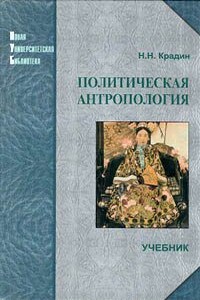
Систематически излагается история политантропологических учений, анализируются основные современные школы и течения в этой области. Рассматриваются социобиологические и культурные основы власти, формы социальной стратификации и мобильности. Исследуются структура власти и эволюция лидерства в различных типах обществ. Большое внимание уделяется феномену государства, причинам его возникновения, путям политогенеза, типам и формам государственности. От 1-го издания (Ладомир, 2001) отличается углубленным анализом современных процессов модернизации политических институтов в посттрадиционных обществах, в том числе в странах СНГ.
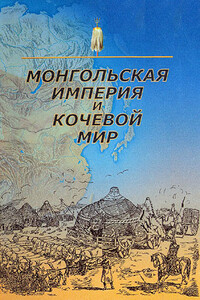
Сборник посвящен истории Монгольской империи Чингис-хана. На широком сравнительно-историческом фоне рассматриваются проблемы типологии кочевых обществ, социально-политическая организация монгольского общества, идеологическая и правовая система Монгольской империи. Много внимания уделено рассмотрению отношений монголов с земледельческими цивилизациями. В числе авторов книги известные ученые из многих стран, специализирующиеся в области изучения кочевых обществ.Книга будет полезна не только специалистам в области истории, археологии и этнографии кочевого мира, но и более широкому кругу читателей, интересующихся историей кочевничества, монгольской истории и истории цивилизаций, в том числе преподавателям вузов, аспирантам, студентам.
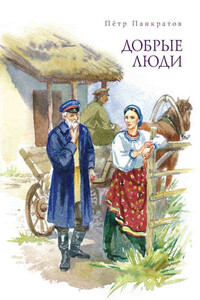
В книге П. Панкратова «Добрые люди» правдиво описана жизнь донского казачества во время гражданской войны, расказачивания и коллективизации.
В книге сотрудника Нижегородской архивной службы Б.М. Пудалова, кандидата филологических наук и специалиста по древнерусским рукописям, рассматриваются различные аспекты истории русских земель Среднего Поволжья во второй трети XIII — первой трети XIV в. Автор на основе сравнительно-текстологического анализа сообщений древнерусских летописей и с учетом результатов археологических исследований реконструирует события политической истории Городецко-Нижегородского края, делает выводы об административном статусе и системе управления регионом, а также рассматривает спорные проблемы генеалогии Суздальского княжеского дома, владевшего Нижегородским княжеством в XIV в. Книга адресована научным работникам, преподавателям, архивистам, студентам-историкам и филологам, а также всем интересующимся средневековой историей России и Нижегородского края.
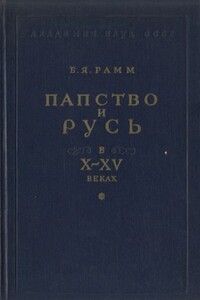
В настоящей книге дается материал об отношениях между папством и Русью на протяжении пяти столетий — с начала распространения христианства на Руси до второй половины XV века.
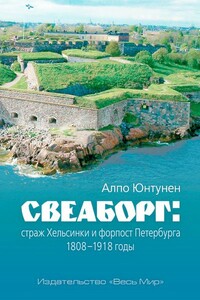
В книге финского историка А. Юнтунена в деталях представлена история одной из самых мощных морских крепостей Европы. Построенная в середине XVIII в. шведами как «Шведская крепость» (Свеаборг) на островах Финского залива, крепость изначально являлась и фортификационным сооружением, и базой шведского флота. В результате Русско-шведской войны 1808–1809 гг. Свеаборг перешел к Российской империи. С тех пор и до начала 1918 г. забота о развитии крепости, ее боеспособности и стратегическом предназначении была одной из важнейших задач России.
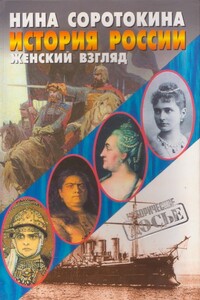
Обзор русской истории написан не профессиональным историком, а писательницей Ниной Матвеевной Соротокиной (автором известной серии приключенческих исторических романов «Гардемарины»). Обзор русской истории охватывает период с VI века по 1918 год и написан в увлекательной манере. Авторский взгляд на ключевые моменты русской истории не всегда согласуется с концепцией других историков. Книга предназначена для широкого круга читателей.
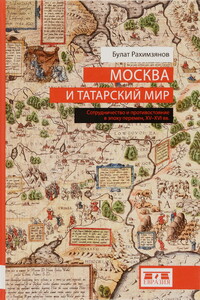
В числе государств, входивших в состав Золотой Орды был «Русский улус» — совокупность княжеств Северо-Восточной Руси, покоренных в 1237–1241 гг. войсками правителя Бату. Из числа этих русских княжеств постепенно выделяется Московское великое княжество. Оно выходит на ведущие позиции в контактах с «татарами». Работа рассматривает связи между Москвой и татарскими государствами, образовавшимися после распада Золотой Орды (Большой Ордой и ее преемником Астраханским ханством, Крымским, Казанским, Сибирским, Касимовским ханствами, Ногайской Ордой), в ХѴ-ХѴІ вв.