Империя Хунну - [125]
The fourth, last stage (9–48 AD) of relations between the Han empire and Hsiung-nu imperial confederation was similar, by its content, to the first stage. As a pretext for a rupture of peaceful relations, the territorial claims of the Chinese emperor-pretender Wang Mang, his intervention in internal affairs of nomads and, finally, substitution of the Shan-уй seal by the Chinese ambassadors have served. Judging from all this, as opposed to the first stage of relations between the Hsiung-nu and China, the nomads have somewhat changed an emphasis of their foreign-polity strategy towards the stimulation of raids to the Han territory. It is possible this was related to the weakening of the frontier might of China and instable political situation within the country. If earlier the northern frontiers of China were protected using a powerful network of the signaling-guard duties and the towns and most crucial sections of the Great Wall were protected by armed to the teeth garrisons then, at the beginning of the Late dynasty of Han (since 23 AD), a maintenance of such army was beyond the Chinese government's means. The raids were found to be more safe and unpunished for inhabitants of steppe regions, that earlier.
Shan-уй had numerous relatives who belonged to his 'king's' clan of Luan-ti: brothers and nephews, wife's, sons and daughters etc. Besides the relatives of Shan-yii other noble 'families' (clans): Hu-yan, Lan Hsti-pu and Quilin have been among the highest Hsiung-nu aristocracy. The next level in the Hsiung-nu hierarchy has been occupied by the tribal chiefs and elders. In the annals, they are mentioned, as a rule, as 'subordinate kings', 'chief commandants', 'household administrators', chii-ch'U officials [Лидай 1958: 17; see also Groot 1921: 55; Watson 1961a: 163–164; Материалы 1968: 40]. Probably, a part of'chiefs of a thousand' were tribal chiefs. The 'chiefs of a hundred' and 'chiefs of ten' were, most likely, clan leaders of different ranks. The economic judicial, cult, fiscal and military functions were considered as the responsibilities of chiefs and elders. Slightly lower at the hierarchical ladder, the chiefs of non-Hsiung-nu tribes being members of the imperial confederation have been. The Hsiung-nu had a particular strata of service nobility — advisers — immigrants from China and bodyguards.
Basic population of the Hsiung-nu empire has consisted of ordinary nomads — cattle-breeders. Based on some indirect data, one can assume that many most important features of economy, social organization, way of life were essentially little different from the features of the nomads of the Mongolian steppes of more recent times [Egami 1956; 1963; Крадин 1999].
In the written sources, there is no information concerning the different categories of poor persons and persons not processing full right who have been engaged in cattle-breeding in the Hsiung-nu society. It is alto, unknown how were spread the slave-owning relations among the Hsiung-nu although the sources are gay with the data of a stealing by nomads of farmers. A lack of development of a slavery in the Hsiung-nu society can be explained by the cross-cultural anthropological studies which clearly demonstrate than in none of the pastoral societies, a slavery has not be widely spread [for details see Нибур 1907: 237–265; Хазанов 1975: 133–148; Khazanov 1984/1994: 160–161; Крадин 1992: 100–111 etc.]. Those researchers are most likely right [Гумилев 1960:147; Давыдова 1975: 145; Rudenko 1969; Хазанов 1975: 143–144], who believe that the overwhelming majority of prisoners of war in the Hsiung-nu societies has been engaged in agricultural and handicraft in the specially established settlements. However, as to social-economic and legal position, the majority of these persons (many of these people were free deserters) have been no slavers. Their social status has been most likely unequal: from the conditional 'vassalage' to some similarity of serfdom. The Ivolginskoye fortes settlement near the city Ulan-Ude in Buryaita was a classical settlement of such type [Davydova 1968; Давыдова 1985; 1995; 1996; Hayashi 1984 etc.].
The archaeological data supplement to a great extent an information of writes annals. Even before a formation of the nomadic empire the social stratification traced on the archaeological data, has existed in the Hsiung-nu society. At the foot of the society, the ordinary burial places of ordinary nomads are. Above, there are graves of the representatives of the tribal ruling clique in which a great quantity of adornments for chariots, rare arms, jewelry and plates with highly artistic images of animals of gold, rods, pommes of banners etc. (burial ground of Aluchzaiden and Hsugoupan in the Inner Mongolia in China [Тянь Гуацзинь, Го Сусинь 1980; 1980а]).
During a period of the Hsiung-nu prosperity, a social stratification has further increased. The higher a status of individual the greater are expenses for erection of the funeral structure and the more splendid are things lowered in a grave. In the picturesque taiga Hentay, Mongolia, the world-famous Noin-Ula burial places were discovered and in the Ilmovaya pad in the Southern Buryatia, the monumental 'royal' and 'princely» mound graves of the Hsiung-nu elite are located for building of which considerable efforts were required [Unehara 1960; Rudenko 1969; Коновалов 1976]. The burials of ordinary nomads were much simpler and more poor in this. These are generally rounded or quadrangular stone burial mounds of 5–10 m in diameter. A depth of the grave hole was generally 2–3 m. At the bottom of a hole, a wooden coffin (more rarely a coffin within a framework) has stood. The burial place has been accompanied by individual goods of households, arms, harness, implements, adornments and funeral food [Доржсурэн 1961; Коновалов 1976; Цэвендорж 1985 etc.]. The graves of settled people living on the territory of Ivolginsky fort were even simpler and more poor [Davydova 1968; Давыдова 1995; 1996]. It demonstrates the complicated multilayer social structure of the Hsiung-nu society [in details see Крадин 1999: 405-67, 471, 476-94].
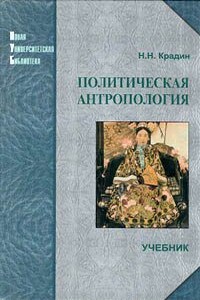
Систематически излагается история политантропологических учений, анализируются основные современные школы и течения в этой области. Рассматриваются социобиологические и культурные основы власти, формы социальной стратификации и мобильности. Исследуются структура власти и эволюция лидерства в различных типах обществ. Большое внимание уделяется феномену государства, причинам его возникновения, путям политогенеза, типам и формам государственности. От 1-го издания (Ладомир, 2001) отличается углубленным анализом современных процессов модернизации политических институтов в посттрадиционных обществах, в том числе в странах СНГ.
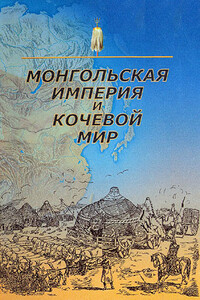
Сборник посвящен истории Монгольской империи Чингис-хана. На широком сравнительно-историческом фоне рассматриваются проблемы типологии кочевых обществ, социально-политическая организация монгольского общества, идеологическая и правовая система Монгольской империи. Много внимания уделено рассмотрению отношений монголов с земледельческими цивилизациями. В числе авторов книги известные ученые из многих стран, специализирующиеся в области изучения кочевых обществ.Книга будет полезна не только специалистам в области истории, археологии и этнографии кочевого мира, но и более широкому кругу читателей, интересующихся историей кочевничества, монгольской истории и истории цивилизаций, в том числе преподавателям вузов, аспирантам, студентам.
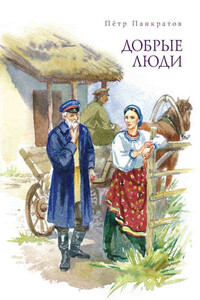
В книге П. Панкратова «Добрые люди» правдиво описана жизнь донского казачества во время гражданской войны, расказачивания и коллективизации.
В книге сотрудника Нижегородской архивной службы Б.М. Пудалова, кандидата филологических наук и специалиста по древнерусским рукописям, рассматриваются различные аспекты истории русских земель Среднего Поволжья во второй трети XIII — первой трети XIV в. Автор на основе сравнительно-текстологического анализа сообщений древнерусских летописей и с учетом результатов археологических исследований реконструирует события политической истории Городецко-Нижегородского края, делает выводы об административном статусе и системе управления регионом, а также рассматривает спорные проблемы генеалогии Суздальского княжеского дома, владевшего Нижегородским княжеством в XIV в. Книга адресована научным работникам, преподавателям, архивистам, студентам-историкам и филологам, а также всем интересующимся средневековой историей России и Нижегородского края.
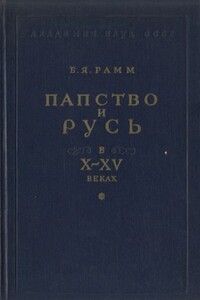
В настоящей книге дается материал об отношениях между папством и Русью на протяжении пяти столетий — с начала распространения христианства на Руси до второй половины XV века.
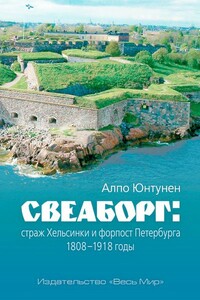
В книге финского историка А. Юнтунена в деталях представлена история одной из самых мощных морских крепостей Европы. Построенная в середине XVIII в. шведами как «Шведская крепость» (Свеаборг) на островах Финского залива, крепость изначально являлась и фортификационным сооружением, и базой шведского флота. В результате Русско-шведской войны 1808–1809 гг. Свеаборг перешел к Российской империи. С тех пор и до начала 1918 г. забота о развитии крепости, ее боеспособности и стратегическом предназначении была одной из важнейших задач России.
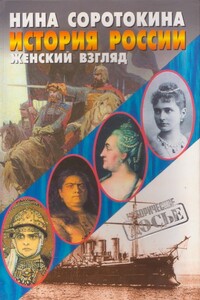
Обзор русской истории написан не профессиональным историком, а писательницей Ниной Матвеевной Соротокиной (автором известной серии приключенческих исторических романов «Гардемарины»). Обзор русской истории охватывает период с VI века по 1918 год и написан в увлекательной манере. Авторский взгляд на ключевые моменты русской истории не всегда согласуется с концепцией других историков. Книга предназначена для широкого круга читателей.
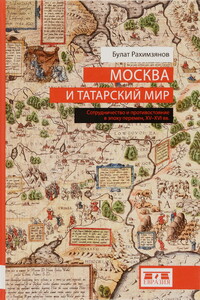
В числе государств, входивших в состав Золотой Орды был «Русский улус» — совокупность княжеств Северо-Восточной Руси, покоренных в 1237–1241 гг. войсками правителя Бату. Из числа этих русских княжеств постепенно выделяется Московское великое княжество. Оно выходит на ведущие позиции в контактах с «татарами». Работа рассматривает связи между Москвой и татарскими государствами, образовавшимися после распада Золотой Орды (Большой Ордой и ее преемником Астраханским ханством, Крымским, Казанским, Сибирским, Касимовским ханствами, Ногайской Ордой), в ХѴ-ХѴІ вв.