Империя Хунну - [128]
At the same time, as to internal relations, the 'state-like' empires of nomads (except some quite explainable cases) were based on non-forcible (consensual and gift-exchange) relations and they existed at the expense of the external sources without establishment of the cattle-breeders taxation. Finally, in the Hsiung-nu empire the main sign of statehood was absent. According to many present theories of the state, the main dissimilarity of the statehood from pre-state forms lies in the fact that the chiefdom's ruler has only consensual power i.e., in essence authority whereas, in the state, the government can apply sanctions with the use of legitimated force [Service 1975: 16, 296–307; Claessen and Skalnik 1978: 21–22, 630, 639–640 etc.]. The power character of the rulers of the steppe empires is more consensual and prevented from monopoly of legal organs. Shan-yii, is primarily redistributor and its power is provided by personal abilities and know-how to get from the outside of he society prestigious goods and to redistribute them between subjects.
For such societies which are more numerous and structurally developed that complex chiefdoms and which are at the same time no states (even 'inchoate' early state), a term supercomplex chiefdom has been proposed [Крадин 1992: 152; Kradin 2000a]. This term has been accepted by the colleagues-nomadologists [Трепавлов 1995: 202; Скрынникова 1997: 49] although, at that time, clear logical criteria allowing to distinguish between supercomplex and complex chiefdoms have not be defined.
The critical structural difference between complex and supercomplex chiefdoms was stated by professor Robert Carneiro in the special paper [1992; 2000]. True Carneiro prefers to call they 'compound' and 'consolidated' chiefdoms respectively. In his opinion, a difference of simple chiefdoms from compound ones is a pure quantitative by a nature. The compound chiefdoms consist of several simple ones and over the subchiefs of districts (i.e. simple chiefdoms), the supreme chief, ruler of the whole polity, is. However, Robert Carneiro pointed out that the compound chiefdoms when they unite in the greater polities prove rarely to be capable to overcome a separatism of subchiefs and such structures disintegrate quickly. A mechanism of the struggle against the structural division was traced by him by the example of one of the great Indian chiefdoms inhabited in XVII century on the territory of present-day American state of Virginia. The supreme chief of this polity by Powhatan name, in order to cope with centrifugal aspirations of the segments chiefs, began to replace them with his supporters who were usually his near relations. This imparted the important structural impulse to the following political integration.
The similar structural principles have been by Thomas Barfield in the Hsiung-nu history [1981:49; 1992: 38–39]. The Hsiung-nu power has consisted of multi-ethnic conglomeration of chiefdoms and tribes including in the 'imperial confederation'. The tribal chiefs and elders have been incorporated in the all-imperial decimal hierarchy. However, their power was to certain degree independent from the centre policy and based on the support on the side of fellow-tribesmen. In the relations with the tribes being members of the imperial confederation. The Hsiung-nu Shan-yii has relied up on support of his nearest relations and companions-in-arms bearing titles of 'ten thousand commander'.
They were put at the head of the special supertribal subdivisions integrating the subordinate or allied tribes into 'rumens' numbering approximately 5–10 thousand of warriors. These persons should be a support for the metropolis' policy in the provinces.
Other nomadic empires in Eurasia were similarly organized. The system of uluses which are often named by Celtic term of tanistty [Fletcher 1986], has existed in all the multi-polities of nomads of the Eurasian steppes: Wu-sun [Бичурин 1950b: 191], European Huns [Хазанов 1975: 190, 197], Turkish [Бичурин 1950a: 270] and Uighur [Bariield 1992: 155] Khaganates, Mongolian Empire [Владимирцов 1934: 98–110].
Further more, in many nomadic empires, there were special functioners of lower rank engaging in the support of the central power in the tribes. In the Hsiung-nu empire, such persons were named 'marquises' Ku-tu [Pritsak 1954: 196–199]. In the Turkish Khaganate, there were functioners designed to control the tribal chiefs [Бичурин 1950а: 283]. The Turk have also sent their governor-general (tutuks) to control the dependent people [Бичурин 1950b: 77; Материалы 1984: 136, 156]. Chinggis Khan, after reform of 1206, has appointed special noyons to control his relations [Козин 1941: § 243].
The nomadic empires as supercomplex chiefdoms are already real model prototype of an early state. If population of complex chiefdoms are as a rule estimated in tens of thousand people [see, for example: Johnson and Earle 1987: 314] and they, as a rule, are homogenous in the ethnic respect then population of multi-national supercomplex chiefdom make up many hundreds of thousand and even more people (nomadic empires of the Inner Asia have amounted to 1–1,5 million pastoral nomads) their territory (nomads, needed for a great are as of land for pastures!) was several orders greater than areas needed for simple and complex chiefdoms.
Систематически излагается история политантропологических учений, анализируются основные современные школы и течения в этой области. Рассматриваются социобиологические и культурные основы власти, формы социальной стратификации и мобильности. Исследуются структура власти и эволюция лидерства в различных типах обществ. Большое внимание уделяется феномену государства, причинам его возникновения, путям политогенеза, типам и формам государственности. От 1-го издания (Ладомир, 2001) отличается углубленным анализом современных процессов модернизации политических институтов в посттрадиционных обществах, в том числе в странах СНГ.
Сборник посвящен истории Монгольской империи Чингис-хана. На широком сравнительно-историческом фоне рассматриваются проблемы типологии кочевых обществ, социально-политическая организация монгольского общества, идеологическая и правовая система Монгольской империи. Много внимания уделено рассмотрению отношений монголов с земледельческими цивилизациями. В числе авторов книги известные ученые из многих стран, специализирующиеся в области изучения кочевых обществ.Книга будет полезна не только специалистам в области истории, археологии и этнографии кочевого мира, но и более широкому кругу читателей, интересующихся историей кочевничества, монгольской истории и истории цивилизаций, в том числе преподавателям вузов, аспирантам, студентам.
В книге П. Панкратова «Добрые люди» правдиво описана жизнь донского казачества во время гражданской войны, расказачивания и коллективизации.
В книге сотрудника Нижегородской архивной службы Б.М. Пудалова, кандидата филологических наук и специалиста по древнерусским рукописям, рассматриваются различные аспекты истории русских земель Среднего Поволжья во второй трети XIII — первой трети XIV в. Автор на основе сравнительно-текстологического анализа сообщений древнерусских летописей и с учетом результатов археологических исследований реконструирует события политической истории Городецко-Нижегородского края, делает выводы об административном статусе и системе управления регионом, а также рассматривает спорные проблемы генеалогии Суздальского княжеского дома, владевшего Нижегородским княжеством в XIV в. Книга адресована научным работникам, преподавателям, архивистам, студентам-историкам и филологам, а также всем интересующимся средневековой историей России и Нижегородского края.
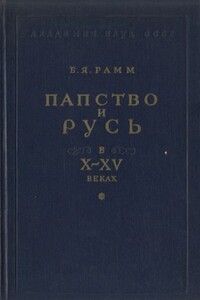
В настоящей книге дается материал об отношениях между папством и Русью на протяжении пяти столетий — с начала распространения христианства на Руси до второй половины XV века.
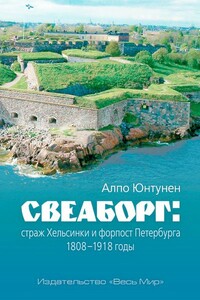
В книге финского историка А. Юнтунена в деталях представлена история одной из самых мощных морских крепостей Европы. Построенная в середине XVIII в. шведами как «Шведская крепость» (Свеаборг) на островах Финского залива, крепость изначально являлась и фортификационным сооружением, и базой шведского флота. В результате Русско-шведской войны 1808–1809 гг. Свеаборг перешел к Российской империи. С тех пор и до начала 1918 г. забота о развитии крепости, ее боеспособности и стратегическом предназначении была одной из важнейших задач России.
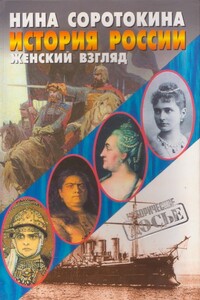
Обзор русской истории написан не профессиональным историком, а писательницей Ниной Матвеевной Соротокиной (автором известной серии приключенческих исторических романов «Гардемарины»). Обзор русской истории охватывает период с VI века по 1918 год и написан в увлекательной манере. Авторский взгляд на ключевые моменты русской истории не всегда согласуется с концепцией других историков. Книга предназначена для широкого круга читателей.
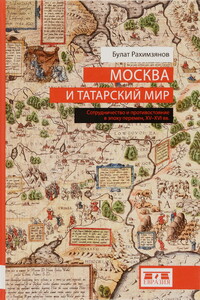
В числе государств, входивших в состав Золотой Орды был «Русский улус» — совокупность княжеств Северо-Восточной Руси, покоренных в 1237–1241 гг. войсками правителя Бату. Из числа этих русских княжеств постепенно выделяется Московское великое княжество. Оно выходит на ведущие позиции в контактах с «татарами». Работа рассматривает связи между Москвой и татарскими государствами, образовавшимися после распада Золотой Орды (Большой Ордой и ее преемником Астраханским ханством, Крымским, Казанским, Сибирским, Касимовским ханствами, Ногайской Ордой), в ХѴ-ХѴІ вв.