Империя Хунну - [127]
The use by the Chinese historian of military ('chiefs of a ten thousand', 'chiefs of a thousand', 'chiefs of a ten hundred') as well as traditional ('kings'= wang, 'princes' of different rank, 'chief commandants', 'household administrators', chii-ch 'u officials etc.) terms gives grounds to propose that the systems of military and civil hierarchy have in Parallel existed. Each of them had different functions. The system of non-decimal ranks has been used during wars when a great quantity of warriors from different parts of steppe have joined into one or several armies [Barfield 1992: 381.
The power of Shan-yii, highest commanders and tribal chiefs at local places has been supported by strict but simple traditional ways. At a whole, as the Hsiung-nu laws were estimated by the Chinese chronicles, the Hsiung-nu's punishment were 'simple and easily realizable' and were mainly reduced to strokes of the can, exile and death penalty. It provided an opportunity to quickly resolve the conflict situations at different levels of the hierarchical pyramid and to maintain a stability of the political system as a whole. It is no mere chance that for the Chinese accustomed from childhood to unwieldy and clumsy bureaucratic machine, the management system of the Hsiung-nu confederation seemed to be extremely simple: "management of the whole state is similar to that of one's body' [Лвдай 1958: 17].
A well-balanced system of ranks developed under Мао-tun has not remained later on. The Chinese historian Fan Yeh has given the same detailed description of the Hsiung-nu's political system in I AD as his eminent predecessor Ssu-ma Ch'ien [Лвдай 1958: 680; Материалы 1973: 73]. It provides an unique opportunity to observe a dynamics of the political institutions of the Hsiung-nu throughout 250 years. The most considerable differences between the power of Мао-tun epoch and Hsiung-nu society before collapses are as follows: (1) There has been a transition, from the tribe, military-administrative division to dual tribal division into wings; (2) Ssu-ma Ch'ien wrote about clearly development military-administrative structure with 'chiefs of a ten thousand'. Fan Yeh does not mention a 'decimal; system and instead of military rank of 'chiefs of a ten thousand', the civil titles of 'kings' (wang) are enumerated; (3) According to Fan Yeh, the whole first ten of so called 'strong' 'chiefs of a ten thousand' that shows, from the viewpoint of the Chinese chronicles. Their more independent position on the side of the Shan-уй headquarters; (4) In the Hsiung-nu empire, an order of succession to the throne has changed. If ordinally the throne of Shan-уй has been passed from the father to the son (except several extraordinary cases), them other order has become to predominate: from uncle to nephew; (5) In the Hsiung-nu society, a principle of join government has prevailed according to which the ruler of the nomadic empire has a cornier controlling a junior by rank 'wing'. A capacity of junior co-ruler is in herited within his lineage but his successors can not pretend on this Shan-уй 's throne.
Therefore, these changes demonstrate a gradual weakening of the autocratic relations in the empire and their substitution for federative relations as demonstrated partially by a transition from triple administrative-territorial division to dual one. The military-hierarchical relations have been pressed back and the genealogical hierarchy between 'seniors' and 'junior' by rank tribes have been pushed into the foreground.
Could the Hsiung-nu create their own statehood? How should the Hsiung-nu society be classified in the anthropological theories of political evolution? Can they be considered as states or pre-state formations? These question are up to present discussed by the researchers of different countries and, especially, by Marxist anthropologists [in details review see in Крадин 1992]. At present there are two most popular groups of the theories explaining a process of origin and essence of early state. The conflict ox control theories show the origin of statehood and its internal nature in the context of the relations between exploitation, class struggle, war and interethnic predominance. The integrative theories were largely oriented to explain a phenomenon of the state as a higher stage of economic and public integration [Fried 1967; Service 1975; Claessen and Skalnik 1978; 1981; Cohen and Service 1978; Haas 1982; 1995; Gailey and Patterson 1988; Павленко 1989; Kradin and Lynsha 1995 etc.].
However, from the viewpoint of neither conflict nor integrating approaches, the Hsiung-nu nomadic empires can not be unambiguously interpreted as a chiefdom or state. A similarity of the Hsiung-nu empire to the state clearly manifests itself the relations with the outer world only (military-hierarchical structure of the nomadic society to confiscate prestigious product from neighbours as well as to surpress the external pressure; international sovereignty, specific ceremonial in the foreign-policy relations).
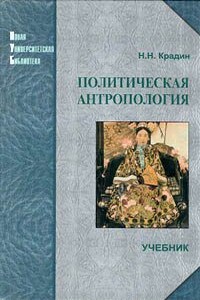
Систематически излагается история политантропологических учений, анализируются основные современные школы и течения в этой области. Рассматриваются социобиологические и культурные основы власти, формы социальной стратификации и мобильности. Исследуются структура власти и эволюция лидерства в различных типах обществ. Большое внимание уделяется феномену государства, причинам его возникновения, путям политогенеза, типам и формам государственности. От 1-го издания (Ладомир, 2001) отличается углубленным анализом современных процессов модернизации политических институтов в посттрадиционных обществах, в том числе в странах СНГ.
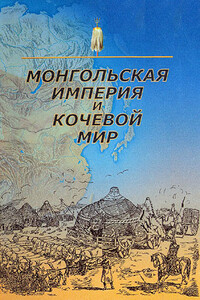
Сборник посвящен истории Монгольской империи Чингис-хана. На широком сравнительно-историческом фоне рассматриваются проблемы типологии кочевых обществ, социально-политическая организация монгольского общества, идеологическая и правовая система Монгольской империи. Много внимания уделено рассмотрению отношений монголов с земледельческими цивилизациями. В числе авторов книги известные ученые из многих стран, специализирующиеся в области изучения кочевых обществ.Книга будет полезна не только специалистам в области истории, археологии и этнографии кочевого мира, но и более широкому кругу читателей, интересующихся историей кочевничества, монгольской истории и истории цивилизаций, в том числе преподавателям вузов, аспирантам, студентам.
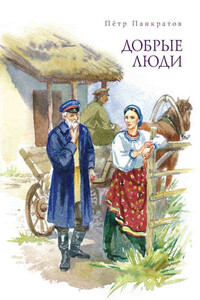
В книге П. Панкратова «Добрые люди» правдиво описана жизнь донского казачества во время гражданской войны, расказачивания и коллективизации.
В книге сотрудника Нижегородской архивной службы Б.М. Пудалова, кандидата филологических наук и специалиста по древнерусским рукописям, рассматриваются различные аспекты истории русских земель Среднего Поволжья во второй трети XIII — первой трети XIV в. Автор на основе сравнительно-текстологического анализа сообщений древнерусских летописей и с учетом результатов археологических исследований реконструирует события политической истории Городецко-Нижегородского края, делает выводы об административном статусе и системе управления регионом, а также рассматривает спорные проблемы генеалогии Суздальского княжеского дома, владевшего Нижегородским княжеством в XIV в. Книга адресована научным работникам, преподавателям, архивистам, студентам-историкам и филологам, а также всем интересующимся средневековой историей России и Нижегородского края.
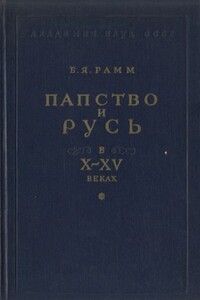
В настоящей книге дается материал об отношениях между папством и Русью на протяжении пяти столетий — с начала распространения христианства на Руси до второй половины XV века.
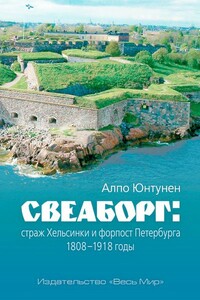
В книге финского историка А. Юнтунена в деталях представлена история одной из самых мощных морских крепостей Европы. Построенная в середине XVIII в. шведами как «Шведская крепость» (Свеаборг) на островах Финского залива, крепость изначально являлась и фортификационным сооружением, и базой шведского флота. В результате Русско-шведской войны 1808–1809 гг. Свеаборг перешел к Российской империи. С тех пор и до начала 1918 г. забота о развитии крепости, ее боеспособности и стратегическом предназначении была одной из важнейших задач России.
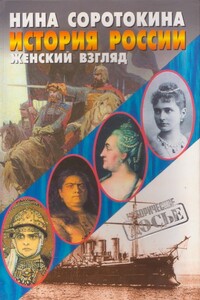
Обзор русской истории написан не профессиональным историком, а писательницей Ниной Матвеевной Соротокиной (автором известной серии приключенческих исторических романов «Гардемарины»). Обзор русской истории охватывает период с VI века по 1918 год и написан в увлекательной манере. Авторский взгляд на ключевые моменты русской истории не всегда согласуется с концепцией других историков. Книга предназначена для широкого круга читателей.
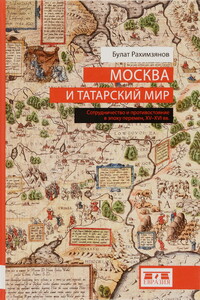
В числе государств, входивших в состав Золотой Орды был «Русский улус» — совокупность княжеств Северо-Восточной Руси, покоренных в 1237–1241 гг. войсками правителя Бату. Из числа этих русских княжеств постепенно выделяется Московское великое княжество. Оно выходит на ведущие позиции в контактах с «татарами». Работа рассматривает связи между Москвой и татарскими государствами, образовавшимися после распада Золотой Орды (Большой Ордой и ее преемником Астраханским ханством, Крымским, Казанским, Сибирским, Касимовским ханствами, Ногайской Ордой), в ХѴ-ХѴІ вв.