Империя Хунну - [124]
Here, new question arise before us and two of them appear to be most important. The first question is related to dating of all events mentioned in the legend. Alas! The time in the folklore works is not consistent with the real time. It obeys the subject and changes in accordance with the events (characters). But the second question is even more complicated: who was a founder of the 'black' legend of Shan-уй Mao-tun? In the main, this question is a key one an and a clue of the problem as a whole depends on the answer to it.
In accordance with the written and archaeological sources, the pastoral nomadism was a basic business of Hsiung-nu. As for the nomads of Mongolia and Transbaikalia in the later times, the Hsiung-nu bred a typical for Eurasia set of animals: sheep, cattle, horses and, more rarely, goats and camels. In addition, they had also in small proportion other species of domestic animals. The economic system of the Hsiung-nu empire was based not only on the pastoral nomadism. The Hsiung-nu developed the internal sedentarization and promoted the agrarian policy, and handicraft. They created the special settlements at the places fafourable for agriculture where they settled the immigrants from China and personers of war from the settled states. The best known settled sites of Hsiung-nu times are Ivolginsky fort and Dureny settlement in Buryatia.
A different nationality of the settled residents in the west Transbaikalia is confirmed by many arguments of the archaeological studies: (1) predominance in the materials of the Ivolginsky fort excavations of the bones of such ('non-nomadic") animals as dog and pig; (2) fishing business; (3) construction of warmed stove-benches in the houses — kangs; (4) typical Chinese agricultural tools; (5) Chinese shapes of vessels; (6) Chinese hieroglyphes on a pottery; (7) anthropologic determinations of skills from the Ivolginsky cemetery [Гохман 1960].
A problem of contacts between the nomads and farmers is among the permanently discussed problems. Almost the fundamental question is in an estimation of a role of nomads in these processes. Some believed that the nomads were first of all robbers since earliest times and conquerors who brought death and destruction to people. While other considered that nomads were creators of the original mobile culture. The supporters of the latter standpoint see, as a rule, the relations between nomads and settled people within the framework of different conceptions of 'symbiosis'. It would be improper to regard the relation between nomadic and settled people unilaterally, only as enmity since earliest times or, on the country, symbiosis. In a reality, a situation was more complicated. Over the course of the Hsiung-nu empire existence, the relations between nomads and Han have not remained unchanged but have subjected to a particular evolution. One can identify four stages of the Hsiung-nu — Han relations.
At the first stage (200–133 ВС) for extortion of more higher profits, the Hsiung-nu have attempted to alternate the war and raids with the periods of a peaceful co-habitation with China [see Barfield 1981; 1992]. The first raids have been carried out to obtain a booty for all member of the imperial confederation of nomads regardless of their status. The Shan-уй should enlist the support of a majority of tribes being members of the confederation. After the devastating raid, the Shan-уй has, as rule, send the ambassadors to China with an offer to conclude a new agreement of 'A peace and relationship' pr, alternatively, the nomads have continued their raids until the Chinese have applied with an offer to conclude a new agreement. After concluding the agreement and obtaining gifts, the raids have ceased for any time. However, after a time when a booty plundered by simple nomads has finished or become worthless, the cattle-breeders have against begun to demand from chiefs and Shan-yii a satisfaction if their interests. By virtue of the fact the border, the Shan-yu has been forced to 'release a steam' and to issue an order to renew to raids.
The second stage (129-58 ВС) of the Hsiung-nu — Han relations is a period of governing of the Han emperor Wu-di who decided to abolish the strategy of farming from active expansion to the North. The war has been waged with a variable success and rendered lifeless both parties. None of the parties has neached the final victory. As a whole, an experience of a campaign showed that nomads in the steppe war, in spite of munerical superiority of the Chinese, have the unquestionable advantages as before. As a sole important achievement of the aggressive antiHsiung-nu policy of Wi-di, a strengthening of the Han positions in the East Turkestan should be considered. However a 'cold war' between the Steppe and China continued as far as a commencement of civil war within the Hsiung-nu tribes.
The third stage (56 ВС — 9 AD) of the Hsiung-nu — Chinese relations can be marked off since the time of assumption by the Shan-yii Hu-han-yeh of vassalage from the Han emperor. A policy of farming from the nomads by 'gifts' was formally replaced by the system of 'tributal' relations. The Hsiung-nu have undertaken to recognize a suzerainty of Han and to pay a nominal 'tribute'. For this, the emperor has provided the Shan-уй his protection and has given to him as a vassal the reply gifts. In fact, the vassalage of nomads camouflaged in terms reflecting the Chinese ideological superiority has been an old policy of extortion on the side of nomads with the only difference that the reply gifts of the Chinese emperor were vastly larger than before. In addition, as may be necessary, the Shan-yii has obtained from China the agricultural products to support his citizens.
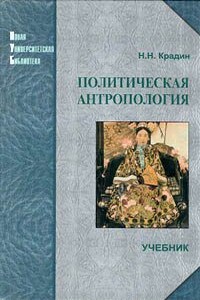
Систематически излагается история политантропологических учений, анализируются основные современные школы и течения в этой области. Рассматриваются социобиологические и культурные основы власти, формы социальной стратификации и мобильности. Исследуются структура власти и эволюция лидерства в различных типах обществ. Большое внимание уделяется феномену государства, причинам его возникновения, путям политогенеза, типам и формам государственности. От 1-го издания (Ладомир, 2001) отличается углубленным анализом современных процессов модернизации политических институтов в посттрадиционных обществах, в том числе в странах СНГ.
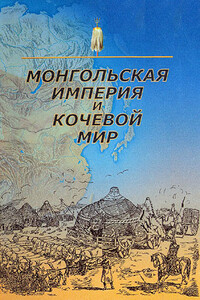
Сборник посвящен истории Монгольской империи Чингис-хана. На широком сравнительно-историческом фоне рассматриваются проблемы типологии кочевых обществ, социально-политическая организация монгольского общества, идеологическая и правовая система Монгольской империи. Много внимания уделено рассмотрению отношений монголов с земледельческими цивилизациями. В числе авторов книги известные ученые из многих стран, специализирующиеся в области изучения кочевых обществ.Книга будет полезна не только специалистам в области истории, археологии и этнографии кочевого мира, но и более широкому кругу читателей, интересующихся историей кочевничества, монгольской истории и истории цивилизаций, в том числе преподавателям вузов, аспирантам, студентам.
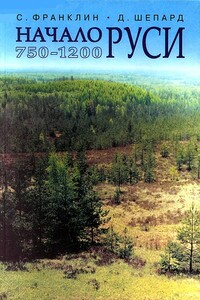
Монография двух британских историков, предлагаемая вниманию русского читателя, представляет собой первую книгу в многотомной «Истории России» Лонгмана. Авторы задаются вопросом, который волновал историков России, начиная с составителей «Повести временных лет», именно — «откуда есть пошла Руская земля». Отвечая на этот вопрос, авторы, опираясь на новейшие открытия и исследования, пересматривают многие ключевые моменты в начальной истории Руси. Ученые заново оценивают роль норманнов в возникновении политического объединения на территории Восточноевропейской равнины, критикуют киевоцентристскую концепцию русской истории, обосновывают новое понимание так называемого удельного периода, ошибочно, по их мнению, считающегося периодом политического и экономического упадка Древней Руси.
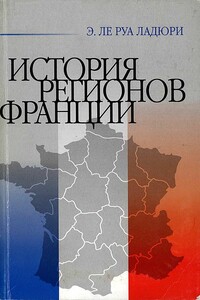
Эмманюэль Ле Руа Ладюри, историк, продолжающий традицию Броделя, дает в этой книге обзор истории различных регионов Франции, рассказывает об их одновременной или поэтапной интеграции, благодаря политике "Старого режима" и режимов, установившихся после Французской революции. Национальному государству во Франции удалось добиться общности, несмотря на различия составляющих ее регионов. В наши дни эта общность иногда начинает колебаться из-за более или менее активных требований национального самоопределения, выдвигаемых периферийными областями: Эльзасом, Лотарингией, Бретанью, Корсикой и др.
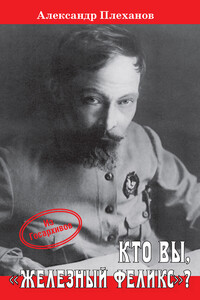
Оценки личности и деятельности Феликса Дзержинского до сих пор вызывают много споров: от «рыцаря революции», «солдата великих боёв», «борца за народное дело» до «апостола террора», «кровожадного льва революции», «палача и душителя свободы». Он был одним из ярких представителей плеяды пламенных революционеров, «ленинской гвардии» — жесткий, принципиальный, бес— компромиссный и беспощадный к врагам социалистической революции. Как случилось, что Дзержинский, занимавший ключевые посты в правительстве Советской России, не имел даже аттестата об образовании? Как относился Железный Феликс к женщинам? Почему ревнитель революционной законности в дни «красного террора» единолично решал судьбы многих людей без суда и следствия, не испытывая при этом ни жалости, ни снисхождения к политическим противникам? Какова истинная причина скоропостижной кончины Феликса Дзержинского? Ответы на эти и многие другие вопросы читатель найдет в книге.

Пособие для студентов-заочников 2-го курса исторических факультетов педагогических институтов Рекомендовано Главным управлением высших и средних педагогических учебных заведений Министерства просвещения РСФСР ИЗДАНИЕ ВТОРОЕ, ИСПРАВЛЕННОЕ И ДОПОЛНЕННОЕ, Выпуск II. Символ *, используемый для ссылок к тексте, заменен на цифры. Нумерация сносок сквозная. .
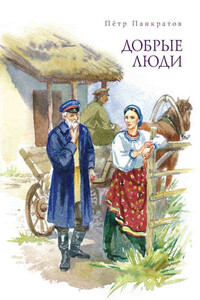
В книге П. Панкратова «Добрые люди» правдиво описана жизнь донского казачества во время гражданской войны, расказачивания и коллективизации.
В книге сотрудника Нижегородской архивной службы Б.М. Пудалова, кандидата филологических наук и специалиста по древнерусским рукописям, рассматриваются различные аспекты истории русских земель Среднего Поволжья во второй трети XIII — первой трети XIV в. Автор на основе сравнительно-текстологического анализа сообщений древнерусских летописей и с учетом результатов археологических исследований реконструирует события политической истории Городецко-Нижегородского края, делает выводы об административном статусе и системе управления регионом, а также рассматривает спорные проблемы генеалогии Суздальского княжеского дома, владевшего Нижегородским княжеством в XIV в. Книга адресована научным работникам, преподавателям, архивистам, студентам-историкам и филологам, а также всем интересующимся средневековой историей России и Нижегородского края.