Can You Speak Over the Telephone. Как вести беседу по телефону - [23]
III. Reproduce the telephone conversations as close to the text as possible.
IV. Make up telephone conversations considering these assignments.
1. Brown amp; Co. for some reason or other have not delivered the goods in the stipulated time. Phone the Company and let them know that they are responsible for the delay and have either to make emergency delivery within a week or to pay you a penalty.
2. You are decorating your apartment. The work is progressing very slowly. Phone the manager of the Company and ask him to offer his workmen a spot of overtime over the week-end so that they could finish off all the outstanding work within two days.
3. You’ve been up to your ears in work over the past two weeks and failed to send a book on Soviet art to your colleague. Phone him, offer your apologies and say that you do remember your promise and that you will get the book in the post this afternoon.
В. INFORMAL TELEPHONE COVERSATIONS
Charles: Two-six-two four-three-double four. Charles Farmer speaking.
Joan: Hello, Charles, it’s Joan — Joan Cook.
Charles: Hello, Joan, how are you?
Joan: I’m very well, thanks[59]. How are you?
Charles: Oh, not so bad, you know.
Joan: Good. I rang to ask if you know anything about hotels in Brighton.
Charles: No, I’m afraid[60] I can’t be very much help to you there[61].
Joan: Well, it’s just that we’ve been thinking of taking the family to the south this summer and at this rather late stage we’re trying to organize[62]ourselves a suitable hotel. But I thought that you’d been to Brighton;
Charles: I have. Several times. But I’ve always taken a tent and done it the hard way[63].
Joan: Oh, I see. I didn’t realize that.
Charles: Yes. Great one for the open air[64], you know.
Joan: Oh, it must be nice, but we could never contemplate it with our lot[65]. We’re terribly disorganized as a family, you know, and we’d be in chaos in no time. And in any case the car isn’t big enough to get all of us in and camping equipment as well, so we simply must find ourselves a nice hotel where they’ll put up with[66] noisy kids.
Charles: Mm. You have got a problem. And it’s certainly a bit late. But there are masses of adverts. Have you looked at those?
Joan: Well, yes. As a matter of fact I was reading one advert only this morning in the Sunday paper which sounded marvellous.
Charles: For a hotel?
Joan: Yes. Just outside Brighton. And I thought to myself “I’ll give Charles a ring[67]. He may know it”.
Charles: Oh, dear I am a dead loss[68], aren’t I. But tell me about the advert.
Joan: It said that this hotel was right on the beach, and that’s essential as far as we’re concerned, because the kids are really only interested in scrabbling[69] in the sand and popping into[70] the sea every five minutes, so we must be close to it-the closer the better.
Charles: I know just how it is[71].
Joan: And all the rooms have balconies facing the sea and overlooking the beach so it should be possible for mum and dad[72] to keep half an eye on[73] the kids while they’re playing and manage a quiet snooze at the same time occasionally.
Charles: Sounds too good to be true[74]. Expensive?
Joan: Rather. But still the prices were a bit lower than in any of the other adverts I’ve seen, and yet the facilities were as good or even better. You know, even allowing for[75] a bit of exaggeration in the advert, it seemed to have a lot to offer[76].
Charles: Had it?
Joan: Oh, yes. And the food is good — according to the advert, again — but they’re bound to say that.
Charles: Of course. The only way to find out for certain is to go and try it. And that’s taking rather a risk. I tell you what[77], though. It’s just occurred to me — Mr and Mrs Croft from over the road[78] have been to that part of England several times, and I seem to remember them saying they always use the same hotel.
Joan: Do they?
Charles: Yes. At least I think that’s what they said. I’ll pop around[79] later this evening, and if they do know anything that might be of use to you I’ll get one or the other of them to give you a ring.
Joan: Would you? That’s very kind of you. They won’t mind, will they?
Charles: No, of course not. I’m sure they’ll be pleased to help.
Joan: Well, that’s marvellous.
Charles: Did you say something about taking the car?
Joan: Yes. It takes a little longer. But there is no need to rush, because Doug’s got an extra week’s holiday this year.
Charles: Lucky Doug. But isn’t it rather a long drive from Edinburgh — what with the children and the holiday traffic[80]?
Joan: Well, strange as it may seem, the kids are very good in the car. And if you go by train or air you don’t see much on the way, you’re sort of insulated from all the lovely places you’re passing.
Charles: Yes, I agree with you.
Joan: But I’m sure you must have better things to do than listen to me rattling on[81].
Charles: Oh, that’s all right. It’s nice to hear from you. But I will drop in on the Crofts and ask them to phone you. Don’t expect to hear anything until after nine, though, because they’re usually out on Sunday until some time in the evening.

Книга известного историка литературы, доктора филологических наук Бориса Соколова, автора бестселлеров «Расшифрованный Достоевский» и «Расшифрованный Гоголь», рассказывает о главных тайнах легендарного романа Бориса Пастернака «Доктор Живаго», включенного в российскую школьную программу. Автор дает ответы на многие вопросы, неизменно возникающие при чтении этой великой книги, ставшей едва ли не самым знаменитым романом XX столетия. Кто стал прототипом основных героев романа? Как отразились в «Докторе Живаго» любовные истории и другие факты биографии самого Бориса Пастернака? Как преломились в романе взаимоотношения Пастернака со Сталиным и как на его страницы попал маршал Тухачевский? Как великий русский поэт получил за этот роман Нобелевскую премию по литературе и почему вынужден был от нее отказаться? Почему роман не понравился властям и как была организована травля его автора? Как трансформировалось в образах героев «Доктора Живаго» отношение Пастернака к Советской власти и Октябрьской революции 1917 года, его увлечение идеями анархизма?
Статья Марка Алданова к столетнему юбилею Ф.М. Достоевского.

Эта книга – о роли писателей русского Монпарнаса в формировании эстетики, стиля и кода транснационального модернизма 1920–1930-х годов. Монпарнас рассматривается здесь не только как знаковый локус французской столицы, но, в первую очередь, как метафора «постапокалиптической» европейской литературы, возникшей из опыта Первой мировой войны, революционных потрясений и массовых миграций. Творчество молодых авторов русской диаспоры, как и западных писателей «потерянного поколения», стало откликом на эстетический, философский и экзистенциальный кризис, ощущение охватившей западную цивилизацию энтропии, распространение тоталитарных дискурсов, «кинематографизацию» массовой культуры, новые социальные практики современного мегаполиса.
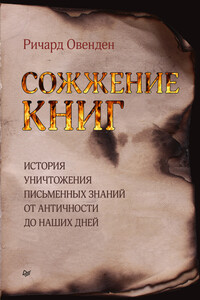
На протяжении всей своей истории люди не только создавали книги, но и уничтожали их. Полная история уничтожения письменных знаний от Античности до наших дней – в глубоком исследовании британского литературоведа и библиотекаря Ричарда Овендена.
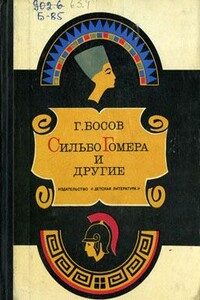
Книга о тайнах и загадках археологии, этнографии, антропологии, лингвистики состоит из двух частей: «По следам грабителей могил» (повесть о криминальной археологии) и «Сильбо Гомера и другие» (о загадочном языке свиста у некоторых народов мира).

Американский популяризатор науки описывает один из наиболее интересных экспериментов в современной этологии и лингвистике – преодоление извечного барьера в общении человека с животными. Наряду с поразительными фактами обучения шимпанзе знаково-понятийному языку глухонемых автор излагает взгляды крупных лингвистов на природу языка и историю его развития.Кинга рассчитана на широкий круг читателей, но особенно она будет интересна специалистам, занимающимся проблемами коммуникации и языка.