Can You Speak Over the Telephone. Как вести беседу по телефону - [25]
II. Rephrase these sentences.
1. I can’t be very much help to you. 2. I’ve always taken a tent and done it the hard way. 3. Great one for the open air. 4. They will put up with noisy kids. 5. I’m a dead loss. 6. Sounds too good to be true. 7. You know, even allowing for a bit of exaggeration in the advert, it seemed to have a lot to offer. 8. They are bound to say that. 9. Strange as it may seem, the kids are very good in the car. 10. If you go by train you are sort of insulated from all the lovely places you are passing. 11. It really is very kind of you to go to all this trouble. 12. I’ve decided to apply for that job. 13. My training and experience have put me in with a chance. 14. I feel reasonably optimistic about getting short-listed. 15. I don’t feel at my best in interviews. 16. I feel off balance when I’m in the hot seat myself. 17. I shoudn’t think they’ll get many applicants with your qualifications. 18. “What’s the pay like incidentally?” “Nearly twice what I’m getting now”. 19. The rates tend to be a lot higher there, anyway. 20. You’ll be loaded! 21. I should need a damned sight more than twice my present wages to be loaded. 22. He’d never do anyone a bad turn. 23. He’s a stick-in-the-mud. 24. He’s very slow to respond to new ideas. 25. I hope you fed them all that guff about your qualifications and experience in your application. 26. I thought I’d have a bash. 27. But you didn’t lay it on too thick. 28. They can go off you. 29. I bet you’ll cake walk it. 30. Travelling in the rush hour can be a bit of a bind. 31. I’ll have to ring off now.
III. Fill in the missing remarks in these snatches of telephone conversation (see Conversations 1 and 2).
1. C: Two-six-two four-three-double four. Charles Farmer speaking.
J.: …
2. C.: Hello, Joan, how are you?
J.: …
C.: Oh, not so bad, you know.
3. C.: But I’ve always taken a tent and done it the hard way.
J.: …
4. J.: …
C.: Oh dear, I am a dead loss, aren’t I. But tell me about the advert.
J.: …
5. С:. Sounds too good to be true. Expensive?
J.: …
6. C.: …
J.: Would you? That’s very kind of you. They won’t mind, will they?
C.: …
7. C.: No, of course not. I’m sure they’ll be pleased to help.
J.: …
8. J.: … It really is very kind of you to go to all this trouble.
C.: …
9. В.: Bob here. How’s things?
J.: …
10. J.: Very nice, too. Do you feel optimistic about it?
В.: …
11. J.: I shoudn’t think they’ll get many applicants with your qualifications.
В.: …
12. J.: You’re bound to get an interview. What’s the pay like incidentally?
В.: …
13. J.: Was the money the main reason for applying?
В.: …
J.: What was that then?
В.: …
14. J.: I bet you’ll cake walk it. I’ll keep my fingers crossed for you, at any rate.
В.: …
IV. Reproduce the telephone conversations as close to the text as possible.
V. Make up telephone conversations considering these assignments.
1. Your colleague has come back from Italy where he spent his vacation. Phone him and have a talk about: a) the places he has been to; b) the hotels he has put up at; c) the facilities he has been offered; d) the hotel charges; e) the way he has amused himself; f) the people he has met.
2. You are taking a holiday and leaving Ottawa for a month. Phone your Canadian colleague to say good-bye and tell him how you are planning to spend your holiday.
3. You have a telephone call from your counterpart in London. After discussing business he says that his son is applying for a job. Ask him about the prospects of his son’s new job, its advantages and disadvantages and what his son feels about it.
Harry: Hallo — 5289.
Cynthia: Is that Harry?
Harry: Yes — who’s that?
Cynthia: Oh, Harry. It’s me, Cynthia.
Harry: Cynthia? Cynthia! Oh yes. How are you?
Cynthia: I’m fine. And you and Barbara?
Harry: Oh, we’re both well.
Cynthia: Oh, that’s good. Look, I’m ringing to ask you a small favour. I hope you don’t mind.
Harry: No. No, of course not. Anything I can do, within reason[117].
Cynthia: Well, the thing is that — you know Shirley?
Harry: Shirley? I don’t think so.
Cynthia: You know, she’s the girl I work with. I think you met her.
Harry: Did I? When?
Cynthia: She’s the one with red hair.
Harry: Oh.
Cynthia: Anyway, I wondered — well — you see Shirley and I are giving a party. Of course we wondered if you and Barbara would like to come…
Harry: Well, that’s very nice of you, I’m sure.
Cynthia: We’d love to have you.
Harry: We’d love to come.
Cynthia: Well, the point is, you see, that we wanted to invite a lot of interesting people.
Harry: Oh yes -
Cynthia: Yes — and well, you know our flat; it really isn’t big enough. And we were wondering if there was just the smallest chance of having it at your place — just for the evening, you know.
Harry: Well — we’d love to let you, of course. But just now it would be a little difficult.
Cynthia: Oh, no. It wouldn’t be now. In about two week’s time.
Harry: Two weeks. Oh, I see. But — unfortunately — I think that would be even more difficult. You see, we’re haying part of the house redecorated, and in two weeks -
Cynthia: I suppose it wouldn’t be possible to use the rooms that aren’t being decorated?

Книга известного историка литературы, доктора филологических наук Бориса Соколова, автора бестселлеров «Расшифрованный Достоевский» и «Расшифрованный Гоголь», рассказывает о главных тайнах легендарного романа Бориса Пастернака «Доктор Живаго», включенного в российскую школьную программу. Автор дает ответы на многие вопросы, неизменно возникающие при чтении этой великой книги, ставшей едва ли не самым знаменитым романом XX столетия. Кто стал прототипом основных героев романа? Как отразились в «Докторе Живаго» любовные истории и другие факты биографии самого Бориса Пастернака? Как преломились в романе взаимоотношения Пастернака со Сталиным и как на его страницы попал маршал Тухачевский? Как великий русский поэт получил за этот роман Нобелевскую премию по литературе и почему вынужден был от нее отказаться? Почему роман не понравился властям и как была организована травля его автора? Как трансформировалось в образах героев «Доктора Живаго» отношение Пастернака к Советской власти и Октябрьской революции 1917 года, его увлечение идеями анархизма?
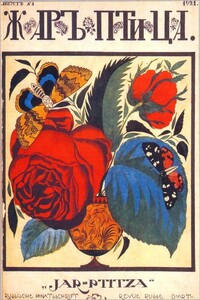
Статья Марка Алданова к столетнему юбилею Ф.М. Достоевского.
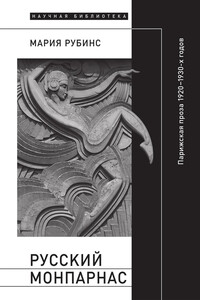
Эта книга – о роли писателей русского Монпарнаса в формировании эстетики, стиля и кода транснационального модернизма 1920–1930-х годов. Монпарнас рассматривается здесь не только как знаковый локус французской столицы, но, в первую очередь, как метафора «постапокалиптической» европейской литературы, возникшей из опыта Первой мировой войны, революционных потрясений и массовых миграций. Творчество молодых авторов русской диаспоры, как и западных писателей «потерянного поколения», стало откликом на эстетический, философский и экзистенциальный кризис, ощущение охватившей западную цивилизацию энтропии, распространение тоталитарных дискурсов, «кинематографизацию» массовой культуры, новые социальные практики современного мегаполиса.
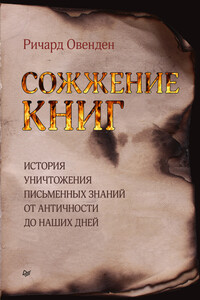
На протяжении всей своей истории люди не только создавали книги, но и уничтожали их. Полная история уничтожения письменных знаний от Античности до наших дней – в глубоком исследовании британского литературоведа и библиотекаря Ричарда Овендена.
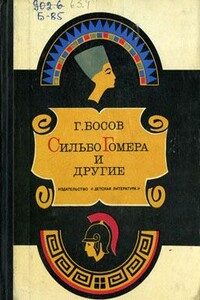
Книга о тайнах и загадках археологии, этнографии, антропологии, лингвистики состоит из двух частей: «По следам грабителей могил» (повесть о криминальной археологии) и «Сильбо Гомера и другие» (о загадочном языке свиста у некоторых народов мира).

Американский популяризатор науки описывает один из наиболее интересных экспериментов в современной этологии и лингвистике – преодоление извечного барьера в общении человека с животными. Наряду с поразительными фактами обучения шимпанзе знаково-понятийному языку глухонемых автор излагает взгляды крупных лингвистов на природу языка и историю его развития.Кинга рассчитана на широкий круг читателей, но особенно она будет интересна специалистам, занимающимся проблемами коммуникации и языка.