Воспитание сердцем. Без правил и условий. - [90]
, edited by Uwe P. Gielen and Jaipaul Roopnarine. Westport, CT: Praeger, 2004.
130. Lewin, Kurt, Ronald Lippitt, and Ralph K. White. “Patterns of Aggressive Behavior in Experimentally Created ‘Social Climates.’” Journal of Social Psychology 10 (1939): 271–299.
131. Lewis, Catherine C. “The Effects of Parental Firm Control: A Reinterpretation of Findings.” Psychological Bulletin 90 (1981): 547–563.
132. Lewis, Catherine C. Educating Hearts and Minds: Reflections on Japanese Preschool and Elementary Education. Cambridge, England: Cambridge University Press, 1995.
133. Lieberman, Alicia F. The Emotional Life of the Toddler. New York: Free Press, 1993.
134. Lovett, Herbert. Cognitive Counseling and Persons with Special Needs: Adapting Behavioral Approaches to the Social Context. New York: Praeger, 1985.
135. Luster, Tom, Kelly Rhoades, and Bruce Haas. “The Relation Between Parental Values and Parenting Behavior: A Test of the Kohn Hypothesis.” Journal of Marriage and the Family 51 (1989): 139–147.
136. Luthar, Suniya S., and Bronwyn E. Becker. “Privileged but Pressured?: A Study of Affluent Youth.” Child Development 73 (2002): 1593–1610.
137. Luthar, Suniya S., and Karen D’Avanzo. “Contextual Factors in Substance Use: A Study of Suburban and Inner-City Adolescents.” Development and Psychopathology 11 (1999): 845–867.
138. Lytton, Hugh. “Physical Punishment Is a Problem, Whether Conduct Disorder Is Endogenous or Not.” Psychological Inquiry 8 (1997): 211–214.
139. Maccoby, Eleanor E., and John A. Martin. “Socialization in the Context of the Family: Parent-Child Interaction.” In Handbook of Child Psychology, 4th ed., vol. 4, edited by Paul H. Mussen. New York: Wiley, 1983.
140. Makri-Botsari, E. “Causal Links Between Academic Intrinsic Motivation, Self-Esteem, and Unconditional Acceptance by Teachers in High School Students.” In International Perspectives on Individual Differences, vol. 2: Self Perception, edited by Richard J. Riding and Stephen G. Rayner. Westport, CT: Ablex, 2001.
141. Mallinckrodt, Brent, and Mei-Fen Wei. “Attachment, Social Competencies, Interpersonal Problems, and Psychological Distress.” Paper presented at the annual conference of the American Psychological Association, Toronto, August 2003.
142. Marshall, Hermine H. “An Updated Look at Delaying Kindergarten Entry.” Young Children, September 2003: 84–93.
143. Matas, Leah, Richard A. Arend, and L. Alan Sroufe. “Continuity of Adaptation in the Second Year: The Relationship Between Quality of Attachment and Later Competence.” Child Development 49 (1978): 547–556.
144. McCord, Joan. “Questioning the Value of Punishment.” Social Problems 38 (1991): 167–179.
145. McCord, Joan. “On Discipline.” Psychological Inquiry 8 (1997): 215–217.
146. McLeod, Jane D., Candace Kruttschnitt, and Maude Dornfeld. “Does Parenting Explain the Effects of Structural Conditions on Children’s Antisocial Behavior?” Social Forces 73 (1994): 575–604.
147. Merrow, John. Choosing Excellence. Lanham, MD: Scarecrow Press, 2001.
148. Miller, Alice. The Drama of the Gifted Child. Rev. ed. New York: Basic, 1994.
149. Morris, Amanda Sheffield, Laurence Steinberg, Frances M. Sessa, Shelli Avenevoli, Jennifer S. Silk, and Marilyn J. Essex. “Measuring Children’s Perceptions of Psychological Control.” In Intrusive Parenting: How Psychological Control Affects Children and Adolescents, edited by Brian K. Barber. Washington, D.C.: American Psychological Association, 2002.
150. Mosier, Christine E., and Barbara Rogoff. “Privileged Treatment of Toddlers: Cultural Aspects of Individual Choice and Responsibility.” Developmental Psychology 39 (2003): 1047–1060.
151. Murstein, Bernard I., Mary Cerreto, and Marcia G. MacDonald. “A Theory and Investigation of the Effect of Exchange-Orientation on Marriage and Friendship.” Journal of Marriage and the Family 39 (1977): 543–548.
152. Neighbors, Clayton, Mary E. Larimer, Irene Markman Geisner, and C. RaymondKnee. “Feeling Controlled and Drinking Motives Among College Students.” Self and Identity 3 (2004): 207–224.
153. Newcomb, Theod[o]re H. “The Family in 1955.” Merrill-Palmer Quarterly 2 (1956): 50–54.
154. Noddings, Nel. The Challenge to Care in Schools: An Alternative Approach to Education. New York: Teachers College Press, 1992.
155. Norem-Hebeisen, Ardyth A., and David W. Johnson. “The Relationship Between Cooperative, Competitive, and Individualistic Attitudes and Differentiated Aspects of Self-Esteem.” Journal of Personality 49 (1981): 415–426.
156. Oliner, Samuel P., and Pearl M. Oliner. The Altruistic Personality: Rescuers of Jews in Nazi Europe. New York: Free Press, 1988.
157. Parpal, Mary, and Eleanor E. Maccoby. “Maternal Responsiveness and Subsequent Child Compliance.” Child Development 56 (1985): 1326–1334.
158. Parsons, Jacquelynne E., and Diane N. Ruble. “The Development of Achievement-Related Expectancies.” Child Development 48 (1977): 1075–1079.
159. Petersen, Larry R., Gary R. Lee, and Godfrey J. Ellis. “Social Structure, Socialization Values, and Disciplinary Techniques: A Cross-Cultural Analysis.”

Альфи Кон, известный психолог и независимый исследователь в области человеческого поведения, доказывает, что базовая стратегия, которую мы используем в общении с детьми и подчиненными, порочна и опасна. «Сделай то – и получишь вот это», – мы прибегаем к подобным фразам, чтобы добиться желаемого поведения, и часто достигаем своей цели, поэтому такая тактика кажется нам оправданной. Но на деле обещание награды имеет лишь временный эффект. Автор призывает не довольствоваться видимым послушанием, а искать причины, которые вызвали неправильное поведение.Эта книга обязательна к прочтению для родителей, преподавателей и руководителей.На русском языке публикуется впервые.
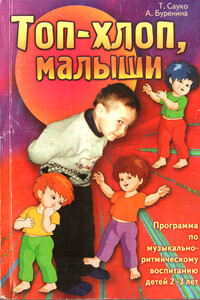
Программа музыкально-ритмического воспитания детей 2-3 лет и методическое сопровождение к ней поможет организовать систему работы по развитию движений и музыкальных способностей у детей раннего возраста. Для музыкальных руководителей и воспитателей дошкольных образовательных учреждений, Домов ребенка, воспитателей групп “Особый ребенок”, дефектологов, преподавателей и студентов педагогических учебных заведений, а также родителей.

Учебное пособие предназначено для помощи обучающимся в освоении учебного курса «Британский мир в Средние века». Цель курса «Британский мир в Средние века» – получение обучающимися знаний о ключевых проблемах развития Британии как особого этнокультурного региона средневековой Европы в период V–XVI веков.В формате PDF A4 сохранен издательский макет.

В помощь музыкальным руководителям и воспитателям детских садов, руководителям музыкальных студий, учителям начальных классов.

В своей книге Кэти Гласс, психолог и опекун, помогающая проблемным детям уже больше 25 лет, рассказывает о Люси – маленькой девочке, которая к 11 годам сменила несколько приемных семей. Казалось, что ребенок уже не сможет вернуться к нормальной жизни, разучился доверять и любить. Но благодаря заботе и чуткости Кэти Люси не только смогла освободиться от травм прошлого, но и обрела настоящую семью.

Вы не успели заметить, как дети выросли и из умилительных малышей превратились в этих «несносных» подростков? Они бунтуют против взрослых, против установленных правил и границ. Они хотят свободы, не понимая еще, что свобода всегда подразумевает ответственность. Как нам, взрослым, научиться ладить с ними, помогать им, любить их, заботиться о них? Да, это сложно, но вместе вы справитесь. В конце концов, вы тоже были подростками и тоже в какой-то момент хотели поступать по-своему. Эта книга написана профессиональными психологами специально для родителей подростков.
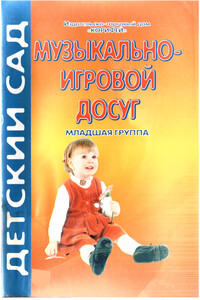
Данное пособие содержит музыкально-методический материал, который может быть использован для проведения музыкальных занятий с детьми младшей группы детского сада.