The Last Confession of Thomas Hawkins - [92]
The Witness thanked the Court but declar’d that she was quite Content with her Life, save for her current Woes. She spoke at length of the Prisoner’s Kind and Gentle acts towards her and diverse Others and swore that he was Innocent. She insist’d that the Prisoner was not capable of such a Bloody deed and that on the Night of the Murder he was in her Company at all times and Cou’d not have Done it.
The Prisoner interjected, reminding the Witness that she was speaking upon Oath and must not Perjure herself on his Behalf.
The Witness answer’d with great Vehemence that she was right Glad that the Prisoner troubled himself to Speak to her and was it not a Shame that he had not reply’d to her letters, and had refus’d to Meet with her despite her Many and Various requests to do so, giving no Consideration to her own Feelings upon the Matter, and moreover was it not a Folly that it took a Trial at the Old Bailey before he would speak two words to her and only then to Accuse her of Lying and so make further Trouble for them Both, and that she call’d upon the whole Court to Witness that the Prisoner had thus shew’d himself to be a Witless Fool and had indeed no Capacity for Murder not only because he had, she must concede, a Good Heart, but also a Muddled Head, to a Degree that was Vexing beyond all Measure, and it was truly a wonder he had surviv’d this long, and a marvel indeed that she yet cared a great deal for him – God help her – and begged that the Jury would Judge the case by its facts and not by the Prisoner’s Behaviour, which was Perplexing and Infuriating in equal Parts. And she ask’d the said Prisoner if he had turn’d mad, and should be locked in Bedlam instead of Newgate, and did he not see that her Heart was Broken? At which point she Wept most Piteously, and the Prisoner seem’d much affected, though he did not Reply.
The King’s Council, who had failed to Interrupt this testimony at Several Junctures, took this opportunity to dismiss the Witness, who was led away by Alice Dunn.
The Court observ’d that it was a great Pity to see such a spirited young woman ruined by a Black-Hearted villain, and that here was Instruction for any foolish Strumpet who had fallen into evil company. The Court then spoke thus:
Prisoner, you hear the Charge and Evidence against you; now you stand up on your Defence.
Prisoner. My Lord: notwithstanding what has been sworn against me, I am Innocent. I confess I did threaten the deceas’d but this was done in a moment of ill humour and under much provocation and also Liquor. The deceas’d had spread Vile lies about the Town and had threaten’d to Destroy me. I am Guilty of speaking Violence, my Lord, but not of committing it. Indeed I have an abhorrence of Violence. I could no more stab a man than plunge the Blade into my own Heart.
My Lord, the King’s Council has offer’d no proof that I committed the Act, only Rumour and Conjecture. I swear upon my Soul that I am Not Guilty and beg that the Jury considers the Facts and does not Judge me upon my Character, for I own that I have not always Behav’d with Good Judgement, and should I be spared will Strive to be a better Man, God help me.
The Court asked if the Prisoner still believed the Murder was committed by one of the children of the Deceas’d, or by Ned Weaver, his Apprentice?
The Prisoner reply’d that he did not. He acknowledg’d that in his Desire to prove his Innocence he had caused Distress, and express’d his Apologies to the family. He added that it was his belief that a House breaker had stolen in and disturb’d the Victim, and so murder’d him in cold blood.
Council for the King. And how does the Prisoner account for the Doors and Windows being barred and lock’d?
Hawkins. I cannot account for it, sir. I am at a loss. But I swear I am Innocent.
The Court asked if the Prisoner wished to call upon any witnesses to speak in his defence?
Hawkins. I regret that I have no witnesses to call, my Lord.
The Court observed that a Man with no Friends or Family to speak for him at such an Hour was a pitiable Wretch indeed and the Jury should consider this Fact when they came to Deliberate: that the Prisoner could not find one Soul in the whole Kingdom to speak for him.
And here the Prisoner rested his Defence.
The Court then proceeded to sum up the Evidence to the Jury with great Discernment and Observation. The Guilt or Innocence of the Prisoner was left to the Jury’s Determination, who did not leave the Court but agreed after a brief time upon their Verdict, finding Thomas Hawkins Guilty of Murder; and the Verdict was so Recorded.
FINIS
Chapter Twenty-One
The jury found me guilty. Twelve gentlemen, who cared so little for my defence that they did not even deign to leave the courtroom to deliberate. A hurried discussion, curt nods, and it was done. I have sat with friends and agreed supper plans with more care and scrutiny.
Friends. The judge had spoken the truth – what good was a man with no one to speak for him when his life hung in the balance? I had spied a few of my old companions in the crowds, watching me fight as if it were a game of skittles. No doubt they would be placing bets on how soon I would hang. These were the men I had called friends these past few years. Not one had spoken for me.
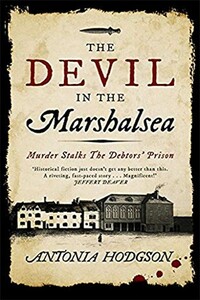
WINNER OF THE CWA HISTORICAL DAGGER AWARD 2014.Longlisted for the John Creasey Dagger Award for best debut crime novel of 2014.London, 1727 – and Tom Hawkins is about to fall from his heaven of card games, brothels, and coffeehouses to the hell of a debtors' prison. The Marshalsea is a savage world of its own, with simple rules: those with family or friends who can lend them a little money may survive in relative comfort. Those with none will starve in squalor and disease. And those who try to escape will suffer a gruesome fate at the hands of the gaol's rutheless governor and his cronies.The trouble is, Tom Hawkins has never been good at following rules – even simple ones.
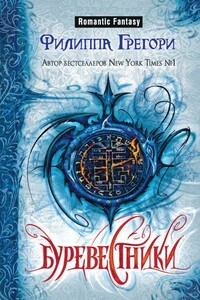
1453 год. В Европе наступили темные времена: взят Константинополь, Османская империя завоевывает новые земли, а папа римский беспокоится о своей пастве… и власти. Его Святейшество отдает приказ ордену Тьмы, члены которого призваны искать повсюду признаки близящегося конца света и создавать «карту людских страхов». И на авансцену выходит Лука – умный не по годам юноша, которого снаряжают в экспедицию вместе с монахом братом Пьетро и слугой Фрейзе. Волею судьбы к ним присоединятся прекрасные девы: благородная Изольда и ее компаньонка – мавританка Ишрак.

Шотландия, 1869 год. Жуткое тройное убийство, происшедшее в отдаленной сельской общине в Хайленде, закончилось арестом 17-летнего юноши по имени Родрик Макрей. Из его личных дневников абсолютно ясно, что он виновен в этом преступлении. Но они же привлекли к себе внимание лучших юристов и психиатров страны, стремящихся выяснить, что именно заставило Макрея совершить этот чудовищный акт насилия. Безумен ли он? Впрочем, для суда дело уже фактически решено. И один лишь адвокат, изо всех сил старающийся спасти своего подопечного, стоит сейчас между Родриком и виселицей…
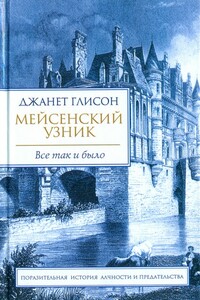
Безжалостный король Август Сильный заточил в своем замке юного аптекаря Иоганна Фридриха Бёттгера. Тот должен открыть тайну получения золота из свинца, а неуспех будет стоить ему жизни. Бёттгер не сумел осуществить мечту алхимиков, зато получил рецепт фарфора — экзотической и загадочной субстанции, называемой «белым золотом». И ради того чтобы его раздобыть многие современники готовы лгать, красть и даже убивать…
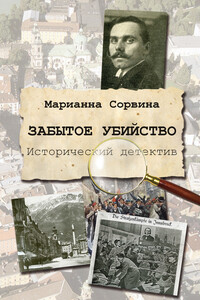
В основе исторического детектива – реальные события, произошедшие в Инсбруке в ноябре 1904 года. Всего один день и одна жертва! Но случившееся там получило широкий резонанс. Мы вглядываемся в эту трагедию из дня нынешнего и понимаем, что мир тогда вступал в совершенно иную эпоху – в драматичный и жертвенный XX век, в войнах которого погибли миллионы. Инсбрукские события, по мнению автора, стали «симптомом всего, что произошло позднее и продолжает происходить до сих пор». Вот почему «Чёрная пятница Инсбрука», столь детально описанная, вызывает у читателя неподдельный интерес и размышления о судьбах мира.

1920-е годы, Англия. Знаменитый лондонский писатель с женой-американкой, следуя на отдых, волею случая оказываются в типично английской глубинке. Их появление совпадает с загадочным и зловещим происшествием. Маленький уютный городок взбудоражен гибелью при весьма туманных обстоятельствах старшей дочери самого богатого и влиятельного человека в графстве, хозяина поместья Ланарк-Грэй-Холл. Слухи приписывают «авторство» преступления ужасному чудовищу из старинной легенды. Но вместо того, чтобы поскорее бежать подальше от опасных мест, приезжие «туристы» решают остаться.
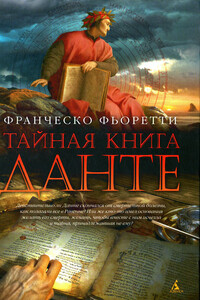
Впервые на русском языке «Тайная книга Данте», роман Франческо Фьоретти, представителя нового поколения в итальянской литературе, одного из наследников Умберто Эко.Действительно ли Данте скончался от смертельной болезни, как полагали все в Равенне? Или же кто-то имел основания желать его смерти, желать, чтобы вместе с ним исчезла и тайна, принадлежавшая не ему? Мучимые сомнениями, дочь поэта Антония, бывший тамплиер по имени Бернар и врач Джованни, приехавший из Лукки, чтобы повидаться с поэтом, начинают двойное расследование.