Letters To My Daughter's Killer - [54]
Miss Dixon begins her summing-up with a reminder to the jury about the legal requirements of the trial. ‘In his opening remarks his Honourable Justice described to you that the burden of proof is the responsibility of the prosecution. That phrase “burden of proof” is wisely chosen, because burden it is. The prosecution must convince you, the members of the jury, that Jack Tennyson is guilty beyond all reasonable doubt. And I put it to you that my learned colleague has failed miserably to make such a case. He has presented you with a hotchpotch of so-called evidence, most of which cannot withstand serious examination. Please bear with me while I review the supposed evidence against my client and demonstrate to you the legion doubts it raises.’ She stops, turns away from the jury for a moment as if marshalling her thoughts, then goes on. ‘Let us begin with Mr Tennyson himself and his character as testified to by witnesses at this trial. Time and again we have heard him described as honourable, likeable, responsible and, most importantly of all, a loving husband and father. A man who cared for his small daughter and supported his wife in her chosen career. Even the witnesses for the prosecution, the deceased’s mother Ruth Sutton and the deceased’s closest friend Rebecca Thornton, were happy to see her marry Jack Tennyson. They have referred to him, and I quote, as “a lovely man” and “a good dad”.
‘Asked about his relationship with Lizzie Tennyson, we have heard that Jack Tennyson loved her, he adored her, he thought the world of her. The prosecution suggests that Mr Tennyson was violent towards his wife, but I would say to you that they have failed to offer robust proof of that contention. The only evidence they have given you is uncorroborated hearsay from one person. No one else, ever…’ she pauses for effect and raises a finger, ‘ever,’ she repeats, looking directly at the jury, ‘heard so much as a whisper about domestic violence from the deceased or any other source. Mrs Tennyson never spoke to her GP about this, she never sought help, she never mentioned it to another friend or family. She never sought medical treatment, she never had unexplained absences from work. The issue of domestic violence is a mirage. Did Mrs Tennyson tell Miss Thornton she’d been assaulted, or did Miss Thornton misunderstand? We will never know, but please remember that Miss Thornton saw no injuries, and when she feared that Mrs Tennyson might be at risk again, Mrs Tennyson clearly denied that she was. Why? Because it was not happening.’ She emphasizes each word. ‘Domestic violence was not, and never had been, an issue in this marriage. And I suggest that the thin and uncorroborated evidence of a single conversation back in 2005 is woefully inadequate.
‘So what of the events of that night? The prosecution would have you believe that a loving husband and father killed his wife in a sustained and brutal attack and then set about constructing a complicated false trail to divert suspicion. This implausible scenario is not backed up by significant evidence. Just consider this.’ Her voice is clear and full of serious intent, her back ramrod straight as she addresses the jury. ‘There were no fingerprints on the poker to connect Mr Tennyson with the weapon used. Much has been made of missing clothes, of missing shoes, but the absence of evidence is not evidence. The forensic expert himself admitted that there was no way of proving where the deposits in the ash tray from the stove originated. And proof is crucial.’ She smacks her fist on to her upturned palm.
‘Without proof, there has to be doubt. Reasonable doubt. We, the defence, do not have to account for the gaps in the prosecution case; that is their job. Ours is to assess and test the evidence.
‘What remains? The skin under the deceased’s nails? Jack Tennyson has explained how Mrs Tennyson stumbled earlier in the day, caught at his arm for balance and grazed his skin. A simple and honest explanation. The bloody fingerprints on the wall by the stairs and the bathroom door were made as Mr Tennyson raced upstairs to check the house for intruders and rescue his little girl. The blood in the shower may well have come from Mrs Tennyson herself, or even from her killer, who would have had almost two and a half hours in the house if they arrived shortly after Mr Tennyson left. Again, we the defence have no responsibility to answer those questions, but we can say that there are any number of explanations for finding blood in the shower, and the prosecution have failed resoundingly to prove a link between Mr Tennyson and that evidence. The footprint? Thousands of pairs of those shoes were sold last year in the Manchester area. It was the most popular style of the season. The prosecution have failed to prove beyond all reasonable doubt that the shoe that made that print belonged to or was worn by Mr Tennyson.’
I think of the receipt, how important it seemed. Wouldn’t common sense tell the jury that the footprint was from your trainers, that you’d burnt them?
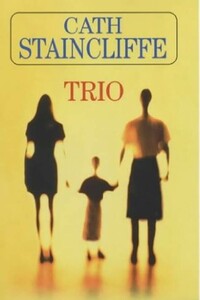
1960, Manchester. Three young Catholic women find themselves pregnant and unmarried. In these pre-Pill days, there is only one acceptable course of action: adoption. So Megan, Caroline and Joan meet up in St Ann's Home for Unmarried Mothers to await the births of their babies. Three little girls are born, and placed with their adoptive families. Trio follows the lives of these mothers and daughters over the ensuing years.
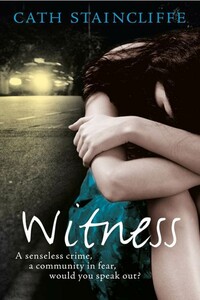
"A painfully honest exploration of an ordinary family under stress… A stunning piece of work." – Ann CleevesFour bystanders in the wrong place at the wrong time. Witnesses to the shocking shooting of a teenage boy. A moment that changes their lives forever. Fiona, a midwife, is plagued by panic attacks and unable to work. Has she the strength to testify? Mike, a delivery driver and family man, faces an impossible decision when his frightened wife forces him to choose – us or the court case. Cheryl, a single-mother, doesn't want her child to grow up in the same climate of fear.
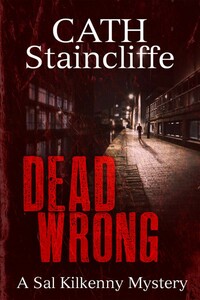
Single mother and private eye, Sal Kilkenny, has two very frightened clients on her hands. One, young mother Debbie Gosforth, is a victim; the other, Luke Wallace, is afraid he is a murderer. While Sal tries to protect Debbie from a stalker, she has to investigate the murder of Luke's best friend.
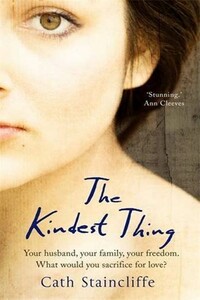
Your husband, your family, your freedom. What would you sacrifice for love? A love story, a modern nightmare and an honest and incisive portrayal of a woman who honours her husband's wish to die and finds herself in the dock for murder.When Deborah reluctantly helps her beloved husband Neil end his life and conceals the truth, she is charged with murder. As the trial unfolds and her daughter Sophie testifies against her, Deborah, still reeling with grief, fights to defend her actions. Twelve jurors hold her fate in their hands, if found guilty she will serve a life sentence.
From the author of LOOKING FOR TROUBLE, a further crime novel featuring private investigator Sal Kilkenny. When a man is distraught at his wife's apparent infidelity, he enlists the help of Sal to confirm his suspicions, only to find himself a widower soon afterwards. From there Sal's other case also begins to take a disturbing and violent turn.
The fourth Blue Murder novel written by the creator of the hit ITV police drama starring Caroline Quentin as DCI Janine Lewis.A well-respected family GP is found shot dead outside his surgery; who could possibly want to kill him? As DCI Janine Lewis and her team investigate they uncover stories of loyalty, love, deception, betrayal and revenge.Praise for the Blue Murder books'Complex and satisfying in its handling of Lewis's agonised attempts to be both a good cop and a good mother.' The Sunday Times'Uncluttered and finely detailed prose.' Birmingham Post'Beautifully realised little snapshots of the different characters' lives… Compelling stuff.' Sherlock Magazine'A swift, satisfying read.' City Life'Precise and detailed delineation of contemporary family relationships.' Tangled Web'Lewis seems set to become another very popular string to Staincliffe's bow as one of the leading English murder writers.' Manchester Metro'Pace and plenty of human interest.' Publishing News'Blending the warmth of family life with the demands of a police investigation.'Manchester Evening News'Juggling work and family is a challenge of modern life and encountering realistically portrayed women with family responsibilities is a pleasure.

Опорск вырос на берегу полноводной реки, по синему руслу которой во время оно ходили купеческие ладьи с восточным товаром к западным и северным торжищам и возвращались опять на Восток. Историки утверждали, что название городу дала древняя порубежная застава, небольшая крепость, именованная Опорой. В злую годину она первой встречала вражьи рати со стороны степи. Во дни же затишья принимала застава за дубовые стены торговых гостей с их товарами, дабы могли спокойно передохнуть они на своих долгих и опасных путях.

Как часто вы ловили себя на мысли, что делаете что-то неправильное? Что каждый поступок, что вы совершили за последний час или день, вызывал все больше вопросов и внутреннего сопротивления. Как часто вы могли уловить скольжение пресловутой «дорожки»? Еще недавний студент Вадим застает себя в долгах и с безрадостными перспективами. Поиски заработка приводят к знакомству с Михаилом и Николаем, которые готовы помочь на простых, но весьма странных условиях. Их мотивация не ясна, но так ли это важно, если ситуация под контролем и всегда можно остановиться?

Из экспозиции крымского художественного музея выкрадены шесть полотен немецкого художника Кингсховера-Гютлайна. Но самый продвинутый сыщик не догадается, кто заказчик и с какой целью совершено похищение. Грабители прошли мимо золотого фонда музея — бесценной иконы «Рождество Христово» работы учеников Рублёва и других, не менее ценных картин и взяли полотна малоизвестного автора, попавшие в музей после войны. Читателя ждёт захватывающий сюжет с тщательно выписанными нюансами людских отношений и судеб героев трёх поколений.
Александра никому не могла рассказать правду и выдать своего мужа. Однажды под Рождество Роман приехал домой с гостем, и они сразу направились в сауну. Александра поспешила вслед со свежими полотенцами и халатами. Из открытого окна клубился пар и были слышны голоса. Она застыла, как соляной столп и не могла сделать ни шага. Голос, поразивший её, Александра узнала бы среди тысячи других. И то, что обладатель этого голоса находился в их доме, говорил с Романом на равных, вышибло её из равновесия, заставило биться сердце учащённо.

Валентин Владимиров живет тихой семейной жизнью в небольшом городке. Но однажды семья Владимировых попадает в аварию. Жена и сын погибают, Валентин остается жив. Вскоре виновника аварии – сына известного бизнесмена – находят задушенным, а Владимиров исчезает из города. Через 12 лет из жизни таинственным образом начинают уходить те, кто был связан с ДТП. Поговаривают, что в городе завелась нечистая сила – привидение со светящимся глазами безжалостно расправляется со своими жертвами. За расследование берется честный инспектор Петров, но удастся ли ему распутать это дело?..

Если вы снимаете дачу в Турции, то, конечно, не ждете ничего, кроме моря, солнца и отдыха. И даже вообразить не можете, что столкнетесь с убийством. А турецкий сыщик, занятый рутинными делами в Измире, не предполагает, что очередное преступление коснется его собственной семьи и вынудит его общаться с иностранными туристами.Москвичка Лана, приехав с сестрой и ее сыном к Эгейскому морю, думает только о любви и ждет приезда своего возлюбленного, однако гибель знакомой нарушает безмятежное течение их отпуска.