Letters To My Daughter's Killer - [55]
‘From the moment that Mr Tennyson found his beloved wife, he has co-operated with the police and he has never wavered one iota from the account he gave at the outset. His statements have been consistent, time and again. Because he is telling the truth.’ She presses her lips together, the line of garish orange forming a rueful smile.
‘In the depth of his grief, and following the trauma of his wife’s murder, Mr Tennyson, finding himself under the insidious cloud of suspicion, has conducted himself with unimaginable dignity. He did not murder Lizzie Tennyson. He did not attack Lizzie Tennyson. He loved her, he needs to grieve for her.’ Her voice seems to fill the chamber, clear and precise. ‘If you have the slightest, slenderest doubt about the evidence against him, then you will see him acquitted without stain upon his character, free to provide a loving home for his child. When you are deliberating, ask yourselves this: where is the proof? Hard, incontrovertible proof. Where? Not in the cheap theatrics of Mr Cromer’s exercise with dummies. Not in the absence of blood, or the absence of clothes, or the absence of fingerprints or the absence of a pair of ill-fitting running shoes. Not in the absence of motive. I’d add another absence here -the absence of guilt.
‘Mr Tennyson loved his wife. He went to the gym on that fateful night, bought milk after Mrs Tennyson texted him to ask him to bring some home, and returned to find utter devastation. Those are the hard facts, corroborated facts. Our sympathy goes to the deceased’s parents and her daughter, to her friends and colleagues for this terrible, terrible crime. But it goes to Mr Tennyson too.’ She speaks quietly now, drawing everyone in. ‘He has lost his wife, his life partner, the mother of his child. Mr Tennyson did not commit this crime. Please study the evidence closely and it will tell you that he is an innocent man, wrongly accused, who is at your mercy. Thank you.’
The judge tells the jury that they have heard all the evidence and their task is to decide whether, taking it all into account, they judge you guilty or not guilty. ‘If you conclude that Mr Tennyson was innocent of the offence as charged, you must return a not guilty verdict. If you agree that there is a suspicion of guilt but the evidence leads you to agree that you have a reasonable doubt about the guilt, then you must acquit the defendant; that is, you must find him not guilty. If you come to the conclusion that Mr Tennyson is responsible for the crime as charged, based on the evidence you have heard, then you will return a verdict of guilty. And you must try and reach a unanimous verdict. It is beholden on me to define the law of the offence charged. The defendant is charged with murder; in British law, that is an offence under common law in which one person kills another with intent to unlawfully cause death or serious harm.’
As he summarizes the evidence, I look at the jury, the men and women who hold your fate in their hands. Has your performance won them over? They have never met Lizzie, but every day here they’ve been witness to your quiet and steadfast presence, perhaps swayed by your handsome features. Don’t we all at some base level expect the beautiful to be morally superior to the unattractive or downright ugly? Wouldn’t they all, like I did, welcome you into their family? Bright, charming, talented. Would we be here if your proposal had not been in public? If she’d had more space to consider that proposal? If she’d not been pregnant? If you’d had the lucky break you wanted? A thousand ifs and all their bastard children.
The judge rises and my stomach falls. The jury leave the room.
I am paralysed. Pinned in place until the verdict is through.
And I hope they find you guilty and set me free.
We are called back into the court the following day. The jury has deliberated for seven hours in all, interrupted by an evening break when they were sent to a hotel overnight.
I have not slept.
My stomach is so tense, I fear I will vomit. My mouth waters and I swallow repeatedly. Tony looks as terrified as me. Denise, red-eyed, has been crying.
Bea is holding my hand.
What if they find you not guilty? What then? You’ll walk out of here a free man. Will you want vengeance of your own? Want to hurt me, punish me for my avid desire to see you made culpable? It would be so easy. You could take Florence, forbid me to see her. Move away, start afresh. I could not bear that.
The judge begins to speak, asking the foreman if the jury has reached a verdict.
My heart climbs into my throat.
I stare at the woman who is answering the judge, blood rushing in my ears, and the high-pitched whine that never leaves me is accentuated in the brief pause before she gives the verdict.
I squeeze Bea’s fingers, watch the foreman’s lips. Read the single word.
Guilty.
And it is done.
Ruth
Part Three
CHAPTER ONE
Tuesday 20 July 2010
Except it’s not that simple, is it? I thought that with the resolution of Jack’s guilt, with the sentence – the judge said he’d serve a minimum of seventeen years – would come a sense of relief, if not exactly closure. Or a feeling of release from the strain of going through the trial in the wake of Lizzie’s death. Back then I had regarded his conviction as a goal, a destination on the horizon. Thinking that once I reached that point I would begin to find my feet again. Feel solid ground beneath me: not rock yet, perhaps, but sand or shingle, marsh.
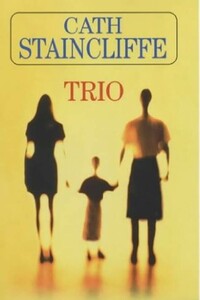
1960, Manchester. Three young Catholic women find themselves pregnant and unmarried. In these pre-Pill days, there is only one acceptable course of action: adoption. So Megan, Caroline and Joan meet up in St Ann's Home for Unmarried Mothers to await the births of their babies. Three little girls are born, and placed with their adoptive families. Trio follows the lives of these mothers and daughters over the ensuing years.
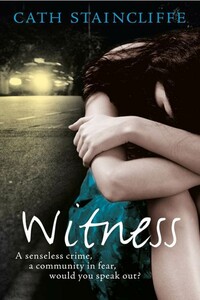
"A painfully honest exploration of an ordinary family under stress… A stunning piece of work." – Ann CleevesFour bystanders in the wrong place at the wrong time. Witnesses to the shocking shooting of a teenage boy. A moment that changes their lives forever. Fiona, a midwife, is plagued by panic attacks and unable to work. Has she the strength to testify? Mike, a delivery driver and family man, faces an impossible decision when his frightened wife forces him to choose – us or the court case. Cheryl, a single-mother, doesn't want her child to grow up in the same climate of fear.
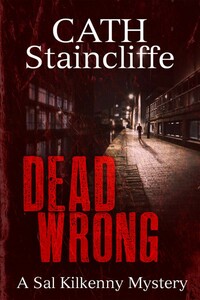
Single mother and private eye, Sal Kilkenny, has two very frightened clients on her hands. One, young mother Debbie Gosforth, is a victim; the other, Luke Wallace, is afraid he is a murderer. While Sal tries to protect Debbie from a stalker, she has to investigate the murder of Luke's best friend.
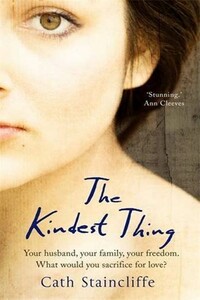
Your husband, your family, your freedom. What would you sacrifice for love? A love story, a modern nightmare and an honest and incisive portrayal of a woman who honours her husband's wish to die and finds herself in the dock for murder.When Deborah reluctantly helps her beloved husband Neil end his life and conceals the truth, she is charged with murder. As the trial unfolds and her daughter Sophie testifies against her, Deborah, still reeling with grief, fights to defend her actions. Twelve jurors hold her fate in their hands, if found guilty she will serve a life sentence.
From the author of LOOKING FOR TROUBLE, a further crime novel featuring private investigator Sal Kilkenny. When a man is distraught at his wife's apparent infidelity, he enlists the help of Sal to confirm his suspicions, only to find himself a widower soon afterwards. From there Sal's other case also begins to take a disturbing and violent turn.
The fourth Blue Murder novel written by the creator of the hit ITV police drama starring Caroline Quentin as DCI Janine Lewis.A well-respected family GP is found shot dead outside his surgery; who could possibly want to kill him? As DCI Janine Lewis and her team investigate they uncover stories of loyalty, love, deception, betrayal and revenge.Praise for the Blue Murder books'Complex and satisfying in its handling of Lewis's agonised attempts to be both a good cop and a good mother.' The Sunday Times'Uncluttered and finely detailed prose.' Birmingham Post'Beautifully realised little snapshots of the different characters' lives… Compelling stuff.' Sherlock Magazine'A swift, satisfying read.' City Life'Precise and detailed delineation of contemporary family relationships.' Tangled Web'Lewis seems set to become another very popular string to Staincliffe's bow as one of the leading English murder writers.' Manchester Metro'Pace and plenty of human interest.' Publishing News'Blending the warmth of family life with the demands of a police investigation.'Manchester Evening News'Juggling work and family is a challenge of modern life and encountering realistically portrayed women with family responsibilities is a pleasure.

Очнувшись на полу в луже крови, Роузи Руссо из Бронкса никак не могла вспомнить — как она оказалась на полу номера мотеля в Нью-Джерси в обнимку с мертвецом?

Действие романа происходит в нулевых или конце девяностых годов. В книге рассказывается о расследовании убийства известного московского ювелира и его жены. В связи с вступлением наследника в права наследства активизируются люди, считающие себя обделенными. Совершено еще два убийства. В центре всех событий каким-то образом оказывается соседка покойных – молодой врач Наталья Голицына. Расследование всех убийств – дело чести майора Пронина, который считает Наталью не причастной к преступлению. Параллельно в романе прослеживается несколько линий – быт отделения реанимации, ювелирное дело, воспоминания о прошедших годах и, конечно, любовь.

Егор Кремнев — специальный агент российской разведки. Во время секретного боевого задания в Аргентине, которое обещало быть простым и безопасным, он потерял всех своих товарищей.Но в его руках оказался секретарь беглого олигарха Соркина — Михаил Шеринг. У Шеринга есть секретные бумаги, за которыми охотится не только российская разведка, но и могущественный преступный синдикат Запада. Теперь Кремневу предстоит сложная задача — доставить Шеринга в Россию. Он намерен сделать это в одиночку, не прибегая к помощи коллег.

Опорск вырос на берегу полноводной реки, по синему руслу которой во время оно ходили купеческие ладьи с восточным товаром к западным и северным торжищам и возвращались опять на Восток. Историки утверждали, что название городу дала древняя порубежная застава, небольшая крепость, именованная Опорой. В злую годину она первой встречала вражьи рати со стороны степи. Во дни же затишья принимала застава за дубовые стены торговых гостей с их товарами, дабы могли спокойно передохнуть они на своих долгих и опасных путях.

Как часто вы ловили себя на мысли, что делаете что-то неправильное? Что каждый поступок, что вы совершили за последний час или день, вызывал все больше вопросов и внутреннего сопротивления. Как часто вы могли уловить скольжение пресловутой «дорожки»? Еще недавний студент Вадим застает себя в долгах и с безрадостными перспективами. Поиски заработка приводят к знакомству с Михаилом и Николаем, которые готовы помочь на простых, но весьма странных условиях. Их мотивация не ясна, но так ли это важно, если ситуация под контролем и всегда можно остановиться?

Из экспозиции крымского художественного музея выкрадены шесть полотен немецкого художника Кингсховера-Гютлайна. Но самый продвинутый сыщик не догадается, кто заказчик и с какой целью совершено похищение. Грабители прошли мимо золотого фонда музея — бесценной иконы «Рождество Христово» работы учеников Рублёва и других, не менее ценных картин и взяли полотна малоизвестного автора, попавшие в музей после войны. Читателя ждёт захватывающий сюжет с тщательно выписанными нюансами людских отношений и судеб героев трёх поколений.