Children of the Street - [32]
By the time darkness fell, the downpour was in full force. She took partial shelter under the roof of a vendor’s kiosk. After a while, a van sidled up to her. She looked in through the passenger window. The man inside nodded at her. She got in, they pulled off. Soaked, she was grateful to be out of the rain.
“How much?” he asked her.
“Fifteen.”
“Ten.”
“Twelve.”
The man nodded. “Okay.”
As he drove through the industrial area, he gave her a towel to wipe her face and neck. He turned in to a deserted alley behind a school near Awudome Circle.
“Get in the back,” he told her.
He joined her, lying down with her on a cloth he had spread on the floor. The rain drummed on the roof. There was a little light through the front window from a lamp on the side of a building. As he hovered over her and pushed her legs back, she saw he had a curious scar. It ran from the front of his scalp down into his forehead. His eyes were unfocused and cold. She shuddered.
“Where are you from?” he asked.
“Juaso. Volta Region.”
He was putting on a condom, which surprised her.
“Why did you come to Accra?”
“To make money.”
“Your father used to beat you in Juaso?”
Second surprise. How did he know?
“Yes,” she whispered. She adjusted her position for his access.
“He beat you very badly.”
“Yes,” she whimpered.
“Because you’re a bad girl?”
She didn’t understand what he was talking about.
“Say it. ‘I’m a bad girl.’ ”
“I’m a bad girl.”
As his pace increased, he told her to repeat it over and over again. He grabbed her wrist with a grip of steel, pulling her hand up to his forehead, where his scar was.
“Touch it,” he gasped. “Touch it.”
The scar felt firm, yet gelatinous and mobile, like worms in a bag. Comfort snatched her hand away as the man let out a hoarse groan of climax.
“Where do you sleep?” he asked her as they drove away.
“At the railway station.”
“I’ll take you there,” he said. “I don’t want you to sell your body to anyone else.”
It was the strangest thing any man had ever said to her.
When he dropped her off, he said, “I’ll come back for you.”
She wasn’t sure what he meant.
Seven o’clock Monday night, Ebenezer trudged the final wet mile to the railway station area off Kwame Nkrumah Avenue. Like everyone else who lived on the streets, he hated the rain and the mess it caused. His shoeshine box was slung over his right shoulder. The brushes and tins of shoe polish made a comforting clattering noise against one another. Over a year ago, when he was fourteen and he had finally saved enough money as a refuse carrier, he bought a shoeshine box and supplies. Two weeks later, another street boy stole it all while Ebenezer was asleep. It was so painful and infuriating that he had wept. Not in front of the other kids. He did it when he visited the pit latrine, crying as he crouched in position.
That experience had toughened him. Wiry, Ebenezer didn’t take abuse from anyone. Another thief had once tried to snatch his second shoeshine box, the one he had now. Ebenezer beat him with such heavy blows that he begged for his life.
Now, things were looking up. Ebenezer was the leader on his shoeshine corner in Lartebiokorshie. He was in charge of three other guys. To use his supplies, they paid him a percentage of their earnings.
His feet ached. Dusty during the day, they were now caked in red mud. Walking was a matter of putting one foot in front of the other while pretending the pain wasn’t there. Not even a week of toil on the farm in Jakwa, his home village in the Western Region, would have made his feet hurt so much. Accra’s streets were hard and unyielding.
By the time he got to the railway, the rain had stopped. He crossed Kwame Nkrumah Avenue to Station Road. There was barely a streetlight, except for the odd fluorescent lighting outside a storefront or warehouse. Darkness shrouded the crumbling old UTC building, which had been one of Accra’s best department stores long before Ebenezer was even born. People were still milling around the streets or talking, eating or playing cards, but later, as people slept on the pavements in front of the stores, everything would become as quiet as it was dark.
Rounding the corner to Knutsford Avenue, Ebenezer collided with someone, making him take half a step back. He stiffened, ready to do battle as he saw who it was. Tedamm was eighteen. He had been around for a long time. He was taller than everyone else. Angular and muscular, he looked as if he had been carved from rock. His eyes took on a hard glint as he saw Ebenezer.
“Hey, small boy, how are you?” Tedamm said with contempt. He took a mock swing at Ebenezer, who brought up his fists defensively in front of his face.
As usual, Tedamm’s boys, Antwi and Ofosu, were following him around like stray dogs hoping for scraps. They had no minds of their own. They did whatever he told them.
“What were you doing shoeshining on my corner today?” Tedamm asked Ebenezer.
“It’s not your corner.”
“It was mine long before you came to Accra from your village.”
“You weren’t at that corner when I came to Accra.”
“It’s still my corner.”
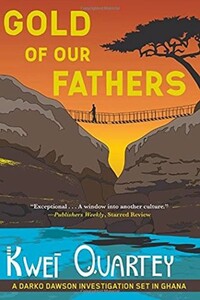
Darko Dawson, Chief Inspector in the Ghana police service, returns in this atmospheric crime series often compared to Alexander McCall Smith's The No. 1 Ladies' Detective Agency novels.Darko Dawson has just been promoted to Chief Inspector in the Ghana Police Service – the promotion even comes with a (rather modest) salary bump. But he doesn't have long to celebrate because his new boss is transferring him from Accra, Ghana's capital, out to remote Obuasi in the Ashanti region, an area now notorious for the illegal exploitation of its gold mines.When Dawson arrives at the Obuasi headquarters, he finds it in complete disarray.
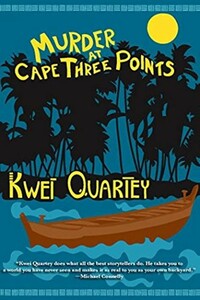
At Cape Three Points on the beautiful Ghanaian coast, a canoe washes up at an oil rig site. The two bodies in the canoe – who turn out to be a prominent, wealthy, middle-aged married couple – have obviously been murdered; the way Mr. Smith-Aidoo has been gruesomely decapitated suggests the killer was trying to send a specific message – but what, and to whom, is a mystery.The Smith-Aidoos, pillars in their community, are mourned by everyone, but especially by their niece Sapphire, a successful pediatric surgeon in Ghana's capital, Accra.

Будущее Джимми Кьюсака, талантливого молодого финансиста и основателя преуспевающего хедж-фонда «Кьюсак Кэпитал», рисовалось безоблачным. Однако грянул финансовый кризис 2008 года, и его дело потерпело крах. Дошло до того, что Джимми нечем стало выплачивать ипотеку за свою нью-йоркскую квартиру. Чтобы вылезти из долговой ямы и обеспечить более-менее приличную жизнь своей семье, Кьюсак пошел на работу в хедж-фонд «ЛиУэлл Кэпитал». Поговаривали, что благодаря финансовому гению его управляющего клиенты фонда «никогда не теряют свои деньги».

Очнувшись на полу в луже крови, Роузи Руссо из Бронкса никак не могла вспомнить — как она оказалась на полу номера мотеля в Нью-Джерси в обнимку с мертвецом?

Действие романа происходит в нулевых или конце девяностых годов. В книге рассказывается о расследовании убийства известного московского ювелира и его жены. В связи с вступлением наследника в права наследства активизируются люди, считающие себя обделенными. Совершено еще два убийства. В центре всех событий каким-то образом оказывается соседка покойных – молодой врач Наталья Голицына. Расследование всех убийств – дело чести майора Пронина, который считает Наталью не причастной к преступлению. Параллельно в романе прослеживается несколько линий – быт отделения реанимации, ювелирное дело, воспоминания о прошедших годах и, конечно, любовь.

Егор Кремнев — специальный агент российской разведки. Во время секретного боевого задания в Аргентине, которое обещало быть простым и безопасным, он потерял всех своих товарищей.Но в его руках оказался секретарь беглого олигарха Соркина — Михаил Шеринг. У Шеринга есть секретные бумаги, за которыми охотится не только российская разведка, но и могущественный преступный синдикат Запада. Теперь Кремневу предстоит сложная задача — доставить Шеринга в Россию. Он намерен сделать это в одиночку, не прибегая к помощи коллег.

Опорск вырос на берегу полноводной реки, по синему руслу которой во время оно ходили купеческие ладьи с восточным товаром к западным и северным торжищам и возвращались опять на Восток. Историки утверждали, что название городу дала древняя порубежная застава, небольшая крепость, именованная Опорой. В злую годину она первой встречала вражьи рати со стороны степи. Во дни же затишья принимала застава за дубовые стены торговых гостей с их товарами, дабы могли спокойно передохнуть они на своих долгих и опасных путях.

Из экспозиции крымского художественного музея выкрадены шесть полотен немецкого художника Кингсховера-Гютлайна. Но самый продвинутый сыщик не догадается, кто заказчик и с какой целью совершено похищение. Грабители прошли мимо золотого фонда музея — бесценной иконы «Рождество Христово» работы учеников Рублёва и других, не менее ценных картин и взяли полотна малоизвестного автора, попавшие в музей после войны. Читателя ждёт захватывающий сюжет с тщательно выписанными нюансами людских отношений и судеб героев трёх поколений.