Children of the Street - [31]
“I think you need to come to my house then,” Dawson said with a laugh.
Obi chuckled. “Please, you just tell me, I will come.”
“Thank you. I’ll remember that.”
“But how the doctor treats me,” Obi continued, becoming serious again, “it’s like I’m his family. He is the one who bought me this truck three years ago, and even before that, he helped me get furniture and a new gas stove for my house.”
“He has a good heart, obviously.”
“Oh, yes. Every day I thank the Almighty for guiding me to the doctor.”
“The pictures of the woman and three kids in his office-that’s his family?”
“Yes, please. But four years ago, the wife died. He has been sad ever since that day. He loved her very much.”
“What happened-to the wife, I mean?”
“Accident. A terrible one like you’ve never seen. She was driving to Cape Coast.”
“And the children?”
“They are all in different places abroad, but the oldest one says she will come back to Ghana soon. I know the doctor wants her to stay in his house.”
“He’s lonesome.”
“Oh, yes-very lonesome. When his children come to see him, and the oldest one brings the grandchildren too, he is so happy.” Obi laughed, as though his boss’s joy was being channeled through him.
The expected rain began in earnest. Dawson asked Obi to drive his motorbike to a repair shop in Asylum Down. Once his bike had been dropped off, Dawson insisted on taking a taxi despite Obi’s repeated offers to give him a ride home.
“You’ve done more than enough, my friend. Thank you.”
He gave Obi a generous tip for his trouble.
19
Comfort Mahama was sixteen. She was copper-colored, a coveted hue, with a tiny waist that flared to those big, bouncy, round buttocks that drove men crazy. Starting late Monday afternoon, she loitered around the Timber Market waiting for customers.
Most of the time, she was a head porter at Agbogbloshie Market up the street, carrying neck-breaking loads of merchandise for people. It just didn’t pay enough. In her mind, Comfort was doing what she needed to do to survive. There was no right or wrong about being an ashawo, no good or bad.
She glanced at the gathering storm clouds. Rain ruined business. Her gaze shifted, roaming languidly across the crowded market scene-people haggling over plywood or paint, a woman selecting herbal preparations from the fetish section, porters lumbering through with planks of wood on carts. One of them, a ragged boy of about seventeen, came up to her after delivering his consignment and offered her fifty pesewas.
She shook her head. He must be joking.
He called her a nasty name and moved on. Comfort flicked her head with contempt and stuck her tongue out at his back.
A few meters away, down a row of timber, a fight had broken out between two porter boys over who was to get the job transporting a pile of plywood. No one seemed to want to stop the brawl. Quite the contrary, a small crowd was collecting to watch. One of the boys was much bigger than the other, who was getting thrashed. After a few minutes of being thoroughly beaten, he begged for mercy, picked himself up, and limped off swollen and battered.
Comfort looked away. These fights were entertainment only because there was nothing better to watch. She shifted her weight slightly, aware of a burning sensation in her loins. She was using some medicine from the fetish market, but it didn’t seem to be working. She still had a yellowish discharge.
Someone hissed at her and beckoned. She sauntered over. He was about nineteen, she guessed, not bad looking.
“I like you,” he said, smiling and showing a gap in his teeth that suited him.
“Four cedis.”
“Oh, it’s too much!”
“How much you want to pay?”
“One fifty.”
They haggled until they agreed on two fifty and then took a walk. The commercial area of the market thinned out. Standing outside a tent rigged up to a wall was a gaunt man. Flash, as people called him, might have been in his twenties, but he looked like forty. He was wearing orange trousers and a bright blue shirt open almost to his navel. Comfort wondered where he got his ridiculous clothes. No one dressed like that.
This turf belonged to a guy called Tedamm. Everyone knew Tedamm. Flash collected user fees from the ashawos and paid Tedamm the larger portion.
Comfort handed him seventy-five pesewas. He looked at it as if it wasn’t money.
“You short fifteen pesewas,” he said.
“Ho!” she exclaimed. “But you charged seventy-five last time.”
“Price go up.”
Sullenly, she topped off the fee.
“Wait small,” Flash told her.
She ignored him while he stared at her without blinking the whole time they stood there. She hated the man. They waited for the muffled groans from inside the tent to die down. The girl came out first, her face dispassionate, then the man, zipping himself up.
Flash nodded permission to Comfort, and his eyes followed her as she went in with her customer.
Afterward, Comfort reflected she would have to do better than this. Two fifty minus the tent user fee didn’t leave her with much. The first drops of rain began, which promised even more misery. She started out to Nkrumah Circle to pick up some more customers. It was a long walk, but she could charge more there than at the Timber Market.
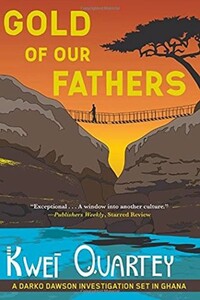
Darko Dawson, Chief Inspector in the Ghana police service, returns in this atmospheric crime series often compared to Alexander McCall Smith's The No. 1 Ladies' Detective Agency novels.Darko Dawson has just been promoted to Chief Inspector in the Ghana Police Service – the promotion even comes with a (rather modest) salary bump. But he doesn't have long to celebrate because his new boss is transferring him from Accra, Ghana's capital, out to remote Obuasi in the Ashanti region, an area now notorious for the illegal exploitation of its gold mines.When Dawson arrives at the Obuasi headquarters, he finds it in complete disarray.
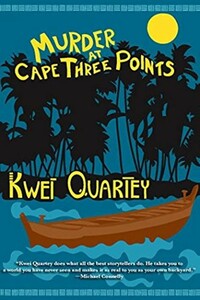
At Cape Three Points on the beautiful Ghanaian coast, a canoe washes up at an oil rig site. The two bodies in the canoe – who turn out to be a prominent, wealthy, middle-aged married couple – have obviously been murdered; the way Mr. Smith-Aidoo has been gruesomely decapitated suggests the killer was trying to send a specific message – but what, and to whom, is a mystery.The Smith-Aidoos, pillars in their community, are mourned by everyone, but especially by their niece Sapphire, a successful pediatric surgeon in Ghana's capital, Accra.

Очнувшись на полу в луже крови, Роузи Руссо из Бронкса никак не могла вспомнить — как она оказалась на полу номера мотеля в Нью-Джерси в обнимку с мертвецом?

Действие романа происходит в нулевых или конце девяностых годов. В книге рассказывается о расследовании убийства известного московского ювелира и его жены. В связи с вступлением наследника в права наследства активизируются люди, считающие себя обделенными. Совершено еще два убийства. В центре всех событий каким-то образом оказывается соседка покойных – молодой врач Наталья Голицына. Расследование всех убийств – дело чести майора Пронина, который считает Наталью не причастной к преступлению. Параллельно в романе прослеживается несколько линий – быт отделения реанимации, ювелирное дело, воспоминания о прошедших годах и, конечно, любовь.

Егор Кремнев — специальный агент российской разведки. Во время секретного боевого задания в Аргентине, которое обещало быть простым и безопасным, он потерял всех своих товарищей.Но в его руках оказался секретарь беглого олигарха Соркина — Михаил Шеринг. У Шеринга есть секретные бумаги, за которыми охотится не только российская разведка, но и могущественный преступный синдикат Запада. Теперь Кремневу предстоит сложная задача — доставить Шеринга в Россию. Он намерен сделать это в одиночку, не прибегая к помощи коллег.

Опорск вырос на берегу полноводной реки, по синему руслу которой во время оно ходили купеческие ладьи с восточным товаром к западным и северным торжищам и возвращались опять на Восток. Историки утверждали, что название городу дала древняя порубежная застава, небольшая крепость, именованная Опорой. В злую годину она первой встречала вражьи рати со стороны степи. Во дни же затишья принимала застава за дубовые стены торговых гостей с их товарами, дабы могли спокойно передохнуть они на своих долгих и опасных путях.

Как часто вы ловили себя на мысли, что делаете что-то неправильное? Что каждый поступок, что вы совершили за последний час или день, вызывал все больше вопросов и внутреннего сопротивления. Как часто вы могли уловить скольжение пресловутой «дорожки»? Еще недавний студент Вадим застает себя в долгах и с безрадостными перспективами. Поиски заработка приводят к знакомству с Михаилом и Николаем, которые готовы помочь на простых, но весьма странных условиях. Их мотивация не ясна, но так ли это важно, если ситуация под контролем и всегда можно остановиться?

Из экспозиции крымского художественного музея выкрадены шесть полотен немецкого художника Кингсховера-Гютлайна. Но самый продвинутый сыщик не догадается, кто заказчик и с какой целью совершено похищение. Грабители прошли мимо золотого фонда музея — бесценной иконы «Рождество Христово» работы учеников Рублёва и других, не менее ценных картин и взяли полотна малоизвестного автора, попавшие в музей после войны. Читателя ждёт захватывающий сюжет с тщательно выписанными нюансами людских отношений и судеб героев трёх поколений.