Children of the Street - [29]
“Please, Inspector Dawson is here to see you,” Obi said.
Dr. Botswe put down the book as he stood up and strode over to shake hands. He was short, dapper, late forties, Dawson guessed. His black and gray beard was exquisitely trimmed, just like his landscaped garden.
“Allen, Allen Botswe,” he said. “Good to meet you, Inspector Dawson.”
“Likewise. I appreciate your seeing me.”
“Not at all. It’s my pleasure.” He spoke with just a touch of sibilance, like a straw broom sweeping concrete. “Please, do have a seat.”
Dawson chose the low-backed ebony chair with stitched, buttery soft, chocolate-colored leather.
“May I offer you some refreshments?” Botswe asked.
“Do you happen to have Malta?”
“Do we, Obi?”
“Yes, please.”
“Have Irene bring Malta for the inspector, and I’ll have a Heineken.”
Obi crossed to the adjoining formal dining room, disappearing through a door on its far side. Dawson imagined him trekking for miles to some region of the mansion in another time zone.
Dawson tried not to stare too obviously at all this opulence as he and Botswe made small talk. Irene, a tiny woman in her early twenties, came in with a tray of Malta, Heineken, and frosted glasses. She set it down on the table between the two men, poured the drinks, and backed away a few steps.
“Please,” she said to Botswe in barely a whisper. “Do you need something else?”
“No, that will be all for now, Irene. Thank you.” He gave a permissive wave. She curtsied before leaving.
“She’s one of our newer ones,” Botswe said casually to Dawson, raising his glass. “They come and go rather faster than I would like. Obi is our only Rock of Gibraltar, really. He’s been with us for twelve years, trains all the staff, keeps an eye on them, and whips them into shape, that sort of thing. All-round handyman as well, takes care of the repairs and the garden.”
Dawson nodded, more concerned with his Malta. When it came to the complexities of supervising the servant classes, he had nothing to contribute.
“Anyway, enough of that,” Botswe said, as if reading his mind. “How can I help, Inspector?”
Dawson told him what he knew about the young man found dead in the lagoon, now identified as Musa Zakari. Botswe listened with rapt attention, nodding at intervals.
“Outstanding detective work,” he commented, at the end of the account.
“Thank you, Dr. Botswe. I know you’ve written extensively about ritual murder in Ghana and other West African countries, and that’s why I’m here. There’s something specific about Musa’s murder that I want to consult you about.”
“Excellent,” Botswe said, sitting forward.
Dawson handed him the autopsy photos.
“My goodness,” Botswe said. “This is extreme decomposition.”
Dawson detected just the tiniest trill in the doctor’s voice.
“Hello, what’s this?” He looked up at Dawson. “Fingers amputated?”
“Yes, except the index.”
“Associated with the murder? Or do we know that?”
“Dr. Biney, the pathologist, thinks so.”
Botswe leaned back, one hand contemplatively on his chin. “Hmm. Any other mutilation? No removal of the genitalia, or the tongue?”
“No.”
Botswe rose. “Come with me, Inspector. Let’s go to my study. Please, by all means bring your Malta with you.”
They passed the dining room into a carpeted corridor. The professor’s study had a muted, anechoic quality to it, like a library. In a way, it was, what with the wall-to-wall-to-wall bookcase. A king-size mahogany desk was polished to a hard, reflecting shine. Botswe’s framed degrees and awards-Dawson counted ten of them-told a tale of academic brilliance. The University of Ghana, Kwame Nkrumah University of Science and Technology, Oxford, Yale, and several prestigious societies. On another wall hung three framed pictures of Botswe with a woman and three teenage children.
A large window looked out onto the garden at an angle slightly different from that of the sitting room. Obi was spreading a tarp over the garden furniture to protect it from the looming rainstorm. Judging by the sky, it would arrive sooner than Dawson had been expecting.
From the bookshelf, the professor selected a hefty textbook titled Magic, Murder and Madness: Ritual Killing in West Africa, by Allen Botswe, Ph.D. He brought it back to the desk and pulled up a chair for Dawson.
“This is probably the most focused on ritual murder that I have.” Botswe opened the book to a page about one-third through. “We can go back as far as the eighteen seventies, when British colonials gave accounts of human sacrifices made to the gods by the Ashantis. Here’s a rare depiction by an unknown artist of a sacrificial ceremony.”
Botswe gave Dawson a few moments to examine the picture before going to another page. “In more modern times, one of the most well-documented early cases was the Bridge House Murders of March 1945. The body of a ten-year-old girl was found on the beach a short distance from Elmina at a popular bathing spot. Her lips, cheeks, eyes, and privates had been removed. The poor little girl died from hemorrhage. The story goes that these body parts were to be used to make medicine, so called, to help someone win a chieftaincy dispute.”
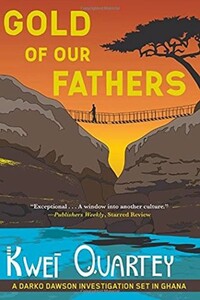
Darko Dawson, Chief Inspector in the Ghana police service, returns in this atmospheric crime series often compared to Alexander McCall Smith's The No. 1 Ladies' Detective Agency novels.Darko Dawson has just been promoted to Chief Inspector in the Ghana Police Service – the promotion even comes with a (rather modest) salary bump. But he doesn't have long to celebrate because his new boss is transferring him from Accra, Ghana's capital, out to remote Obuasi in the Ashanti region, an area now notorious for the illegal exploitation of its gold mines.When Dawson arrives at the Obuasi headquarters, he finds it in complete disarray.
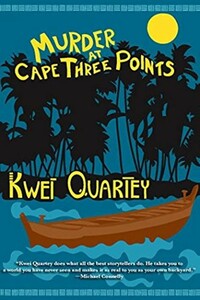
At Cape Three Points on the beautiful Ghanaian coast, a canoe washes up at an oil rig site. The two bodies in the canoe – who turn out to be a prominent, wealthy, middle-aged married couple – have obviously been murdered; the way Mr. Smith-Aidoo has been gruesomely decapitated suggests the killer was trying to send a specific message – but what, and to whom, is a mystery.The Smith-Aidoos, pillars in their community, are mourned by everyone, but especially by their niece Sapphire, a successful pediatric surgeon in Ghana's capital, Accra.

Очнувшись на полу в луже крови, Роузи Руссо из Бронкса никак не могла вспомнить — как она оказалась на полу номера мотеля в Нью-Джерси в обнимку с мертвецом?
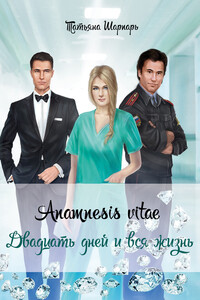
Действие романа происходит в нулевых или конце девяностых годов. В книге рассказывается о расследовании убийства известного московского ювелира и его жены. В связи с вступлением наследника в права наследства активизируются люди, считающие себя обделенными. Совершено еще два убийства. В центре всех событий каким-то образом оказывается соседка покойных – молодой врач Наталья Голицына. Расследование всех убийств – дело чести майора Пронина, который считает Наталью не причастной к преступлению. Параллельно в романе прослеживается несколько линий – быт отделения реанимации, ювелирное дело, воспоминания о прошедших годах и, конечно, любовь.

Егор Кремнев — специальный агент российской разведки. Во время секретного боевого задания в Аргентине, которое обещало быть простым и безопасным, он потерял всех своих товарищей.Но в его руках оказался секретарь беглого олигарха Соркина — Михаил Шеринг. У Шеринга есть секретные бумаги, за которыми охотится не только российская разведка, но и могущественный преступный синдикат Запада. Теперь Кремневу предстоит сложная задача — доставить Шеринга в Россию. Он намерен сделать это в одиночку, не прибегая к помощи коллег.
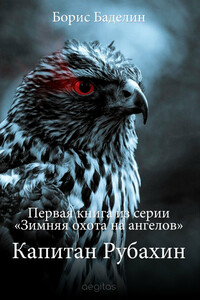
Опорск вырос на берегу полноводной реки, по синему руслу которой во время оно ходили купеческие ладьи с восточным товаром к западным и северным торжищам и возвращались опять на Восток. Историки утверждали, что название городу дала древняя порубежная застава, небольшая крепость, именованная Опорой. В злую годину она первой встречала вражьи рати со стороны степи. Во дни же затишья принимала застава за дубовые стены торговых гостей с их товарами, дабы могли спокойно передохнуть они на своих долгих и опасных путях.
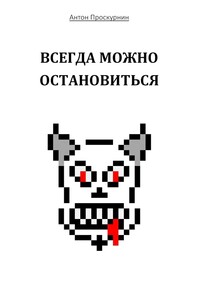
Как часто вы ловили себя на мысли, что делаете что-то неправильное? Что каждый поступок, что вы совершили за последний час или день, вызывал все больше вопросов и внутреннего сопротивления. Как часто вы могли уловить скольжение пресловутой «дорожки»? Еще недавний студент Вадим застает себя в долгах и с безрадостными перспективами. Поиски заработка приводят к знакомству с Михаилом и Николаем, которые готовы помочь на простых, но весьма странных условиях. Их мотивация не ясна, но так ли это важно, если ситуация под контролем и всегда можно остановиться?

Из экспозиции крымского художественного музея выкрадены шесть полотен немецкого художника Кингсховера-Гютлайна. Но самый продвинутый сыщик не догадается, кто заказчик и с какой целью совершено похищение. Грабители прошли мимо золотого фонда музея — бесценной иконы «Рождество Христово» работы учеников Рублёва и других, не менее ценных картин и взяли полотна малоизвестного автора, попавшие в музей после войны. Читателя ждёт захватывающий сюжет с тщательно выписанными нюансами людских отношений и судеб героев трёх поколений.