Children of the Street - [30]
“A human life just for a chieftaincy dispute,” Dawson said.
“People go to extraordinary lengths,” Botswe said. “Five men were charged, found guilty of first-degree murder, and hanged. In the twenty-first century, we still have examples of ritual murder. Although Nigeria has probably received most notoriety on the subject, Ghana has had its share.”
“What makes a killing a ritual one?”
“It shows some aspect of strong belief systems that have no scientific basis. It may be for the purposes of creating a magic potion, as in the Bridge House Murder, or to appease the gods, or in some cases, there’s the belief that a particular ritual will bring wealth.”
“Are there parts of the body that are focused on more than others?”
“Yes, some are invested with greater magical powers than others. If you read accounts of these killings, it’s clear that heads, breasts, lips, eyes, and genitalia are more valued than limbs or limb parts.”
“So what’s your feeling about the Musa Zakari case?”
“We can’t completely rule out that the fingers had some ritualistic significance to the killer,” Botswe said, “but in the absence of some other body part removed in addition, I’m not that persuaded it’s a ritual murder in the usual defined sense.”
“If that’s the case, can you suggest what else it could mean?”
“Nothing specific comes to mind except that either the fingers have special meaning to the killer or he’s trying to say something with the murder. For instance, we point with the index finger. When we want to indicate ‘number one,’ we hold up the index finger… Oh, wait a minute.”
He and Dawson stared at each other.
“Could he be saying this is only number one in a series?” Botswe said.
“If that were the case, wouldn’t he cut the index first, then the middle finger, and so on until they’re all removed, not the reverse? That would be like counting backward.”
Botswe was stroking his beard. “Or,” he said slowly, “another alternative-and this is just a wild notion-is that he’s making reference to the opposite phenomenon, as in a reincarnation, or rebirth. Among some African peoples, death is an end to one life only and a gateway to another. In other words, man must be reborn because reincarnation is a spiritual necessity. So let’s say this man kills repeatedly, each subsequent death is represented by the appearance of one more finger until all five are back.”
“It never even occurred to me,” Dawson said with some admiration. “I suppose that’s why I’m the ignoramus and you’re the expert I came to consult.”
Botswe smiled. “My fancy theory may hold no water whatsoever. I hope it doesn’t.”
They spent a little more time with each other. As they walked outside together, Dawson was praying the Honda wouldn’t embarrass him by not starting. Which was exactly what it did. Botswe and Obi watched him as he tried multiple times to coax some life out of the bike.
“Obi can put it in the back of his pickup and take you home,” Botswe suggested, glancing up at the sky. The sun had disappeared. “Looking at those rain clouds, I don’t think you want to be out riding in any case. There may be lightning.”
“I can take you,” Obi said to Dawson. “No problem.”
“Thank you very much.”
Obi went out to the street, returning in a well-used black Toyota pickup that looked out of place in Dr. Botswe’s lavish environment. Dawson and Obi loaded the bike, tethering it upright and steady on the truck bed.
“Thank you for your help, Dr. Botswe,” Dawson said, shaking hands again. “I’ll be in touch.”
Once Obi and Inspector Dawson had departed, Dr. Botswe sat on the terrace overlooking the garden. Smart man, that detective, the kind you watched what you said when he was around. Botswe had sensed the gears and cogwheels working in the inspector’s mind.
After a while, he went back inside to the study. At his desk, he thought for a moment about life when Peggy had been alive. She was gone forever, leaving an unhealed gash straight through Botswe’s heart. His children and grandchildren were his treasures, but he didn’t see them often enough. His only constant companions were his work and his wealth. He applied himself assiduously to both to distract him from the pain and emptiness.
He logged on to his computer and worked for about thirty minutes on his latest paper: “Fight for Survival: Street Children and Crime.” His mind strayed. He saved his latest edit and brought up the photos he had been looking at before the inspector arrived. Gruesome. Mutilations of all kinds from war atrocities, crime scenes, vehicle crashes, and autopsies. His work had brought him to this awful attraction. What would Peggy have said about his obsession?
He logged off quickly and stood up. He knew there was something wrong with him. He was, after all, a psychologist. Then again, those in his profession were often the most psychologically flawed.
As Obi drove past the Tetteh Quarshie Interchange, he said to Dawson, “The doctor is a lovely man.”
“I understand you’ve worked for him about twelve years.”
“Yes, please. When I first came, I was poor. I didn’t know anything at all, at all. But I struggled to learn. Windows, doors, electricity, water-I can fix anything. That fountain in the doctor’s garden, I made it myself.”
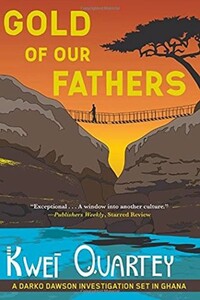
Darko Dawson, Chief Inspector in the Ghana police service, returns in this atmospheric crime series often compared to Alexander McCall Smith's The No. 1 Ladies' Detective Agency novels.Darko Dawson has just been promoted to Chief Inspector in the Ghana Police Service – the promotion even comes with a (rather modest) salary bump. But he doesn't have long to celebrate because his new boss is transferring him from Accra, Ghana's capital, out to remote Obuasi in the Ashanti region, an area now notorious for the illegal exploitation of its gold mines.When Dawson arrives at the Obuasi headquarters, he finds it in complete disarray.
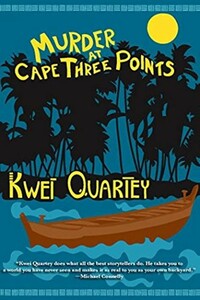
At Cape Three Points on the beautiful Ghanaian coast, a canoe washes up at an oil rig site. The two bodies in the canoe – who turn out to be a prominent, wealthy, middle-aged married couple – have obviously been murdered; the way Mr. Smith-Aidoo has been gruesomely decapitated suggests the killer was trying to send a specific message – but what, and to whom, is a mystery.The Smith-Aidoos, pillars in their community, are mourned by everyone, but especially by their niece Sapphire, a successful pediatric surgeon in Ghana's capital, Accra.

Будущее Джимми Кьюсака, талантливого молодого финансиста и основателя преуспевающего хедж-фонда «Кьюсак Кэпитал», рисовалось безоблачным. Однако грянул финансовый кризис 2008 года, и его дело потерпело крах. Дошло до того, что Джимми нечем стало выплачивать ипотеку за свою нью-йоркскую квартиру. Чтобы вылезти из долговой ямы и обеспечить более-менее приличную жизнь своей семье, Кьюсак пошел на работу в хедж-фонд «ЛиУэлл Кэпитал». Поговаривали, что благодаря финансовому гению его управляющего клиенты фонда «никогда не теряют свои деньги».

Очнувшись на полу в луже крови, Роузи Руссо из Бронкса никак не могла вспомнить — как она оказалась на полу номера мотеля в Нью-Джерси в обнимку с мертвецом?

Действие романа происходит в нулевых или конце девяностых годов. В книге рассказывается о расследовании убийства известного московского ювелира и его жены. В связи с вступлением наследника в права наследства активизируются люди, считающие себя обделенными. Совершено еще два убийства. В центре всех событий каким-то образом оказывается соседка покойных – молодой врач Наталья Голицына. Расследование всех убийств – дело чести майора Пронина, который считает Наталью не причастной к преступлению. Параллельно в романе прослеживается несколько линий – быт отделения реанимации, ювелирное дело, воспоминания о прошедших годах и, конечно, любовь.

Егор Кремнев — специальный агент российской разведки. Во время секретного боевого задания в Аргентине, которое обещало быть простым и безопасным, он потерял всех своих товарищей.Но в его руках оказался секретарь беглого олигарха Соркина — Михаил Шеринг. У Шеринга есть секретные бумаги, за которыми охотится не только российская разведка, но и могущественный преступный синдикат Запада. Теперь Кремневу предстоит сложная задача — доставить Шеринга в Россию. Он намерен сделать это в одиночку, не прибегая к помощи коллег.
Опорск вырос на берегу полноводной реки, по синему руслу которой во время оно ходили купеческие ладьи с восточным товаром к западным и северным торжищам и возвращались опять на Восток. Историки утверждали, что название городу дала древняя порубежная застава, небольшая крепость, именованная Опорой. В злую годину она первой встречала вражьи рати со стороны степи. Во дни же затишья принимала застава за дубовые стены торговых гостей с их товарами, дабы могли спокойно передохнуть они на своих долгих и опасных путях.

Из экспозиции крымского художественного музея выкрадены шесть полотен немецкого художника Кингсховера-Гютлайна. Но самый продвинутый сыщик не догадается, кто заказчик и с какой целью совершено похищение. Грабители прошли мимо золотого фонда музея — бесценной иконы «Рождество Христово» работы учеников Рублёва и других, не менее ценных картин и взяли полотна малоизвестного автора, попавшие в музей после войны. Читателя ждёт захватывающий сюжет с тщательно выписанными нюансами людских отношений и судеб героев трёх поколений.