Children of the Street - [34]
Chikata had roped off Kwatei Kojo at each end. The resulting diversion was causing traffic backups on the surrounding roads, including High Street. Furious drivers leaned on their horns while a traffic policeman tried to redirect them.
The CSU hadn’t arrived yet. Dawson and Chikata looked down at the body. Its head was completely submerged in the mud, and only part of its left side was visible, with the left hand sticking up like a rigid wave good-bye.
“Who found the body?” Dawson asked.
“They did,” Chikata said, nodding toward a group of five men with pickaxes, shovels, and buckets. “They were about to start digging the channel out when they saw it. One of them called Joy FM, who broadcast the report on the Super Morning Show. I heard it before I left the house and stopped here on the way to CID.”
The country’s reputed emergency numbers 1-9-1 and 1-9-2 could be so unreliable that it was sometimes more effective to call a radio station, which would then broadcast the emergency in the hope that the appropriate personnel were listening.
“Well done, Chikata,” Dawson said quietly.
He saw the sergeant glance at him with pleasant surprise that he had just earned praise, and Dawson realized guiltily that he seldom gave it.
“Here comes CSU,” Chikata said.
The CSU vehicle skidded on the wet road to a stop. The crew got out, led by Deputy Superintendent Bright, the indomitable boss of the team.
“Morning, morning,” he greeted Chikata and Dawson cheerily.
“Morning, sir.”
Bright peered into the ditch. “Interesting,” he said. “Seems we’re always in the mud these days.”
After quite some discussion, Bright and his men got down in the ditch and began to maneuver the corpse onto a sheet of tarpaulin.
“Hold on!” Bright said suddenly. “Wait. There’s something wrong.”
His assistants stood back, muddy, wet, and breathing heavily from their exertions.
“What’s the matter?” Dawson asked.
“Is this the front of him or the back?” Bright said, staring at the body.
“What are you talking about?” Chikata asked.
“His face is facing upward,” Bright said, “but…”
“He’s on his belly,” Dawson finished.
“Ewurade,” Chikata muttered.
“His head is on backward,” Bright said.
In the morgue, Dr. Biney shook his head in disbelief. “I’ve never seen anything like it.”
The boy was lying on his belly, yet he was faceup. He was about sixteen. His wiry physique told of years of hard manual labor.
“There’s a stab wound to the lowest one-third of the right thorax,” Biney said. “This squared-off mark here is from the hilt of the knife, which means it was plunged deep. See these bruises around it? A bit tough to make out, but I call them satellite bruises. What do they tell us? They show the assailant rocked the knife around to inflict maximum damage. On internal examination, I think we’ll find a collapsed lung and possibly a damaged diaphragm and lacerated liver.”
“Is that the probable cause of death,” Dawson asked, “or is it the broken neck?”
“Hard to say. If there was any life left in him after the stab wound, breaking his cervical spine made certain he was finished off. Or vice versa, for that matter. A violent death, for sure.”
“By knife,” Dawson said. “Like Musa.”
“Are you connecting the two murders?”
“Speculating.”
The murdered boy didn’t have Musa’s repulsive putrefaction, but the sight of a broken neck caused Dawson to cringe just as much, or even more. It shifted his thoughts to his brother, Cairo, rendered paraplegic at the age of thirteen. Mama had sent him to the corner kiosk to buy a tin of sardines. As he started across the street, she remembered one other item and called out to Cairo, who turned at her voice. He never saw the oncoming car, which hit him hard. He went up over the roof and down the back, severing his spinal cord. One moment he was the athlete of the family, who could outdribble anyone at soccer, the next he was a paraplegic totally dependent on the care of others.
“You’ll want to look at the victim’s belongings,” Biney said, bringing Dawson abruptly back to the present. Moving to the counter by the sink, he showed Dawson the boy’s clothes: a pair of brown trousers, a greenish shirt with only one button, and athletic shoes worn down beyond the sole.
“And there’s this,” Biney said. “It’s still drying off, but I think it could be very useful to you.”
He showed Dawson a business card, crumpled, moist, and soiled by mud, but still legible.
STREET CHILDREN OF ACCRA REFUGE (SCOAR)
Genevieve Kusi, Director
No. 2 Goodwill Road, Accra New Town
There was a phone number as well, which Dawson entered in his mobile. On the reverse side of the card, written several times in a halting scrawl, crossed out, and rewritten, as though the inscriber had been trying to perfect his signature, was the name Ebenezer.
21
SCOAR was in a slate-colored, two-story building. At the ground-floor reception, Dawson was asked to have a seat while waiting for Mrs. Kusi. Although the area had open windows on both sides, no air was moving through. The afternoon was as thick and warm as soup. Adult supervisors and kids of all ages went back and forth and in and out. The long bulletin board on the opposite wall carried community announcements, notices of job opportunities, and photos of smiling young men and women who had made it to the mainstream as seamstresses, carpenters, or wood carvers. A poster said:
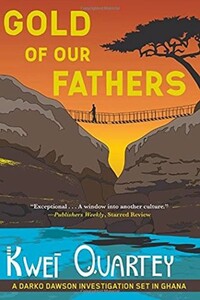
Darko Dawson, Chief Inspector in the Ghana police service, returns in this atmospheric crime series often compared to Alexander McCall Smith's The No. 1 Ladies' Detective Agency novels.Darko Dawson has just been promoted to Chief Inspector in the Ghana Police Service – the promotion even comes with a (rather modest) salary bump. But he doesn't have long to celebrate because his new boss is transferring him from Accra, Ghana's capital, out to remote Obuasi in the Ashanti region, an area now notorious for the illegal exploitation of its gold mines.When Dawson arrives at the Obuasi headquarters, he finds it in complete disarray.
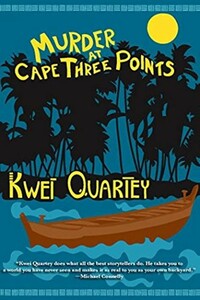
At Cape Three Points on the beautiful Ghanaian coast, a canoe washes up at an oil rig site. The two bodies in the canoe – who turn out to be a prominent, wealthy, middle-aged married couple – have obviously been murdered; the way Mr. Smith-Aidoo has been gruesomely decapitated suggests the killer was trying to send a specific message – but what, and to whom, is a mystery.The Smith-Aidoos, pillars in their community, are mourned by everyone, but especially by their niece Sapphire, a successful pediatric surgeon in Ghana's capital, Accra.

Будущее Джимми Кьюсака, талантливого молодого финансиста и основателя преуспевающего хедж-фонда «Кьюсак Кэпитал», рисовалось безоблачным. Однако грянул финансовый кризис 2008 года, и его дело потерпело крах. Дошло до того, что Джимми нечем стало выплачивать ипотеку за свою нью-йоркскую квартиру. Чтобы вылезти из долговой ямы и обеспечить более-менее приличную жизнь своей семье, Кьюсак пошел на работу в хедж-фонд «ЛиУэлл Кэпитал». Поговаривали, что благодаря финансовому гению его управляющего клиенты фонда «никогда не теряют свои деньги».

Очнувшись на полу в луже крови, Роузи Руссо из Бронкса никак не могла вспомнить — как она оказалась на полу номера мотеля в Нью-Джерси в обнимку с мертвецом?

Действие романа происходит в нулевых или конце девяностых годов. В книге рассказывается о расследовании убийства известного московского ювелира и его жены. В связи с вступлением наследника в права наследства активизируются люди, считающие себя обделенными. Совершено еще два убийства. В центре всех событий каким-то образом оказывается соседка покойных – молодой врач Наталья Голицына. Расследование всех убийств – дело чести майора Пронина, который считает Наталью не причастной к преступлению. Параллельно в романе прослеживается несколько линий – быт отделения реанимации, ювелирное дело, воспоминания о прошедших годах и, конечно, любовь.
Егор Кремнев — специальный агент российской разведки. Во время секретного боевого задания в Аргентине, которое обещало быть простым и безопасным, он потерял всех своих товарищей.Но в его руках оказался секретарь беглого олигарха Соркина — Михаил Шеринг. У Шеринга есть секретные бумаги, за которыми охотится не только российская разведка, но и могущественный преступный синдикат Запада. Теперь Кремневу предстоит сложная задача — доставить Шеринга в Россию. Он намерен сделать это в одиночку, не прибегая к помощи коллег.
Опорск вырос на берегу полноводной реки, по синему руслу которой во время оно ходили купеческие ладьи с восточным товаром к западным и северным торжищам и возвращались опять на Восток. Историки утверждали, что название городу дала древняя порубежная застава, небольшая крепость, именованная Опорой. В злую годину она первой встречала вражьи рати со стороны степи. Во дни же затишья принимала застава за дубовые стены торговых гостей с их товарами, дабы могли спокойно передохнуть они на своих долгих и опасных путях.

Из экспозиции крымского художественного музея выкрадены шесть полотен немецкого художника Кингсховера-Гютлайна. Но самый продвинутый сыщик не догадается, кто заказчик и с какой целью совершено похищение. Грабители прошли мимо золотого фонда музея — бесценной иконы «Рождество Христово» работы учеников Рублёва и других, не менее ценных картин и взяли полотна малоизвестного автора, попавшие в музей после войны. Читателя ждёт захватывающий сюжет с тщательно выписанными нюансами людских отношений и судеб героев трёх поколений.