Children of the Street - [36]
“Is Tedamm capable of murder?” Dawson asked.
Patience’s big eyes were direct. “In the world of homelessness, poverty, and desperation, you fight for survival, and there are no polite limits to the fight.”
“I need to talk to Tedamm,” Dawson said.
Patience exchanged a quick glance with Genevieve. “You can join me when I go out in the field in a little while, Inspector. We can ask around for him.”
“Thank you. I would like to do that.” He sat forward slightly. “About two weeks ago, a dead young man was found in Korle Lagoon.”
“I remember the newspaper article,” Patience said. “He was a truck pusher.”
“Correct. His name was Musa Zakari. Is that familiar?”
“Not to me.”
She looked at her boss, who shook her head. “Nor me. But just to be sure, we should check with Socrate Tagoe, our webmaster and photographer. He might know.”
22
Dawson had imagined that Socrate would be thin and owlish. He was wrong. Standing around five-ten, Socrate probably weighed two hundred and fifty pounds. His office was too small for him, a laptop, a desktop, a printer-fax, piles of paper-stuffed folders, and boxes of CDs and DVDs.
“Socrate is our webmaster,” Genevieve said as he and Dawson shook hands, “but he’s also happy to get out there and photograph our street children, aren’t you, Socra?”
He tried to smile as his eyes moved away from hers, collided with Dawson’s for an instant, and swerved back. Dawson instinctively understood that the man really didn’t enjoy going out to photograph street children. He was doing it for Genevieve, but if he had his way, he would spend all day sitting in front of his computer. He was no Patience.
“Socrate,” Genevieve said, “have we ever had a boy here by the name of Musa Zakari?”
He rubbed his chin. “That name doesn’t sound familiar to me, but I can check my records.” His voice was nasal and pinched.
“Thank you,” Genevieve said. “You do that while I show Inspector Darko around.”
Genevieve’s and the other administrative offices were on the ground floor. There was one common office with space enough for four caseworkers, although SCOAR had only two at the moment.
“Budget cuts,” Genevieve explained. “Things are tight.”
“Everywhere,” Dawson agreed.
“Most of our funding is from European organizations, but their trust in us has waned over the years.”
“What do you mean by that?”
“As you said, finances are tight everywhere. Donors don’t want to pour their aid into some bottomless pit anymore. They’re saying to us, if you’re not rehabilitating a certain number of children or getting a certain number of kids successfully into school or a trade, what’s the point in our giving you money? In many ways, I understand their point of view. On the other hand, because we’re often dealing with transient children, some of the results the donors demand are unrealistic.”
Round the corner, Genevieve and Dawson went into a classroom where four young teenagers-three boys and one girl-were absorbed in front of computer screens learning word games under the supervision of a young female teacher. The boys, one of whom was bare-chested, all wore low-sagging basketball shorts. The girl had on a sleeveless red blouse and a wraparound skirt.
“These are poor children who live on the streets of an African city,” Genevieve said to Dawson, “yet they love computers and video games as much as any pampered boy or girl in the U.S.”
“Do you have Ghanaian traditional activities for them as well?” Dawson asked.
“Yes-for instance, we have drumming and dancing lessons on Fridays.”
“What was Ebenezer most interested in?”
“He was completely illiterate when he came to Accra, but he learned basic reading and writing during the time he was here. He was a good drummer as well.”
Dawson became aware of how close to Genevieve he was standing. She was wearing a light fragrance, but he also caught the pure scent of her skin-different from Christine’s but just as intoxicating. He moved back slightly, afraid of the attraction.
“Come this way, Inspector,” Genevieve said. “There’s much more to show you.”
Next door to the classroom was a small, rudimentary clinic run by a nurse, who was busy giving advice to a teenage mother cradling her baby.
“It’s young pregnancies like hers that often make school an impossible prospect for teenage girls,” Genevieve said as they went up to a room on the second floor with five sewing machines, two of them in use by girls training to be seamstresses. Beyond that was a woodshop, where two boys were carving traditional masks out of fresh mahogany.
The Refuge Room, the subject of the poster announcement downstairs, was the largest space so far. The front section had no furniture, just scores of floor mats on which a dozen or so children were lying down. Others were in the back recreation area playing table tennis and oware while the rest watched a DVD.
“This is their escape from the cruel streets,” Genevieve said. “Sometimes the kids stage small performances or poetry or rapping contests.”
“You do a lot of good work here,” Dawson said. “I’m really very impressed.”
“Thank you.”

Darko Dawson, Chief Inspector in the Ghana police service, returns in this atmospheric crime series often compared to Alexander McCall Smith's The No. 1 Ladies' Detective Agency novels.Darko Dawson has just been promoted to Chief Inspector in the Ghana Police Service – the promotion even comes with a (rather modest) salary bump. But he doesn't have long to celebrate because his new boss is transferring him from Accra, Ghana's capital, out to remote Obuasi in the Ashanti region, an area now notorious for the illegal exploitation of its gold mines.When Dawson arrives at the Obuasi headquarters, he finds it in complete disarray.
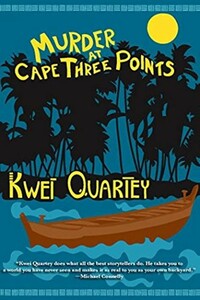
At Cape Three Points on the beautiful Ghanaian coast, a canoe washes up at an oil rig site. The two bodies in the canoe – who turn out to be a prominent, wealthy, middle-aged married couple – have obviously been murdered; the way Mr. Smith-Aidoo has been gruesomely decapitated suggests the killer was trying to send a specific message – but what, and to whom, is a mystery.The Smith-Aidoos, pillars in their community, are mourned by everyone, but especially by their niece Sapphire, a successful pediatric surgeon in Ghana's capital, Accra.

В порыве гнева гражданин Щегодубцев мог нанести смертельную рану собственной жене, но он вряд ли бы поднял руку на трёхлетнего сына и тем самым подверг его мучительной смерти. Никто не мог и предположить, что расследование данного преступления приведёт к весьма неожиданному результату.

Предать жену и детей ради любовницы, конечно, несложно. Проблема заключается в том, как жить дальше? Да и можно ли дальнейшее существование назвать полноценной, нормальной жизнью?…

Будущее Джимми Кьюсака, талантливого молодого финансиста и основателя преуспевающего хедж-фонда «Кьюсак Кэпитал», рисовалось безоблачным. Однако грянул финансовый кризис 2008 года, и его дело потерпело крах. Дошло до того, что Джимми нечем стало выплачивать ипотеку за свою нью-йоркскую квартиру. Чтобы вылезти из долговой ямы и обеспечить более-менее приличную жизнь своей семье, Кьюсак пошел на работу в хедж-фонд «ЛиУэлл Кэпитал». Поговаривали, что благодаря финансовому гению его управляющего клиенты фонда «никогда не теряют свои деньги».

Очнувшись на полу в луже крови, Роузи Руссо из Бронкса никак не могла вспомнить — как она оказалась на полу номера мотеля в Нью-Джерси в обнимку с мертвецом?

Действие романа происходит в нулевых или конце девяностых годов. В книге рассказывается о расследовании убийства известного московского ювелира и его жены. В связи с вступлением наследника в права наследства активизируются люди, считающие себя обделенными. Совершено еще два убийства. В центре всех событий каким-то образом оказывается соседка покойных – молодой врач Наталья Голицына. Расследование всех убийств – дело чести майора Пронина, который считает Наталью не причастной к преступлению. Параллельно в романе прослеживается несколько линий – быт отделения реанимации, ювелирное дело, воспоминания о прошедших годах и, конечно, любовь.

Егор Кремнев — специальный агент российской разведки. Во время секретного боевого задания в Аргентине, которое обещало быть простым и безопасным, он потерял всех своих товарищей.Но в его руках оказался секретарь беглого олигарха Соркина — Михаил Шеринг. У Шеринга есть секретные бумаги, за которыми охотится не только российская разведка, но и могущественный преступный синдикат Запада. Теперь Кремневу предстоит сложная задача — доставить Шеринга в Россию. Он намерен сделать это в одиночку, не прибегая к помощи коллег.