Split Second - [6]
He’d always been a handful; the number of times she’d been summoned into school: Luke giving cheek, Luke not showing up. He was bright and bored. He couldn’t wait to leave. She’d been the same at that age. She had tried talking to him about A levels or doing a BTEC. Something to give him a chance of a decent job, not end up like her in the poverty trap, no qualifications, everything a struggle.
‘No way,’ he’d said. And she knew there was no shifting him. Stubborn as a mule, never knew when to back down or back off. Could be a good quality at times, that persistence, but at others he’d back himself into a corner and brick it up.
Days later he came in from town, put a pizza in the oven and announced that he wanted to join the army.
Over my dead body, Louise swore to herself. She hadn’t spent sixteen years raising him to have him go off and get blown to bits by a roadside bomb in a godforsaken desert. ‘Thought you didn’t like people bossing you about,’ she’d said. ‘That’s all you get in the army: rules and regulations.’
‘So?’
‘C’mon, Luke, you’re not exactly hot on authority, are you?’
‘What you saying?’ He was truculent, ready for an argument. ‘Someone’s got to fight for their country.’
She stifled a sigh, didn’t want to alienate him, wondered where the sudden interest in soldiering had come from. ‘What’s the attraction?’
‘Best training in the world, isn’t it?’
Then what? Kill people, be killed. Eight years ago, Louise had dragged him on the anti-Iraq war march, him and Ruby both. He’d loved it, shouted himself hoarse, enjoying the novelty of mass protest, the whiff of disobedience, transgression, marching down the middle of the road between the police lines, waving the flag he’d made. Ruby had cried, fearful that planes would come and bomb them any minute. Not understanding that this was a war where only the children of the ‘enemy’ would lose life and limb. An unequal and illegal war fought for duplicitous reasons.
‘Grandad was in the army,’ he said. Meaning Louise’s grandad, his great-grandad.
‘That was different, he was called up. He’d not have wanted you fighting in Afghanistan. He was a communist, I’ve told you that. He’d have known exactly what it was down to: oil and economics.’
While Louise’s mother had been roaming the world entertaining passengers in her glittery gowns and long black gloves, Louise and her dad Phil had lived with her grandparents. Grandad was a docker, a union man and a lifelong Party member. The only paper that came into the house was the Morning Star. Louise’s dad was a liberal, if pressed. Wishy-washy, according to Grandad. The house rang with political arguments and debates. Louise got dragged along to fund-raisers for Cuba and Angola, or commandeered by her grandad to give out leaflets for pickets during the miners’ strike, but once grown, she’d never joined a party or got involved. Her political activity ran to voting every election, paying union dues, even though the agency wasn’t unionized, attending the occasional demonstration and peeling racist stickers off lamp posts.
Maybe the army thing was a reaction against her and her views. Luke rebelling, thinking of something to put her back up. She decided not to give him any more ammunition. ‘Okay,’ she said steadily, ‘how about this – you still want to join up in a year’s time and you can go.’
He frowned at her, wary. ‘Why wait?’
‘You’re only sixteen, you’ll need my consent if you’re under eighteen, but I’d like you to give something else a go first.’
‘Such as?’ He leaned back on the chair, rocking it on its back legs, arms folded.
‘A trade – you choose.’
‘Not college,’ he insisted.
‘An apprenticeship. You’d be earning. There’s usually day release.’
‘What?’
‘You do a day a week at college, the rest on the job.’
‘You just don’t want me to join the army,’ he objected.
‘No, I don’t.’ She kept her voice level. ‘But I can’t stop you, once you’re old enough. People die, Luke, they get injured, lose limbs; or they get stressed out, can’t settle again. Why would I want that for you?’
‘I won’t change my mind,’ he said, his eyes fixing on hers. His lovely fine brown eyes
She nodded. ‘But give it till your next birthday. I’ll ask around, see if anyone knows anyone.’ She waited, tense. Hoping to God she could find an opening. Half the kids in Manchester were on the dole, a lost generation, they were saying. What would Grandad make of this? Cameron and cronies finishing Thatcher’s job. Privatizing everything that moved, dismantling the public services, the NHS, crushing the north, where no one ever voted Tory, penalizing the poor.
‘’Kay.’ He let the chair fall back in place, got to his feet. ‘Not doing plumbing, though – skanky, man.’
Emma
Her flat was across the other side of the dual carriageway, next to the railway station. She was on the second floor, her windows level with the platforms. Sometimes she got the train to work, though if she did, she had a fifteen-minute walk across town at the other end.
Emma liked being near the line; the sound of the trains was reassuring, somehow, telling her that there were all those people out there going places, coming back. Growing up in Brum, the railway had run at the end of their terraced street, so it was probably in her blood.

1960, Manchester. Three young Catholic women find themselves pregnant and unmarried. In these pre-Pill days, there is only one acceptable course of action: adoption. So Megan, Caroline and Joan meet up in St Ann's Home for Unmarried Mothers to await the births of their babies. Three little girls are born, and placed with their adoptive families. Trio follows the lives of these mothers and daughters over the ensuing years.

"A painfully honest exploration of an ordinary family under stress… A stunning piece of work." – Ann CleevesFour bystanders in the wrong place at the wrong time. Witnesses to the shocking shooting of a teenage boy. A moment that changes their lives forever. Fiona, a midwife, is plagued by panic attacks and unable to work. Has she the strength to testify? Mike, a delivery driver and family man, faces an impossible decision when his frightened wife forces him to choose – us or the court case. Cheryl, a single-mother, doesn't want her child to grow up in the same climate of fear.
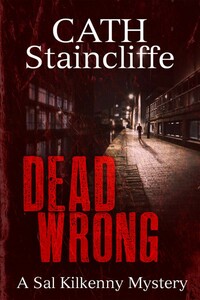
Single mother and private eye, Sal Kilkenny, has two very frightened clients on her hands. One, young mother Debbie Gosforth, is a victim; the other, Luke Wallace, is afraid he is a murderer. While Sal tries to protect Debbie from a stalker, she has to investigate the murder of Luke's best friend.

Your husband, your family, your freedom. What would you sacrifice for love? A love story, a modern nightmare and an honest and incisive portrayal of a woman who honours her husband's wish to die and finds herself in the dock for murder.When Deborah reluctantly helps her beloved husband Neil end his life and conceals the truth, she is charged with murder. As the trial unfolds and her daughter Sophie testifies against her, Deborah, still reeling with grief, fights to defend her actions. Twelve jurors hold her fate in their hands, if found guilty she will serve a life sentence.

When private eye Sal Kilkenny is asked to discover the whereabouts of Jennifer Pickering, disinherited by her family twenty years ago, it seems that Jennifer does not want to be found. Despite her initial reservations, as the events of the past gradually unfold, single-mum Sal finds that she is becoming engrossed in the case. There are dark secrets waiting to be uncovered but can Sal break the conspiracy of silence that surrounds this mystery? As she spends her days tracing Jennifer, Sal's nights become shattered by an emotional and often dangerous assignment with the Neighbour Nuisance Unit on one of Manchester's toughest housing estates.
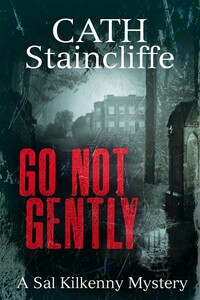
From the author of LOOKING FOR TROUBLE, a further crime novel featuring private investigator Sal Kilkenny. When a man is distraught at his wife's apparent infidelity, he enlists the help of Sal to confirm his suspicions, only to find himself a widower soon afterwards. From there Sal's other case also begins to take a disturbing and violent turn.

В книге рассказывается история главного героя, который сталкивается с различными проблемами и препятствиями на протяжении всего своего путешествия. По пути он встречает множество второстепенных персонажей, которые играют важные роли в истории. Благодаря опыту главного героя книга исследует такие темы, как любовь, потеря, надежда и стойкость. По мере того, как главный герой преодолевает свои трудности, он усваивает ценные уроки жизни и растет как личность.
О них, о братьях наших меньших. Собачий детектив. Рассказ опубликован в киевском журнале "Детектив+" (№ 1-2006)
В книге рассказывается история главного героя, который сталкивается с различными проблемами и препятствиями на протяжении всего своего путешествия. По пути он встречает множество второстепенных персонажей, которые играют важные роли в истории. Благодаря опыту главного героя книга исследует такие темы, как любовь, потеря, надежда и стойкость. По мере того, как главный герой преодолевает свои трудности, он усваивает ценные уроки жизни и растет как личность.
В книге рассказывается история главного героя, который сталкивается с различными проблемами и препятствиями на протяжении всего своего путешествия. По пути он встречает множество второстепенных персонажей, которые играют важные роли в истории. Благодаря опыту главного героя книга исследует такие темы, как любовь, потеря, надежда и стойкость. По мере того, как главный герой преодолевает свои трудности, он усваивает ценные уроки жизни и растет как личность.
В книге рассказывается история главного героя, который сталкивается с различными проблемами и препятствиями на протяжении всего своего путешествия. По пути он встречает множество второстепенных персонажей, которые играют важные роли в истории. Благодаря опыту главного героя книга исследует такие темы, как любовь, потеря, надежда и стойкость. По мере того, как главный герой преодолевает свои трудности, он усваивает ценные уроки жизни и растет как личность.
В книге рассказывается история главного героя, который сталкивается с различными проблемами и препятствиями на протяжении всего своего путешествия. По пути он встречает множество второстепенных персонажей, которые играют важные роли в истории. Благодаря опыту главного героя книга исследует такие темы, как любовь, потеря, надежда и стойкость. По мере того, как главный герой преодолевает свои трудности, он усваивает ценные уроки жизни и растет как личность.