Satellite People - [50]
‘I must say that I am not entirely sure how I can be of use with regards to your ongoing murder investigation. But I will of course do everything I can to help you,’ he said after a couple of moments, in his characteristic dialect.
I took the hint that the foreign minister’s time was limited and promptly launched into a hastily improvised list of questions.
In answer to my first question about the treason trials after the war, the foreign minister apologized that he unfortunately knew nothing about them. He had spent the final years of the war in Sweden. He denied any knowledge of operations carried out by Resistance groups in Oslo during that time, and he had only heard about the ‘tragedy on Liberation Day’ after the event. From what he had read, there was something very odd about the circumstances surrounding Ole Kristian Wiig’s death. But legally the case appeared to be cut and dried and had quickly been overshadowed by the trials against leading Nazis.
Lykke sat lost in thought fora few moments after he had mentioned this, but then quickly returned to the present. He concluded in a grave voice that he unfortunately could not be of much help to me with regard to the war either. He had met both Magdalon Schelderup and Petter Johannes Wendelboe several times later, but did not know either of them particularly well and had never discussed with them what went on in the war. At the time, Schelderup had been more interested in the Cold War and contingency plans for a possible Soviet invasion. Even after fifty, he seemed to be a man who preferred to guard against possible future scenarios rather than dwell on the past.
Jonas Lykke became obviously more animated and informative when the subject turned to the Conservative parliamentary group after the war. In fact, I thought to myself that he was remarkably informal given that he was still a senior politician. He remarked with a quiet, dry chuckle that Magdalon Schelderup had come across as ‘unusually intelligent, unusually clear-sighted, unusually conservative and unusually cynical, even for a Conservative member of parliament for Akershus or Oslo!’
I ventured to ask why, then, Schelderup’s career in national politics had been so short-lived. Lykke answered with another gentle smile that that problem had in fact been Magdalon Schelderup’s clear-sightedness. He quite obviously preferred to be in a position of power and was realistic enough to admit that it would be many years before the Conservatives would ever form a government. When he stood down in 1953 he was fifty-four years old and had decided to concentrate on his extremely successful business empire.
It had become standard practice that the war was not mentioned unnecessarily when Magdalon Schelderup was present. But the court case from 1945 had been mentioned now and again when he was not there. Lykke added with a dry laugh that the Conservatives had a habit of dealing with sensitive issues in this way. However, he did not remember the issue from the war being raised in connection with the question of Schelderup’s renomination in 1953. Lykke had certainly never mentioned it himself at that time.
Continuing in this jolly and frank vein, the foreign minister added that he had not been sorry when Schelderup decided not to stand again in the general election.
‘We needed a right-wing coalition, and he was not someone who promoted that. He was far too conservative for those on the left, and too urban for members of the Centre Party. And the Christian Democrats strongly disapproved his divorces.’
I understood what he was saying and had to reluctantly concur with Jonas Lyke that there was not much of relevance to the murder inquiry here either. As a politician, Magdalon Schelderup had been respected, but not liked, not even within his own party. He appeared to have left politics of his own volition, and if it was the case that he was pushed, it certainly seemed to have nothing to do with events during the war. I did not think that Jonas Lykke knew anything more of importance about the war, and was fairly sure that if he did, I would not be able to wheedle it from him.
So I thanked the foreign minister cordially for his time. He shook my hand and jokingly wished me luck with ‘both the spring murder investigation and the autumn election’.
The final seat in Oslo was evidently very uncertain and could be decisive, according to the sheet on the top of the left-hand pile that I glanced at as I left the room. Jonas Lykke had already turned his attention back to the papers by the time I closed the door behind me.
XI
The yellowing papers from the war were waiting on my desk when I got back to the office.
According to these papers, the NS member whose house Magdalon Schelderup and Ole Kristian Wiig had visited on Liberation Day 1945 was called Jens Rune Meier.
I quickly found the case in the archive for unsolved murders under 1942, and could thus confirm that Wendelboe had thus far proved to be reliable. Jens Rune Meier had indeed been shot when out skiing at the start of Easter 1942. The operation had obviously been well planned. The police found the tracks of the perpetrators, who had clearly been familiar with his route and lain in wait behind some undergrowth on a more deserted stretch. The ski tracks led back to the car park, and even though considerable resources were given to the case, not enough evidence was found to pursue it.
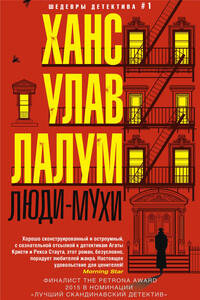
Убит бывший лидер норвежского Сопротивления и бывший член кабинета министров Харальд Олесен. Его тело обнаружено в запертой квартире, следов взлома нет, орудие убийства отсутствует. На звук выстрела к двери Олесена сбежались все соседи, но никого не увидели. Инспектор уголовного розыска Колбьёрн Кристиансен считает, что убийство, скорее всего, совершил кто-то из них. Более того, он полагает, что их показания лживы.
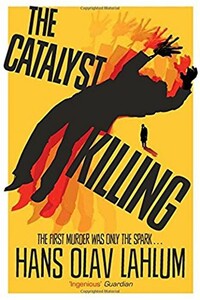
The third mystery in the hugely compelling, bestselling international crime series from Norway's answer to Agatha Christie, Hans Olav Lahlum, The Catalyst Killing will have you guessing to the final clue. The first murder was only the spark… 1970: Inspector Kolbjorn Kristiansen, known as K2, witnesses a young woman desperately trying to board a train only to have the doors close before her face. The next time he sees her, she is dead… As K2 investigates, with the help of his precocious young assistant Patricia, he discovers that the story behind Marie Morgenstierne's murder really began two years ago, when a group of politically active young people set out on a walking tour in the mountains.
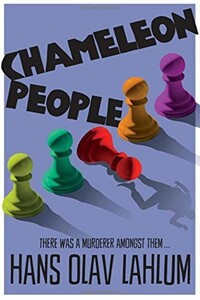
From the international bestselling author, Hans Olav Lahlum, comes Chameleon People, the fourth murder mystery in the K2 and Patricia series.1972. On a cold March morning the weekend peace is broken when a frantic young cyclist rings on Inspector Kolbjorn 'K2' Kristiansen's doorbell, desperate to speak to the detective.Compelled to help, K2 lets the boy inside, only to discover that he is being pursued by K2's colleagues in the Oslo police. A bloody knife is quickly found in the young man's pocket: a knife that matches the stab wounds of a politician murdered just a few streets away.The evidence seems clear-cut, and the arrest couldn't be easier.
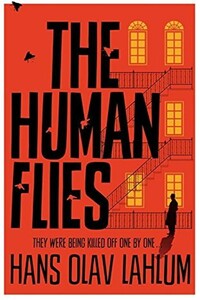
Oslo, 1968: ambitious young detective Inspector Kolbjorn Kristiansen is called to an apartment block, where a man has been found murdered. The victim, Harald Olesen, was a legendary hero of the Resistance during the Nazi occupation, and at first it is difficult to imagine who could have wanted him dead. But as Detective Inspector Kolbjorn Kristiansen (known as K2) begins to investigate, it seems clear that the murderer could only be one of Olesen's fellow tenants in the building. Soon, with the help of Patricia – a brilliant young woman confined to a wheelchair following a terrible accident – K2 will begin to untangle the web of lies surrounding Olesen's neighbors; each of whom, it seems, had their own reasons for wanting Olesen dead.

Молодой и дерзкий журналист Виктор Вавилов, главный редактор глянцевого журнала, находится на грани нервного срыва. Кредитор требует срочного возврата долга, угрожая физической расправой; любимая жена, кажется, собирается подать на развод; подчиненные на работе явно не готовы выполнять поставленные задачи. Все меняется, когда в руки Виктора попадает видеокамера его друга, телевизионного оператора. Нужно просто нажать кнопку «rec» — и все будет… хорошо?
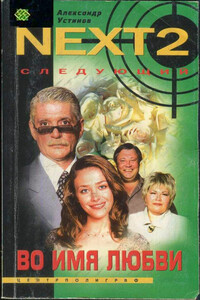
Книга написана по сценарию известного российского драматурга А.В. Тимма.Шайка Ангелины Виннер продолжает борьбу. Им удается похитить Ольгу Кирсанову, жену убитого хозяина «Империи». Сын Ольги Ваня ради спасения матери отказывается от своих прав на фирму. Враждебный лагерь празднует победу, но… преждевременно! В руках у Лавра козырная карта — завещание, и, обнародовав его, он ломает планы своих врагов. Остановятся ли бандиты, или кто-то снова окажется их следующей жертвой?
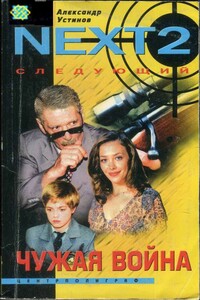
Книга написана по сценарию известного российского драматурга А.В. Тимма.Франц Хартман и Ангелина Виннер, подстроившие автокатастрофу, в которой погиб хозяин «Империи» Владимир Кирсанов, намерены идти до конца. Теперь они замышляют убийство его жены Ольги и несовершеннолетнего сына Вани, наследника «трона». Волею случая Лавру суждено сыграть роль доброго ангела в судьбе женщины и ребенка.
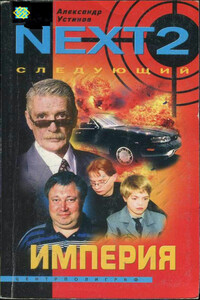
Книга написана по сценарию известного российского драматурга А. В. Тимма.Конкуренты хозяина «Империи» Владимира Кирсанова подстроили автокатастрофу. Он гибнет, а его жена Ольга чудом остается жива. Пока она лежит в коме, адвокат Ангелина Виннер и бывший компаньон погибшего Андрей Семирядин пытаются завладеть наследством Кирсанова. Но его сын Ваня прерывает учебу в Лондоне и с помощью «сладкой парочки», музыкального Санчо и неувядающей Клавдии, возвращается на Родину, чтобы продолжить дело отца.
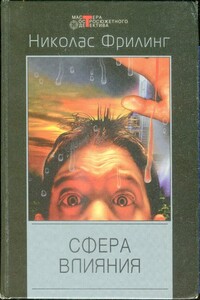
Обстоятельный и дотошный инспектор амстердамской полиции Ван дер Вальк расследует странное убийство домохозяйки («Ать-два!»). Героям известного автора детективов предстоят жестокие испытания, прежде чем справедливость восторжествует.
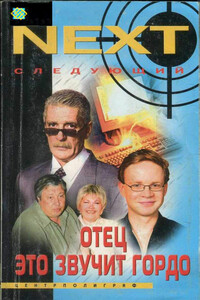
Книга написана по сценарию известного российского драматурга А.В. Тимма. На страницах романа вы встретитесь со старыми знакомыми, полюбившимися вам по сериалу «NEXT», — благородным и великодушным Лавром, его сыном Федором, добродушным весельчаком Санчо и решительной Клавдией. Увлекательное повествование вводит в мир героев, полный настоящих рыцарских подвигов и романтических приключений.