Satellite People - [49]
And so I had to admit to myself, if no one else, that my theory that it was Synnøve Jensen who had paid a visit to Leonard Schelderup’s bed had come crashing down like a house of cards. Without any great hope of a breakthrough, I asked if they could examine the other rooms and also start to compare the new fingerprints with those registered in our archives. The former would take another day, the latter possibly more.
The time was no more than three in the afternoon. For want of more clues to follow up in relation to Leonard Schelderup, I turned to the questions Patricia had given me regarding his father.
Finding Magdalon Schelderup’s doctor proved to be as simple as finding his telephone number. I was given both in a two-minute telephone conversation with Sandra Schelderup. Getting through to the doctor was, however, not so easy. To begin with, the telephone was engaged for ten minutes, but the problems began in earnest when someone finally answered. It took me five minutes at least to convince the super-pedant of a nurse that I really was a detective inspector. Then it took a further ten minutes to persuade her that a murder investigation had to take precedence over a consultation with a patient, even when the patient was over forty-five and had a blood pressure that was several per cent more than average.
The doctor himself was a pleasant surprise when he finally came on the line. He was so unbureaucratic and informative with his answers that I almost made up for the time lost on the engaged signal and the pedant nurse. Yes, he had been Magdalon Schelderup’s personal doctor for many years, twenty-one to be precise. Yes, Schelderup had been in generally good shape both physically and mentally. Yes, something dramatic had happened to his health a year ago. Again, to be precise, on 8 July 1968.
The doctor had noted the date partly because it was his best-known patient, and partly because it was the first time he had experienced a patient having a heart attack in his waiting room. The nurse had called the doctor when she discovered Schelderup sitting almost lifeless with his eyes closed on a chair in the waiting room, mumbling incomprehensible words. He had been treated quickly and the situation had not been life-threatening. At his own wish, Schelderup had gone home after only a few hours in hospital. The heart attack had, however, revealed serious heart disease which meant that Schelderup was not likely to live much more than two or three years longer, with the risk of a new and more serious heart attack within the next twelve to sixteen months.
Nor had the doctor ever known a patient to receive such grave news with such calm as Magdalon Schelderup showed. He had later come to several routine check-ups, but had never asked any questions or made any comments as to how he felt about the situation. He had not revealed who he had told about his heart, but the doctor had the impression that he had kept it to himself.
My final question to the helpful doctor was whether he had heard anything of what Magdalon Schelderup had said when he was semi-conscious after the heart attack. The doctor remarked with a merry little laugh that that was something that Magdalon Schelderup had also asked, a few hours after the attack. He could only tell me what he had told him – and that was that the name ‘Synnøve’ was the only thing that had been clear to anyone in the midst of all the incomprehensible burble. Schelderup had commented with an almost joking smile that it was, in principle, perhaps not such a good thing to mention your secretary rather than your wife, but at least no great secrets had been revealed.
In short, Patricia had once again been right. Something dramatic had happened in Magdalon Schelderup’s life in the summer of 1968, which provided a credible explanation as to the origins of his first will. However, any deeper significance in relation to his dramatic death in May 1969 was still unclear to me, to say the least.
My ponderings on the cases from the war were suddenly interrupted by a heavy pounding on the door. A breathless constable came into the room and, obviously impressed, informed me that they had just received a phone call from the Ministry of Foreign Affairs. The foreign minister, Jonas Lykke, was leaving on a trip to Eastern Europe the following morning, but would take the time to see me this afternoon if I could go there immediately.
X
The foreign minister, Jonas Lykke, was smaller than he looked on the television, but otherwise more or less as I expected.
The former Resistance fighter and prime minister was what could be described as corpulent with greying hair. But his gaze was still intense, his voice was dynamic and his handshake was firm. Sitting behind a large desk in his office, Jonas Lykke radiated precisely the calm and dignity that one would expect of a foreign minister.
There were two tall piles of paper in front of him. To my surprise, they both appeared to be about the mandate possibilities in the up-and-coming general election, rather than the day’s foreign policy issues.
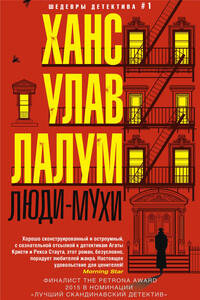
Убит бывший лидер норвежского Сопротивления и бывший член кабинета министров Харальд Олесен. Его тело обнаружено в запертой квартире, следов взлома нет, орудие убийства отсутствует. На звук выстрела к двери Олесена сбежались все соседи, но никого не увидели. Инспектор уголовного розыска Колбьёрн Кристиансен считает, что убийство, скорее всего, совершил кто-то из них. Более того, он полагает, что их показания лживы.
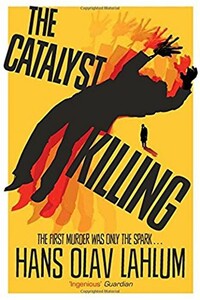
The third mystery in the hugely compelling, bestselling international crime series from Norway's answer to Agatha Christie, Hans Olav Lahlum, The Catalyst Killing will have you guessing to the final clue. The first murder was only the spark… 1970: Inspector Kolbjorn Kristiansen, known as K2, witnesses a young woman desperately trying to board a train only to have the doors close before her face. The next time he sees her, she is dead… As K2 investigates, with the help of his precocious young assistant Patricia, he discovers that the story behind Marie Morgenstierne's murder really began two years ago, when a group of politically active young people set out on a walking tour in the mountains.

From the international bestselling author, Hans Olav Lahlum, comes Chameleon People, the fourth murder mystery in the K2 and Patricia series.1972. On a cold March morning the weekend peace is broken when a frantic young cyclist rings on Inspector Kolbjorn 'K2' Kristiansen's doorbell, desperate to speak to the detective.Compelled to help, K2 lets the boy inside, only to discover that he is being pursued by K2's colleagues in the Oslo police. A bloody knife is quickly found in the young man's pocket: a knife that matches the stab wounds of a politician murdered just a few streets away.The evidence seems clear-cut, and the arrest couldn't be easier.
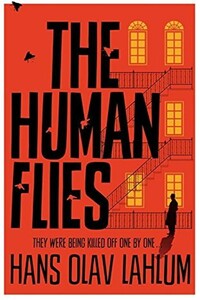
Oslo, 1968: ambitious young detective Inspector Kolbjorn Kristiansen is called to an apartment block, where a man has been found murdered. The victim, Harald Olesen, was a legendary hero of the Resistance during the Nazi occupation, and at first it is difficult to imagine who could have wanted him dead. But as Detective Inspector Kolbjorn Kristiansen (known as K2) begins to investigate, it seems clear that the murderer could only be one of Olesen's fellow tenants in the building. Soon, with the help of Patricia – a brilliant young woman confined to a wheelchair following a terrible accident – K2 will begin to untangle the web of lies surrounding Olesen's neighbors; each of whom, it seems, had their own reasons for wanting Olesen dead.

Молодой и дерзкий журналист Виктор Вавилов, главный редактор глянцевого журнала, находится на грани нервного срыва. Кредитор требует срочного возврата долга, угрожая физической расправой; любимая жена, кажется, собирается подать на развод; подчиненные на работе явно не готовы выполнять поставленные задачи. Все меняется, когда в руки Виктора попадает видеокамера его друга, телевизионного оператора. Нужно просто нажать кнопку «rec» — и все будет… хорошо?
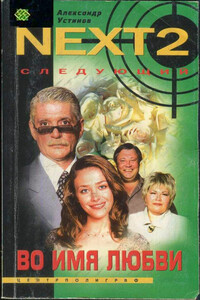
Книга написана по сценарию известного российского драматурга А.В. Тимма.Шайка Ангелины Виннер продолжает борьбу. Им удается похитить Ольгу Кирсанову, жену убитого хозяина «Империи». Сын Ольги Ваня ради спасения матери отказывается от своих прав на фирму. Враждебный лагерь празднует победу, но… преждевременно! В руках у Лавра козырная карта — завещание, и, обнародовав его, он ломает планы своих врагов. Остановятся ли бандиты, или кто-то снова окажется их следующей жертвой?
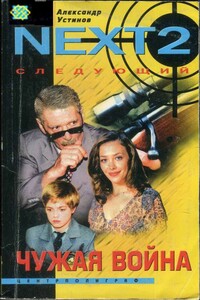
Книга написана по сценарию известного российского драматурга А.В. Тимма.Франц Хартман и Ангелина Виннер, подстроившие автокатастрофу, в которой погиб хозяин «Империи» Владимир Кирсанов, намерены идти до конца. Теперь они замышляют убийство его жены Ольги и несовершеннолетнего сына Вани, наследника «трона». Волею случая Лавру суждено сыграть роль доброго ангела в судьбе женщины и ребенка.
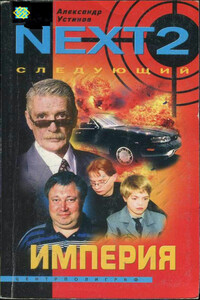
Книга написана по сценарию известного российского драматурга А. В. Тимма.Конкуренты хозяина «Империи» Владимира Кирсанова подстроили автокатастрофу. Он гибнет, а его жена Ольга чудом остается жива. Пока она лежит в коме, адвокат Ангелина Виннер и бывший компаньон погибшего Андрей Семирядин пытаются завладеть наследством Кирсанова. Но его сын Ваня прерывает учебу в Лондоне и с помощью «сладкой парочки», музыкального Санчо и неувядающей Клавдии, возвращается на Родину, чтобы продолжить дело отца.
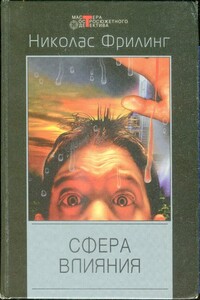
Обстоятельный и дотошный инспектор амстердамской полиции Ван дер Вальк расследует странное убийство домохозяйки («Ать-два!»). Героям известного автора детективов предстоят жестокие испытания, прежде чем справедливость восторжествует.
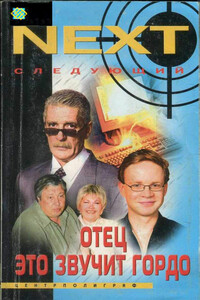
Книга написана по сценарию известного российского драматурга А.В. Тимма. На страницах романа вы встретитесь со старыми знакомыми, полюбившимися вам по сериалу «NEXT», — благородным и великодушным Лавром, его сыном Федором, добродушным весельчаком Санчо и решительной Клавдией. Увлекательное повествование вводит в мир героев, полный настоящих рыцарских подвигов и романтических приключений.