Практический курс английского языка 2 курс - [16]
family relationships begins with the throwing of politeness overboard. Politeness is often little more
than the exercise of self-control, which is as valuable a quality in friendship as kindness itself."
(From "Effective English and Personal Efficiency Course")
Note: These patterns of writing seldom occur alone, more often they are joined together.
Assignments:
1. Read the text "Anne Meets her Class" and point out the paragraph» of
description, narration, argumentation and exposition. What does the author like to
describe in this episode? What is he telling the reader about? What argument is
Anne thinking of to manage the class? What is Miss Enderby trying to explain to
Anne?
2. Search Texts А, В (Р. II) for the basic forms of treating the topic "On
Teaching" and prove your selection of paragraphs.
3. Write a paragraph describing the picture suggested by the teacher.
4. Write a short paragraph about your visit to a former schoolmate.
5. Write a paragraph supporting or arguing Jane's and Bob's idea about
teaching. (See the Dialogue.)
LABORATORY EXERCISES (II)
1. a) Listen to the additional text "What's Your Line?" on the topic "Choosing a
Carrer", mark stresses and tunes, practise reading the text.
b) listen to the dialogue and learn it by heart.
2. Respond as in the models. Check your replies.
3. Write a spelling-translation test, check it with the key.
4. Write the dictation "Five Hundred Years of English Language Teaching",
check your spelling with a dictionary.
5. Translate the sentences into English, check your translation with the key.
6. a) Listen to the text and find English equivalents to the given words and
word combinations.
b) Check the words and word combinations.
c) Listen to the text again and do the tasks after it.
UNIT TWO
SPEECH PATTERNS
la. It would have been natural if the boy had gone to sleep.
It would have been natural if you had punished the child for his behaviour yesterday.
It wouldn't have been so cold in the morning if the wind had stopped blowing.
It would have been strange if he hadn't called on me when he was here last summer.
It would have been quite dark in the forest if we hadn't made a good fire.
1b. The father wouldn't have called the doctor if the boy had been quite well.
Grant would have accepted Mario's invitation if he hadn't made up his plans for the summer.
Anne would have taken her spring exams if she hadn't fallen ill.
We shouldn't have made friends with them if we hadn't stayed in the same camp.
We should have finished our work yesterday if you had helped us.
1c. The boy would have behaved in a different way if he were selfish.
They wouldn't have quarrelled if they both were less nervous.
You would have improved your spelling long ago if you were more diligent.
We should have invited him to our party if we knew him better.
She wouldn't have forgiven him if she didn't love him so much.
2. He seemed to know all about influenza.
The children seem to like each other very much. You don't seem to understand me.
She seemed to know grammar much better than we thought.
They did't seem to have met before.
3. I can't keep from thinking.
Can't you keep from talking all the time? Try and keep from gossiping about other people.
She couldn't keep from scolding the child, though she knew she shouldn't do it.
We can't keep from laughing when we look at him.
EXERCISES I. Change these sentences, using Patterns 1a and 1b:
Example:
We should meet a lot of tourists if we went to a tourist camp next summer.
We should have met a lot of tourists if we had gone to a tourist camp last year (last summer,
when we had our holiday, etc.).
1. Mario wouldn't come to England if John didn't invite him. 2. Peter would accept your
invitation if he were not ill. 3. It wouldn't be a hardship for the children to sweep and clean the
rooms, would it? 4. If the weather were fine we should go to a holiday camp next summer. 5. We
would live in a hotel if the rates were not very high. 6. It would be natural if they didn't meet after
their quarrel. 7. My friend and I would go to the cinema after this lesson if the rest of the students
agreed to go with us. 8. If the weather didn't change we should go to the country tonight.
II. Combine the fallowing sentences into one, using speech Pattern 1c:
Example:
They quarrelled. They both are very nervous.
They wouldn't have quarrelled if they both were not very nervous.
1. Bob recovered. The doctors that had treated him are very experienced. 2. Mary passed her
exams. She is industrious. 3. We invited John Brown to our tea-party. We are acquainted with him. 4.
I didn't leave the children alone. They are naughty. 5. She didn't agree to teach us French. She doesn't
know the language well. 6. Martha understood the German delegates, she is a German. 7. I gave you
this book because it's very interesting. 8. I advised my friends to have a walking tour because I
myself am fond of walking tours.
III. Make up sentences after Patterns 2 and 3, using the following words and
phrases:
a) Pattern 2: to be busy, to know a lot, to understand each other, to hate (smb. or smth.), to
Упражнения, Задания: Ключи к Учебнику. Учебник является второй частью серии комплексных учебников для I - V курсов педагогических вузов. Цель учебника – обучение устной речи на основе развития необходимых автоматизированных речевых навыков, развитие техники чтения, а также навыков письменной речи.
Учебник является третьей частью серии комплексных учебников для I - V курсов педагогических вузов. Цель учебника – обучение устной речи на основе развития необходимых автоматизированных речевых навыков, развитие техники чтения, а также навыков письменной речи.

Учебник является первой частью серии комплексных учебников для I - V курсов педагогических вузов. Цель учебника – обучение устной речи на основе развития необходимых автоматизированных речевых навыков, развитие техники чтения, а также навыков письменной речи.
Упражнения, Задания: Ключи к Учебнику. Учебник является третьей частью серии комплексных учебников для I - V курсов педагогических вузов. Цель учебника – обучение устной речи на основе развития необходимых автоматизированных речевых навыков, развитие техники чтения, а также навыков письменной речи.
Упражнения, Задания: Ключи к Учебнику. Учебник является первой частью серии комплексных учебников для I - V курсов педагогических вузов. Цель учебника – обучение устной речи на основе развития необходимых автоматизированных речевых навыков, развитие техники чтения, а также навыков письменной речи.

В книге рассказывается история главного героя, который сталкивается с различными проблемами и препятствиями на протяжении всего своего путешествия. По пути он встречает множество второстепенных персонажей, которые играют важные роли в истории. Благодаря опыту главного героя книга исследует такие темы, как любовь, потеря, надежда и стойкость. По мере того, как главный герой преодолевает свои трудности, он усваивает ценные уроки жизни и растет как личность.

Рассматриваются генезис и эволюция российской и украинской государственности, социальной структуры и общественных институтов, развитие хозяйственной сферы и культуры народов России и Украины в период Средневековья и Нового времени. Обобщение научного и учебного материала, оценки и выводы сделаны с учетом современного уровня историографии, в том числе белорусской. Предназначено для студентов исторических факультетов высших учебных заведений Республики Беларусь, может быть полезно для всех, кто интересуется историей России и Украины.

Рассмотрены этапы развития японской литературы с момента заимствования китайских иероглифов и зарождения собственной письменности до современности. Описаны наиболее известные письменные памятники, а также основные литературные жанры и стили различных исторических периодов. Предназначено для студентов бакалавриата, обучающихся по направлению подготовки 45.03.02 «Лингвистика».
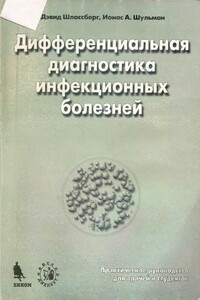
В книге изложены современные методы дифференциальной диагностики инфекционных болезней, основанные на анализе типов лихорадки, диареи, сыпи, желтухи, местной и генерализованной лимфаденопатии, являющихся неотъемлемыми признаками инфекционного процесса. Рассмотрены этиология, пути передачи, методы лабораторной диагностики, клинические проявления и способы лечения инфекций. Дан алгоритм постановки правильного диагноза. Для врачей общей практики, инфекционистов, студентов медицинских учебных заведений.
Настоящее учебно-методическое пособие включает конспект лекционного курса по социологии, краткий словарь социологических терминов к каждой теме, список учебной литературы, а также контрольные вопросы по дисциплине. Пособие разработано в соответствии с типовой программой по социологии и предназначено для студентов всех факультетов ГГМУ дневной и заочной форм обучения. Цель настоящего пособия состоит в обеспечении студентов необходимым минимумом учебно-методического материала по социологии.

В книге в доступной форме излагает суть работы журналиста-новостийщика, основа подготовки газетных материалов. Начинающим журналистам и тем, кто планирует в будущем работать в печатных СМИ, будет полезно ознакомится с технологическими аспектами написания статей.