Letters To My Daughter's Killer - [5]
Tony uses it for work but switches it off when he is at home. Or he used to. It seems to take forever to find my phone and his details. While it rings, it occurs to me that the Tennysons, Jack’s parents, need to know too. I mention it to Kay. ‘Should I wait?’ Have I even got their number?
‘Jack will probably want to tell them himself,’ Kay says.
‘Of course.’
She knows the etiquette, not just of death but of this particular situation: sudden, violent death.
Tony’s cell phone goes to voicemail and I hang up. Bury my head in my hands.
‘Try again in a while,’ Kay says. ‘Or we can send someone round there if you-’
‘No.’ It seems cowardly to do that. I should be the one to tell him, not some stranger.
The man who comes to take my statement seems far too young to be dealing with this sort of thing. But he’s not at all nervous or inept. He takes me slowly through the sequence of events: Jack’s call, the car journey, going into the house, being restrained.
Then he asks more questions about the house. Were the lights on or off, did I put any lights on? Was there any sound, TV or radio? What was the temperature like?
I laugh at this; it seems preposterous that in the face of such a huge shock, my sense of hot and cold would be functioning and that I might still remember.
‘No idea,’ I say.
I picture Lizzie, the contrast of her hair and the dark stains. Recall light flickering over her hand, her left hand. That would have been from the fire, their log-burning stove. ‘The fire was lit,’ I say.
Then the questions become more general, he confirms Lizzie’s date of birth and age. He wants to know about her life, her work, her marriage, her routines. When I last saw her. What we spoke about. And finally if I can think of anyone who might have wanted to cause her harm. I tell him all I can about Broderick Litton, urge him to check the police files. Surely they will know more than me.
He writes it all up and reads it back to me. Four pages in all. And I sign in the proper place.
When I call Tony again, Denise answers.
‘It’s Ruth, I need to talk to Tony.’
There’s a wait while she fetches him or takes him the phone, and then his voice, thick with sleep. I say his name and then I freeze. I swallow. Force breath into my lungs. ‘Tony, I’ve got some really, really bad news. Oh Tony. It’s Lizzie. I’m so sorry. Lizzie, she’s dead.’
He makes a noise, a sort of howl, strangulated.
I can’t tell him the rest, not on the phone. ‘Can you come?’
‘Yes,’ he says. That’s all he says. Just yes. Quick and quiet. And hangs up.
Jack gets back first; it is almost dawn. His eyes are red, his lips chapped, his face grey. He is wearing navy jog pants and black trainers and a nylon anorak which the police must have given him to replace his clothes. He takes the coat off, moving slowly like an arthritic old man, and sits beside Florence, still sleeping on the sofa.
There’s no mistaking whose daughter she is. The same shiny straight black hair and even features, prominent cheekbones. The only thing Florence got from Lizzie are her eyes, sea green, the same as Tony’s.
Jack’s been the main carer the last couple of years. Lizzie and he are both freelance, so whoever has work offered grabs it and the other person picks up the domestic reins. It’s hard for them – juggling, coping with the uncertainty of money – but they both love their work and neither of them would swap it for the security of doing something tedious nine to five.
Jack will do anything he can get: radio parts, panto, telly, as well as theatre, which he likes best. He keeps going up for auditions but hasn’t had anything for months, whereas Lizzie’s been flat out. She first began interpreting at conferences and for deaf students at the universities here, then developed her theatre work, which has really taken off.
Kay brings Jack a cup of tea and he wraps his hands around it and hunches over. She tells him what she’s already told me about the day ahead. About what will happen to Lizzie. What must be done. She leaves us to talk.
He is clearly exhausted, but I am desperate to know what he saw, to hear the sequence of events, to find out if he’s learnt anything yet from the police.
‘What happened?’ I ask him.
He shakes his head. ‘They don’t know.’ His voice is worn out, husky, almost gone. ‘I’d been to the gym…’ He tries to clear his throat. ‘She was watching TV when I left…’
They both go to the gym regularly. Lizzie likes it as a way of keeping fit, and Jack has to keep in shape for his work in the theatre.
‘I got back…’ His hands tighten round the mug. ‘She was there…’ his composure breaks and he speaks, fighting tears, ‘she was there, like that. Who could do that?’ He looks at me.
‘Did you see anyone?’
Jack shakes his head, ruination in his eyes.
‘Broderick Litton,’ I say.
‘They know. They’ll interview him.’
‘She’s not had any trouble from him recently?’
‘No, nothing since last July.’
‘And she’d never have let him in,’ I point out.
‘She might have thought it was me, that I’d forgotten something,’ Jack says.
‘You’d use your key.’
‘Forgotten that, then – I don’t know.’ He casts about. ‘We had a prowler.’

1960, Manchester. Three young Catholic women find themselves pregnant and unmarried. In these pre-Pill days, there is only one acceptable course of action: adoption. So Megan, Caroline and Joan meet up in St Ann's Home for Unmarried Mothers to await the births of their babies. Three little girls are born, and placed with their adoptive families. Trio follows the lives of these mothers and daughters over the ensuing years.
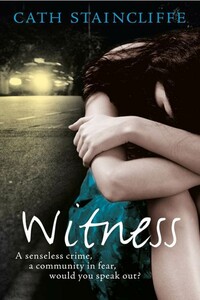
"A painfully honest exploration of an ordinary family under stress… A stunning piece of work." – Ann CleevesFour bystanders in the wrong place at the wrong time. Witnesses to the shocking shooting of a teenage boy. A moment that changes their lives forever. Fiona, a midwife, is plagued by panic attacks and unable to work. Has she the strength to testify? Mike, a delivery driver and family man, faces an impossible decision when his frightened wife forces him to choose – us or the court case. Cheryl, a single-mother, doesn't want her child to grow up in the same climate of fear.
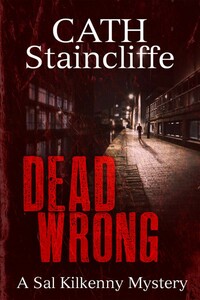
Single mother and private eye, Sal Kilkenny, has two very frightened clients on her hands. One, young mother Debbie Gosforth, is a victim; the other, Luke Wallace, is afraid he is a murderer. While Sal tries to protect Debbie from a stalker, she has to investigate the murder of Luke's best friend.

Your husband, your family, your freedom. What would you sacrifice for love? A love story, a modern nightmare and an honest and incisive portrayal of a woman who honours her husband's wish to die and finds herself in the dock for murder.When Deborah reluctantly helps her beloved husband Neil end his life and conceals the truth, she is charged with murder. As the trial unfolds and her daughter Sophie testifies against her, Deborah, still reeling with grief, fights to defend her actions. Twelve jurors hold her fate in their hands, if found guilty she will serve a life sentence.
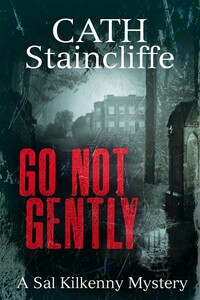
From the author of LOOKING FOR TROUBLE, a further crime novel featuring private investigator Sal Kilkenny. When a man is distraught at his wife's apparent infidelity, he enlists the help of Sal to confirm his suspicions, only to find himself a widower soon afterwards. From there Sal's other case also begins to take a disturbing and violent turn.

When private eye Sal Kilkenny is asked to discover the whereabouts of Jennifer Pickering, disinherited by her family twenty years ago, it seems that Jennifer does not want to be found. Despite her initial reservations, as the events of the past gradually unfold, single-mum Sal finds that she is becoming engrossed in the case. There are dark secrets waiting to be uncovered but can Sal break the conspiracy of silence that surrounds this mystery? As she spends her days tracing Jennifer, Sal's nights become shattered by an emotional and often dangerous assignment with the Neighbour Nuisance Unit on one of Manchester's toughest housing estates.

В самом начале нового века, а может быть и в конце старого (на самом деле все подряд путались в сроках наступления миллениума), Катя Малышева получила от бывшего компаньона Валентина поручение, точнее он попросил оказать ему платную любезность, а именно познакомиться с заслуженной старой дамой, на которую никто в агентстве «Аргус» не мог угодить. Катя без особой охоты взялась за дело, однако очень скоро оно стало усложняться. Водоворот событий увлек Катю за собой, а Валентину пришлось её искать в печальных сомнениях жива она или уже нет…

Наталия Новохатская Предлагает серию развернутых описаний, сначала советской (немного), затем дальнейшей российской жизни за последние 20 с лишком лет, с заметным уклоном в криминально-приключенческую сторону. Главная героиня, она же основной рассказчик — детектив-самоучка, некая Катя Малышева. Серия предназначена для более или менее просвещенной аудитории со здоровой психикой и почти не содержит описаний кровавых убийств или прочих резких отклонений от здорового образа жизни. В читателе предполагается чувство юмора, хотя бы в малой степени, допускающей, что можно смеяться над собой.

Смерть – какая она? Страшная? Или наоборот – освободительная? Кто решает кому жить, а кому нет? Журналист Максим Котов недавно пережил самую страшную потерю. Неизвестный вирус унёс жизнь его ребёнка. «Так бывает…» – сказали врачи. Но Максим уверен, что смерть его дочери – не случайность, а часть большого заговора. И в этом заговоре его ребенку была отведена роль пешки, которой с легкостью пожертвовали ради достижения «большой цели». Котов решает найти виновного и отомстить. Но чем больше он углубляется в расследование, тем запутаннее становится история.

Эта история начинается с ограбления с трагическим финалом: немолодой хозяин загородного дома погибает от рук неизвестных преступников. Однако в этой истории оказывается не так все просто, и сам погибший несет ответственность за то, что с ним произошло. Рассказ «Вода из колодца» седьмой в ряду цикла «Дыхание мегаполиса». Главным героем этого цикла является следователь Дмитрий Владимиров, который на этот раз должен разобраться в хитросплетениях одной запутанной семейной драмы.