Letters To My Daughter's Killer - [4]
Ruth
CHAPTER THREE
17 Brinks Avenue
Manchester
M19 6FX
Did you think you’d got away with it, that first night? What were you feeling? Elation? Terror? Some sexual frisson? It’s the same physiological response, isn’t it – fight, flight, fuck. Violence, fear, sex. It’s on my list of questions. And did you replay events in your head or try to shut them out? Were you racked with guilt or full of exhilaration?
While I wait for someone to come, to break the spell, me and my granddaughter and the cat cocooned in the bubble, I try to imagine you. Broderick Litton, who I never met, never saw. Like a bodyguard, Lizzie said you were; smart, though, a military type, clipped and polished. Always very pleasant except when you were being a vicious bully. At the time you were stalking her, I grew more panicky than Lizzie. When the police did so little, I wanted her to move. Suggested we swap houses.
The questions swoop through my head like bats in the dark, to and fro, silent, quick and shadowy. Why wasn’t Lizzie more careful? Why did she open the door? Why did she let you in? Why? Why? Why?
Where are you? Scurrying through night-black streets smelling of blood, or lurking in some lair, drinking and gloating, or slipping into bed beside your drowsy wife?
It is hard to sit still and Milky senses my agitation, echoes it with repeated sorties out of the cat flap and back. My skin is cold; I am frozen to the marrow, despite the heating being on, and I’m itchy. I can’t stop scratching: my arms, my neck, my calves. As if I am shedding a skin, or trying to claw it off and make my body raw like the rest of me.
Lizzie’s photographs – Lizzie as a baby, as a child, with Jack, with Florence – clutter my walls. I am standing in the corner, staring at one: her graduation day, Lizzie flanked by Tony and me. Her eyes alive with happiness, ours too. Delight and pride. I rub at my shoulder. Tony – I must ring Tony. Should I? Or wait? Make completely sure? If there’s been a horrible mistake and I tell him now… that she is… A wave of nausea breaks through me, coating me in clammy sweat, shrivelling my stomach, forcing bile into the back of my throat. In the kitchen I spit it out and drink a little water.
A knocking at the door makes me jump. It is the family liaison officer. A beanpole of a woman with short greying hair and a weather-beaten face. Kind eyes. Stupid thing to say really, but they are not brash or judgemental, or even overtly emotional, but accepting. The sort of eyes you can stare into and not feel impelled to look away. (Or maybe that’s hindsight. Those early days, Kay, that was her name, was a sort of calm anchor for us all.)
Kay makes tea and explains what is happening, what will happen in the next twenty-four hours. That is as much as I can take in, and even that doesn’t really penetrate. There is a buffer between my understanding and the outside world, a fog that makes it hard to truly hear and know things.
‘It’s the shock,’ Kay says, when I apologize and ask her to repeat something. ‘You won’t be able to think straight,’ she says. ‘It’s normal.’
A flare of anger pierces the fug. I take issue. ‘This is not normal, none of this is normal.’
‘No,’ she agrees.
I pace the room; my scalp itches, I rake at it with my nails. And I try to remember what Kay has said. People will be busy at Lizzie’s house documenting the scene and collecting evidence. There will be a post-mortem. A host of television dramas come to mind, angst-ridden pathologists and flawed but courageous detectives. This is real, I tell myself. Real. Really happening. There will be the formal identification of Lizzie’s body. Kay says that, ‘Lizzie’s body’, not ‘the body’. Every time she mentions her, she uses Lizzie’s name. Keeping it specific and personal. They are probably trained to do that. I appreciate it. The understanding that their victim is more than a victim; she’s my daughter, Jack’s wife, Florence’s mother.
‘I should ring Tony,’ I remember in a rush. ‘Lizzie’s dad.’
‘Does he live nearby?’
‘Reddish Vale.’ A few miles. ‘He remarried,’ I say, ‘Denise.’
Denise the wheeze. My nasty nickname because Denise’s default position is to giggle, to laugh, and she is a smoker, which adds to the breathy quality of her chortling. It’s probably a nervous tic, but it makes me want to slap her. Grab her by the arms and ask her what’s so funny.
I have to look their number up in my address book; it’s not something I ever wanted to memorize. It rings and rings. Tony probably can’t hear it. He’s going deaf, Lizzie said recently, but he’s too proud or too macho to get his ears tested. Lizzie teased him about it, and said she’d have to teach him sign language. A bit more than the few signs we mastered when she first began learning BSL: hello, goodbye, I love you and a couple of swear words. She brings me titbits about Tony (and no doubt does the same in the other direction), and I accept them gracefully. We keep it civilized. For her as much as anything. And for Florence.
The phone rings out. ‘They’re not answering,’ I say to Kay. ‘I’ll try his mobile.’

1960, Manchester. Three young Catholic women find themselves pregnant and unmarried. In these pre-Pill days, there is only one acceptable course of action: adoption. So Megan, Caroline and Joan meet up in St Ann's Home for Unmarried Mothers to await the births of their babies. Three little girls are born, and placed with their adoptive families. Trio follows the lives of these mothers and daughters over the ensuing years.
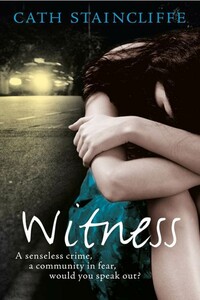
"A painfully honest exploration of an ordinary family under stress… A stunning piece of work." – Ann CleevesFour bystanders in the wrong place at the wrong time. Witnesses to the shocking shooting of a teenage boy. A moment that changes their lives forever. Fiona, a midwife, is plagued by panic attacks and unable to work. Has she the strength to testify? Mike, a delivery driver and family man, faces an impossible decision when his frightened wife forces him to choose – us or the court case. Cheryl, a single-mother, doesn't want her child to grow up in the same climate of fear.
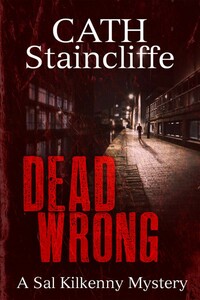
Single mother and private eye, Sal Kilkenny, has two very frightened clients on her hands. One, young mother Debbie Gosforth, is a victim; the other, Luke Wallace, is afraid he is a murderer. While Sal tries to protect Debbie from a stalker, she has to investigate the murder of Luke's best friend.

Your husband, your family, your freedom. What would you sacrifice for love? A love story, a modern nightmare and an honest and incisive portrayal of a woman who honours her husband's wish to die and finds herself in the dock for murder.When Deborah reluctantly helps her beloved husband Neil end his life and conceals the truth, she is charged with murder. As the trial unfolds and her daughter Sophie testifies against her, Deborah, still reeling with grief, fights to defend her actions. Twelve jurors hold her fate in their hands, if found guilty she will serve a life sentence.
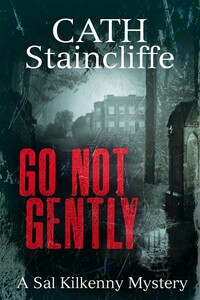
From the author of LOOKING FOR TROUBLE, a further crime novel featuring private investigator Sal Kilkenny. When a man is distraught at his wife's apparent infidelity, he enlists the help of Sal to confirm his suspicions, only to find himself a widower soon afterwards. From there Sal's other case also begins to take a disturbing and violent turn.

When private eye Sal Kilkenny is asked to discover the whereabouts of Jennifer Pickering, disinherited by her family twenty years ago, it seems that Jennifer does not want to be found. Despite her initial reservations, as the events of the past gradually unfold, single-mum Sal finds that she is becoming engrossed in the case. There are dark secrets waiting to be uncovered but can Sal break the conspiracy of silence that surrounds this mystery? As she spends her days tracing Jennifer, Sal's nights become shattered by an emotional and often dangerous assignment with the Neighbour Nuisance Unit on one of Manchester's toughest housing estates.
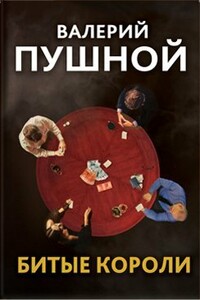
Обнаженная девушка выбегает на дорогу, останавливает встречный автомобиль и просит защитить ее. Ей помогают. Но все оказывается не так просто, как кажется на первый взгляд. Герои, ранее известные читателю по книге «Ребро беса», попадают в новую детективную историю.

В самом начале нового века, а может быть и в конце старого (на самом деле все подряд путались в сроках наступления миллениума), Катя Малышева получила от бывшего компаньона Валентина поручение, точнее он попросил оказать ему платную любезность, а именно познакомиться с заслуженной старой дамой, на которую никто в агентстве «Аргус» не мог угодить. Катя без особой охоты взялась за дело, однако очень скоро оно стало усложняться. Водоворот событий увлек Катю за собой, а Валентину пришлось её искать в печальных сомнениях жива она или уже нет…

Наталия Новохатская Предлагает серию развернутых описаний, сначала советской (немного), затем дальнейшей российской жизни за последние 20 с лишком лет, с заметным уклоном в криминально-приключенческую сторону. Главная героиня, она же основной рассказчик — детектив-самоучка, некая Катя Малышева. Серия предназначена для более или менее просвещенной аудитории со здоровой психикой и почти не содержит описаний кровавых убийств или прочих резких отклонений от здорового образа жизни. В читателе предполагается чувство юмора, хотя бы в малой степени, допускающей, что можно смеяться над собой.

Эта история начинается с ограбления с трагическим финалом: немолодой хозяин загородного дома погибает от рук неизвестных преступников. Однако в этой истории оказывается не так все просто, и сам погибший несет ответственность за то, что с ним произошло. Рассказ «Вода из колодца» седьмой в ряду цикла «Дыхание мегаполиса». Главным героем этого цикла является следователь Дмитрий Владимиров, который на этот раз должен разобраться в хитросплетениях одной запутанной семейной драмы.