Letters To My Daughter's Killer - [10]
From the curry house we went to the pub. We hadn’t been out for a drink together since Lizzie was born. After a couple of halves of Guinness, I told him that I definitely wanted to go back to work after my six months’ leave, but part time if we could possibly manage it. And I also announced that I didn’t want to have any more children. ‘I know everyone says that at first,’ I told him, ‘but I really can’t do this again.’
‘It’s bound to be different,’ he said.
‘No,’ I said, ‘because it isn’t going to happen. I mean it.’ What I was saying was serious and he needed to realize it. ‘If you want more kids, you need to be honest with me, and not go along with it thinking I might change my mind. Because I won’t.’
‘No,’ he said, ‘I wanted to be a dad, I wanted a child. We’ve got a child. That’s fine.’
I stared at him, into those blue-green eyes, and he met my gaze. He meant what he said.
Florence was so different from Lizzie. Polar opposites. As long as she was fed and clean and warm enough, she was happy. She cried if she needed something but not those raging, painful howls her mother had made, the sort that clawed inside your skull and scraped at your nerves.
‘When Lizzie met you,’ I say to Jack, ‘when you started going out. She was so… giddy.’
I remember her bursting to tell us: ‘The one who played Cassius, the one with the dark hair.’
Lizzie had been sign-language interpreting at the Royal Exchange. One of her first big jobs and she was petrified. We were worried at first; Jack was living with someone, but Lizzie insisted that he was an honourable man. He would tell his partner. Of course I fretted: if he could be fickle once… But Lizzie knew he was the great love of her life. She never doubted they’d be together.
And she was right. Jack left his girlfriend in London and moved to Manchester.
‘And your proposal!’ We laugh with delight and another wave of shame runs through me. Lizzie is dead. I ought never to laugh again.
The men catch my mood.
‘It’s all right,’ Tony says, his eyes on me.
‘She was embarrassed,’ Jack says after a pause.
‘But she loved it,’ I say. ‘The romance of it.’ Several months after their first meeting, Jack was playing in What the Butler Saw at the Birmingham Rep, and Lizzie was doing the signed performances.
At the end of the show, after the curtain call, Jack remained on stage, and the technician, who’d been primed, played a drum roll, alerting the audience, who were already on their feet ready to leave. Lizzie was sitting at the side of the stage, near the wings.
Jack had practised his message and began to sign to her. At first she did nothing, just went bright red. ‘I was too surprised,’ she told me. Jack repeated the signs: Lizzie, I love you. I want to spend the rest of my life with you. Will you marry me?
Blushing furiously, she stood up and translated to the audience.
A hush of expectation fell over the theatre, broken only by a couple of wolf whistles and someone yelling, ‘Say yes.’ And answering laughter. Then Lizzie in turn signed to Jack. Yes, I will. I love you. And said it aloud. The place erupted with applause and cheers and catcalls.
No one wants to break up our little circle, but eventually at almost two in the morning Tony calls a cab and Jack says good night.
Lizzie was heartbroken when we split up. Is it different for any children? Are there those who find relief in the separation, in the cessation of hostilities? Perhaps.
Lizzie was only fifteen when the mayhem of our troubles clashed with her own teenage trauma. Sometimes it felt like we were three adolescents competing as to who could slam the door hardest, stay silent longest, shout the loudest.
In my memory, that period lasted for years. In reality, it was no more than three or four months. We weren’t complete idiots, and even mired in our own pain, we could see how it was hurting Lizzie.
It was the greatest shock of my life.
Before this.
Tony stayed home from work one day. I was doing the late shift at the library and Lizzie had left for school.
‘Don’t you need to open up?’ I said. He had been working all hours, making the most of the lighter nights and a fresh wave of property development in the region.
‘I need to talk to you,’ he said, a peculiar shifty look on his face.
I had no idea.
We sat at the kitchen table. I swallowed. I couldn’t imagine what it was about; my mind alighted on possibilities: financial trouble, a health scare, another discussion about moving house (every few years we’d go through the rigmarole of considering a move, of looking for some wreck and doing it up and selling it on as another way to make some money. But we’d never finally bitten the bullet).
‘I’ve met someone else,’ he said.
I stared at him. Clutching at the possibility that I’d misheard, misunderstood. Waiting in case there was something more to come, a punchline, another phrase to set me straight and allow me to breathe again.
When I didn’t speak, he cleared his throat. ‘It’s serious,’ he said. His hands, big, brawny hands, clenched together, one nail tugging at a scab.
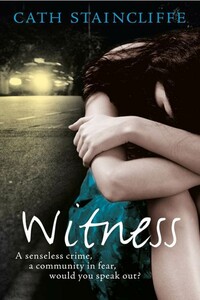
"A painfully honest exploration of an ordinary family under stress… A stunning piece of work." – Ann CleevesFour bystanders in the wrong place at the wrong time. Witnesses to the shocking shooting of a teenage boy. A moment that changes their lives forever. Fiona, a midwife, is plagued by panic attacks and unable to work. Has she the strength to testify? Mike, a delivery driver and family man, faces an impossible decision when his frightened wife forces him to choose – us or the court case. Cheryl, a single-mother, doesn't want her child to grow up in the same climate of fear.
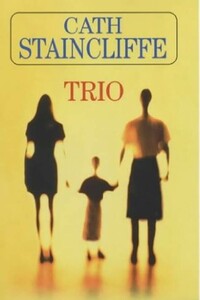
1960, Manchester. Three young Catholic women find themselves pregnant and unmarried. In these pre-Pill days, there is only one acceptable course of action: adoption. So Megan, Caroline and Joan meet up in St Ann's Home for Unmarried Mothers to await the births of their babies. Three little girls are born, and placed with their adoptive families. Trio follows the lives of these mothers and daughters over the ensuing years.
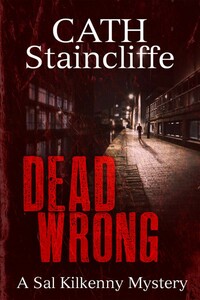
Single mother and private eye, Sal Kilkenny, has two very frightened clients on her hands. One, young mother Debbie Gosforth, is a victim; the other, Luke Wallace, is afraid he is a murderer. While Sal tries to protect Debbie from a stalker, she has to investigate the murder of Luke's best friend.
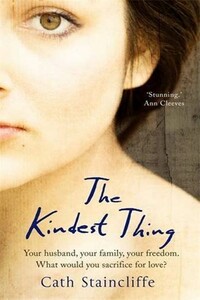
Your husband, your family, your freedom. What would you sacrifice for love? A love story, a modern nightmare and an honest and incisive portrayal of a woman who honours her husband's wish to die and finds herself in the dock for murder.When Deborah reluctantly helps her beloved husband Neil end his life and conceals the truth, she is charged with murder. As the trial unfolds and her daughter Sophie testifies against her, Deborah, still reeling with grief, fights to defend her actions. Twelve jurors hold her fate in their hands, if found guilty she will serve a life sentence.
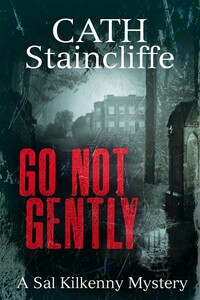
From the author of LOOKING FOR TROUBLE, a further crime novel featuring private investigator Sal Kilkenny. When a man is distraught at his wife's apparent infidelity, he enlists the help of Sal to confirm his suspicions, only to find himself a widower soon afterwards. From there Sal's other case also begins to take a disturbing and violent turn.
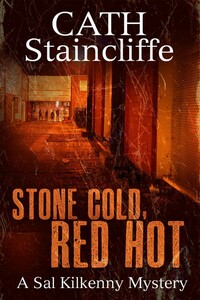
When private eye Sal Kilkenny is asked to discover the whereabouts of Jennifer Pickering, disinherited by her family twenty years ago, it seems that Jennifer does not want to be found. Despite her initial reservations, as the events of the past gradually unfold, single-mum Sal finds that she is becoming engrossed in the case. There are dark secrets waiting to be uncovered but can Sal break the conspiracy of silence that surrounds this mystery? As she spends her days tracing Jennifer, Sal's nights become shattered by an emotional and often dangerous assignment with the Neighbour Nuisance Unit on one of Manchester's toughest housing estates.

Люси и Джейк – образцовые супруги. У них двое детей, уютный домик и налаженный семейный быт. Он строит карьеру. Она посвятила всю себя семье. Но тихую идиллию нарушает шокирующая весть. Джейк изменил Люси. Теперь уже ничто не будет как прежде… Боль от предательства. Разбитые надежды. Люси и Джейк решают остаться вместе, но с одним условием. Чтобы «уравнять» супругов и спасти брак, Люси трижды причинит боль Джейку… Любым способом, каким захочет.

Во время летнего фестиваля искусств на территории бывшей графской усадьбы происходит убийство. Чеховская чайка, призванная олицетворять свободный творческий полёт, может стать символом тёмного мира, где жизнь не имеет цены. Поймёт ли следователь Кречетов, к какому миру принадлежит каждый из персонажей? Сумеет ли он распутать цепочку странных взаимосвязей? А может быть, в этой цепочке замешан призрак графини, блуждающий по аллеям парка и охраняющий тайну старинного клада?
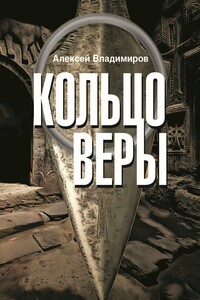
Археолог Вера Буковская при раскопках монастыря в Армении обнаруживает кусок льняной ткани с непонятными надписями и чертежом. Странная находка погружает «везучую Верочку» в кольцо динамично развивающихся событий, предсказать которые не может никто. Командор Тайного ордена хранителей Священного Копья и римский кардинал, магистр Мальтийского ордена и отставной полковник Котов, петербургский академик-востоковед Пиоровский и безжалостный итальянский специалист по «щекотливым делам» охвачены азартом охоты за утерянным тысячелетия назад артефактом.
В книге рассказывается история главного героя, который сталкивается с различными проблемами и препятствиями на протяжении всего своего путешествия. По пути он встречает множество второстепенных персонажей, которые играют важные роли в истории. Благодаря опыту главного героя книга исследует такие темы, как любовь, потеря, надежда и стойкость. По мере того, как главный герой преодолевает свои трудности, он усваивает ценные уроки жизни и растет как личность.
В книге рассказывается история главного героя, который сталкивается с различными проблемами и препятствиями на протяжении всего своего путешествия. По пути он встречает множество второстепенных персонажей, которые играют важные роли в истории. Благодаря опыту главного героя книга исследует такие темы, как любовь, потеря, надежда и стойкость. По мере того, как главный герой преодолевает свои трудности, он усваивает ценные уроки жизни и растет как личность.
В книге рассказывается история главного героя, который сталкивается с различными проблемами и препятствиями на протяжении всего своего путешествия. По пути он встречает множество второстепенных персонажей, которые играют важные роли в истории. Благодаря опыту главного героя книга исследует такие темы, как любовь, потеря, надежда и стойкость. По мере того, как главный герой преодолевает свои трудности, он усваивает ценные уроки жизни и растет как личность.