Философское - [55]
In fact, if we put in an effort and try to overcome the primordial (initial) conventionality in the problem of «thought» and «feeling (emotion)», then in the light of the meta-principle of the whole-oneness of everything in existence, the truth of the essential oneness of thought and sense (feeling) comes into evidence.
It is not enough by far to speak of their close unity. «Thought» and «feeling» are dissected elements of that single, indissectible, essentially whole principle which we term — for lack of a better word — «Pathos». Thought and feeling make an integral whole, like consciousness and non-consciousness; pathos cannot be dismembered structurally, in the same way as the human soul, human psychics cannot be dismembered. Creativity is the domain of pathos. Pathos is not consciousness, neither it is non-consciousness, it is something that encompasses, essentially and as a whole, those principles which, again too conveniently, in the dissecting language of science, we determine as consciousness, on the one hand, and as non-consciousness, on the other; or, by distant association — as idea and as image. (Paul Valery wrote that painting gives us the possibility to perceive things as they once were, — when they were looked upon with love…)
Thus, the tragedy of the end suggested by consciousness is overcome in creation. Creation is the realm of pathos, the realm of man's organic unity with the Universe, the realm of interpenetration of the human and the non-human, the reciprocal balancing and complete fusion of consciousness and reality. Consequently, pathos is the only instrument of existential optimism, of self-assertion of life and self-assertion in life, and, thus, the only instrument which helps to obtain inner freedom; for, as Spinoza rightly thought, man's freedom lies in overcoming thoughts of death. The conventionally assumed structure of pathos is, we repeat, whole-oneness of thought and feeling. The existentially optimistic impulse provided by pathos is testified to, to say the least, by those historical epochs in whose culture thought and feeling were comparatively close together. Such are Antiquity and the Renaissance, eternal in their enlightening significance.
To sum it up, we can say — it is creativity that effects man's unrealized «comeback to himself», i.e. to the state of organic oneness with the world, the comeback of man to Adam, and of Adam himself — to Paradise.
6
The Holy One — blessed be He — endows with wisdom only him who has wisdom.
Gemara
Now, concerning the connection of our observations with contemporaneity. To begin with, let us ask a question: if all the above is true, why is it that the above ideas have become so vital today? Why is it that just our time has seen the emergence of the tremendously important problem of the unconscious, a problem that could not have turned out to be a cardinal one if it were not closely bound with the cardinal aspect of existence? Why is it that Freud appeared in our day and why is it not yesterday, but today?
What happened, and happened today, is something most significant.
The steady and uncontrolled escalation of rationalism in all its manifestations, in all directions and at all levels, has become today that «quantitative leap» which changes the structure of existence rapidly. All the complex of such well-known processes as the «massification» of the world, as all-encompassing and all-penetrating peculiarization, the parcelling of the «separate» forces within man, his alienation from the Universe, the alienation of men from one another (moral and spiritual, political, economic and practical alienation), the rationalistic and hideously absurd, in its final results, formalization of human instincts which became an uncontrolled process of perfecting and accumulating means of self-destruction, — all this ponderous and redoubtable conglomerate of phenomena rooted in idolized rationalism hangs like a deadweight on the cogwheel of the very mechanism that serves to balance man's existence with his consciousness. This mechanism seems to be worn out, and the signs of it are multiple. They are, on the one hand, social depression and man's loss of initiative in expectation of the Apocalypse; on the other hand — the turmoil of chaotic spurts in desperate and unceasing efforts to find an outcome by means of all kinds of revolutions (economic, political, moral revolutions, «revolutions of consciousness», racial and class battles, confrontation of the sexes, of age groups, etc.). All this is, maybe, nothing new; but it is clear that the extreme intensification of even the most traditional processes cannot but provoke certain shifts in the generalized structure of existence. Homo-centrism, an old «infantile disease» of society, has taken on most hideously hypertrophic forms; it is expressed now in an all-round disintegration and decomposition of the whole, a falling apart that began from the very moment when man set himself apart not only from the world that was not man-made, but also from the entirely human world, from the world «authorized» by him. In a word, the mighty acceleration and boosting of habitual processes and changes have led to what contemporary «naturalists» term «the strong non-reversibility of time». The notion expresses difference between «after» and «before», a difference which has penetrated into now and has become the inner definition of now, thus doing away with the fundamental a p o r i a of existence: the past no longer exists, the future does not yet exist, the present is the zero border-line between both, — nil between nil and nil.
Иосиф Сталин… Минуло уже полвека после его смерти, но и сейчас кто-то произносит это имя с восхищением («отец и учитель»), а кто-то — с ненавистью («тиран и деспот»). О нем написаны сотни книг, тысячи статей. Мы знаем почти все о его деяниях, но… почти ничего о мыслях и чувствах. Близких друзей у Сталина не было. Дневников, которым люди доверяют самое сокровенное, он не вел…А если бы вел? Если бы обнаружились записи, в которых день ото дня властелин огромной страны фиксировал потаенное? Если бы он выплеснул на бумагу все свои страхи, сомнения, печали, мечты? Мечты не о «строительстве коммунизма в мировом масштабе», а о простой жизни с ее радостями и горестями.
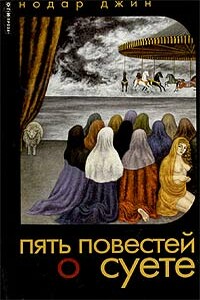
Нодар Джин родился в Грузии. Жил в Москве. Эмигрировал в США в 1980 году, будучи самым молодым доктором философских наук, и снискал там известность не только как ученый, удостоенный международных премий, но и как писатель.Романы Н. Джина «История Моего Самоубийства» и «Учитель» вызвали большой интерес у читателей и разноречивые оценки критиков. Последнюю книгу Нодара Джина составили пять философских повестей о суетности человеческой жизни и ее проявлениях — любви, вере, глупости, исходе и смерти.
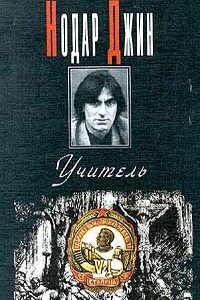
Нодар Джин эмигрировал в США в 1980 году, будучи самым молодым в СССР доктором философских наук, и снискал там известность не только как ученый, удостоенный международных премий, но и как писатель. Эта книга о Сталине, но вряд ли ее можно поместитьв ряд классической антисталинианы, будь то произведения А. Солженицына или А. Рыбакова. Роман Джина, написанный от лица «вождя всех времен», своего рода «Евангелие от Иосифа» — трагическая исповедь и одновременно философская фантасмагория о перипетиях человеческой судьбы, история о том, как человек, оказавшийся на вершине власти и совершивший много такого, на что способен разве сам дьявол, мог стать другим.
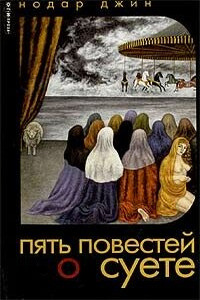
Нодар Джин родился в Грузии. Жил в Москве. Эмигрировал в США в 1980 году, будучи самым молодым доктором философских наук, и снискал там известность не только как ученый, удостоенный международных премий, но и как писатель. Романы Н. Джина «История Моего Самоубийства» и «Учитель» вызвали большой интерес у читателей и разноречивые оценки критиков. Последнюю книгу Нодара Джина составили пять философских повестей о суетности человеческой жизни и ее проявлениях — любви, вере, глупости, исходе и смерти.
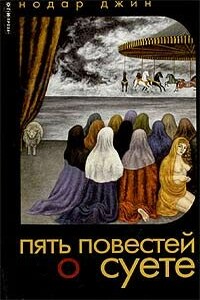
Нодар Джин родился в Грузии. Жил в Москве. Эмигрировал в США в 1980 году, будучи самым молодым доктором философских наук, и снискал там известность не только как ученый, удостоенный международных премий, но и как писатель. Романы Н. Джина «История Моего Самоубийства» и «Учитель» вызвали большой интерес у читателей и разноречивые оценки критиков. Последнюю книгу Нодара Джина составили пять философских повестей о суетности человеческой жизни и ее проявлениях — любви, вере, глупости, исходе и смерти.
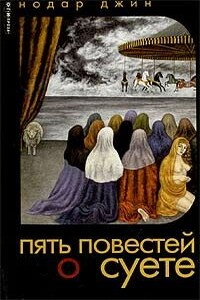
Нодар Джин родился в Грузии. Жил в Москве. Эмигрировал в США в 1980 году, будучи самым молодым доктором философских наук, и снискал там известность не только как ученый, удостоенный международных премий, но и как писатель. Романы Н. Джина «История Моего Самоубийства» и «Учитель» вызвали большой интерес у читателей и разноречивые оценки критиков. Последнюю книгу Нодара Джина составили пять философских повестей о суетности человеческой жизни и ее проявлениях — любви, вере, глупости, исходе и смерти.
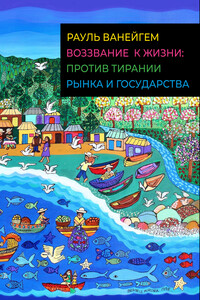
Трактат бельгийского философа, вдохновителя событий Мая 1968 года и одного из главных участников Ситуационистского интернационала. Издан в 2019 году во Франции и переведён на русский впервые. Сопровождается специальным предисловием автора для русских читателей. Содержит 20 документальных иллюстраций. В формате PDF A4 сохранен издательский макет книги.
В книге рассказывается история главного героя, который сталкивается с различными проблемами и препятствиями на протяжении всего своего путешествия. По пути он встречает множество второстепенных персонажей, которые играют важные роли в истории. Благодаря опыту главного героя книга исследует такие темы, как любовь, потеря, надежда и стойкость. По мере того, как главный герой преодолевает свои трудности, он усваивает ценные уроки жизни и растет как личность.
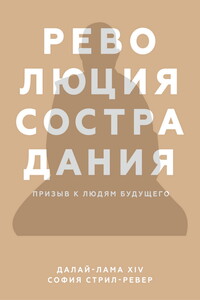
Убедительный и настойчивый призыв Далай-ламы к ровесникам XXI века — молодым людям: отринуть национальные, религиозные и социальные различия между людьми и сделать сострадание движущей энергией жизни.

Самоубийство или суицид? Вы не увидите в этом рассказе простое понимание о смерти. Приятного Чтения. Содержит нецензурную брань.
Автор, кандидат исторических наук, на многочисленных примерах показывает, что империи в целом более устойчивые политические образования, нежели моноэтнические государства.