Философское - [54]
However, the problem, as we interpret it, does not permit us to quite stop at this and requires further discussion.
4
The world we inhabit is only the reflected image of our inner chaos.
The Eden of the past is the Utopia of the future
Henry Miller
So, in the process of life-creation man «obtains» a sense of non-finiteness, an insuperable sense of optimism: in the process of creation, he equalizes his consciousness with his existence; this is where the so-called balancing set of consciousness steps in. This process of reciprocal equalization of the mind and life is, first of all, unconscious, natural, automatic. The second and the principal facet of the truth is that in the same process man comes back to the status he has lost forever, to the initial situation which was described in the biblical Eden scene. In other words, man «regains» the slate of harmonious unity with the world and overcomes the situation of homo-centrism, so detrimental to him. Man reintegrates himself. The radical essential aim of this fundamentally never-completed process is — too achieve happiness.
Thus, creativity is a return to that past «in Eden» which, unconsciously and covertly, lives on in the memory of mankind. We should add here that this past «in Eden» does not at all require recognition as a real historical fact; it is only known that it is «realized» at the level of an image translated into the pact from the future, into reality from a dream. That is why we determine the act of present-day man achieving «an Eden» status as a comeback, while creativity is regarded by us as the means of man's achieving this status.
At the same time, creativity means creation: not only a means of comeback as we understand it, but also actual creation, creation of everything that is termed progress, movement forward, everything that puts more space between humanity and the «pre-human border». In this lies the dialectical nature of creativity — to lead forward and, simultaneously, to bring back, to return. This is why we cannot but conclude that the comeback is achieved, in this case, by moving forward, in the form of inevitably moving away from the initial point, from any point on which our gaze is fixed now; that is why it is always a comeback to a new place, or, to put it more acceptably, to a new coil; we mean not only a new coil in the history of society as such, as a whole, but also a new coil in the «history» of an individual, a concrete personality.
The question arises here: if true progress (different from its contemporary partial, i.e. illusory representation) — is a forward movement that brings man bask to Eden, — where and how should he proceed in order to be adequately reintegrated? This is, actually, an age-old socio-political question, a quest for an answer to which has led and still leads men to generate a variety of philosophical-political and politico-economic theories. Although this question is, obviously, of prime importance, we focus our attention on the essentially human, ontological aspect of the problem stated in the title, comprehending fully — as will be seen lower down — its indiseverable bond with the above.
But now let us consider another question: why is it that creativity returns men into the «milieu» of harmonious unity with the world, the unity of Adam not only with the tree, but also with the Serpent, the unity of Adam and Eve, a return into a «pre-disintegrated» milieu. An answer to this question is prompted by art, the most full-blooded form of creativity.
5
And this is the writing that was written, MENE, MEHE, TEKEI., UPHARSIN
Daniel, 5:25
By its very essence, art unobtrusively reconciles us to reality. It equalizes our consciousness with our reality, equalizes each of us and humanity, harmonizes our relations with the world, however cruel this world may look in a work of art. A work of art is a work of an artistic, entirely harmonized world, a world that has an appeasing influence on us. Art actually gives us that enjoyment which Adam parted with forever when he left Paradise. Art is a powerful source of life-giving energy and optimism, understood not in the down-to-earth, everyday, customary sense, neither in the concretely socio-political sense, but in the broadest, «existential» sense. Art is, essentially, a life-inspiring, life-asserting, essentially optimistic force, allowing every one who is drawn into its sphere to overcome the uneasy sense of one's finiteness, to be reconciled with existence. In this measure, art is love which generates that peculiar state when man, however convinced he may be that miracles do not happen, does not venture, nevertheless, to maintain that miracles cannot happen.
Owing to what does art succeed in achieving this effect, most essential to our existence?
An instrumentalistic approach would suggest the following answer: art means striking a balance between consciousness and reality through uniting thought and sense (emotion), an idea and an image. This «correct» answer is, however, far from the truth. This answer would have been quite correct if we had agreed to «recall» the very fact which has long and completely been «forgotten» by literally all researchers. The very fact is that «thought» and «feeling» have never been, never are and will never be parallel, independent and separately-existing phenomena. At the same time, they have never been, are not and cannot be such not only in the sphere of art, but also in no sphere of human existence. The assumption of separate existence of thought and feeling which has become axiomatic, is a tremendous delusion of reason cognizing the human soul. This delusion has been the cause of unending human calamities, but it was, nevertheless, inevitable. It was predetermined at the very moment when man plucked the fruit and issued from the Gate; in doing this man doomed himself to vivisection with the lancet of reason in whose nature it is to dissect every living thing and to schematize it. Cogito operates with conventions, but since Homo Sapiens came to «exhaust» the notion of Homo, these conventions are not at all apprehended as conventions, but as realities. The paradox of conventions in the Homo Sapiens world lies in the fact that they are spontaneously transformed into facts («non-conventions»).
Иосиф Сталин… Минуло уже полвека после его смерти, но и сейчас кто-то произносит это имя с восхищением («отец и учитель»), а кто-то — с ненавистью («тиран и деспот»). О нем написаны сотни книг, тысячи статей. Мы знаем почти все о его деяниях, но… почти ничего о мыслях и чувствах. Близких друзей у Сталина не было. Дневников, которым люди доверяют самое сокровенное, он не вел…А если бы вел? Если бы обнаружились записи, в которых день ото дня властелин огромной страны фиксировал потаенное? Если бы он выплеснул на бумагу все свои страхи, сомнения, печали, мечты? Мечты не о «строительстве коммунизма в мировом масштабе», а о простой жизни с ее радостями и горестями.
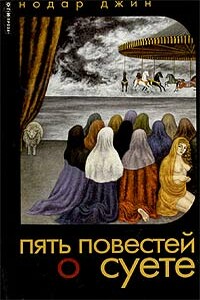
Нодар Джин родился в Грузии. Жил в Москве. Эмигрировал в США в 1980 году, будучи самым молодым доктором философских наук, и снискал там известность не только как ученый, удостоенный международных премий, но и как писатель.Романы Н. Джина «История Моего Самоубийства» и «Учитель» вызвали большой интерес у читателей и разноречивые оценки критиков. Последнюю книгу Нодара Джина составили пять философских повестей о суетности человеческой жизни и ее проявлениях — любви, вере, глупости, исходе и смерти.
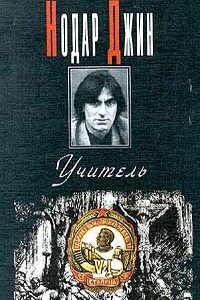
Нодар Джин эмигрировал в США в 1980 году, будучи самым молодым в СССР доктором философских наук, и снискал там известность не только как ученый, удостоенный международных премий, но и как писатель. Эта книга о Сталине, но вряд ли ее можно поместитьв ряд классической антисталинианы, будь то произведения А. Солженицына или А. Рыбакова. Роман Джина, написанный от лица «вождя всех времен», своего рода «Евангелие от Иосифа» — трагическая исповедь и одновременно философская фантасмагория о перипетиях человеческой судьбы, история о том, как человек, оказавшийся на вершине власти и совершивший много такого, на что способен разве сам дьявол, мог стать другим.
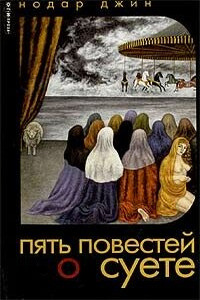
Нодар Джин родился в Грузии. Жил в Москве. Эмигрировал в США в 1980 году, будучи самым молодым доктором философских наук, и снискал там известность не только как ученый, удостоенный международных премий, но и как писатель. Романы Н. Джина «История Моего Самоубийства» и «Учитель» вызвали большой интерес у читателей и разноречивые оценки критиков. Последнюю книгу Нодара Джина составили пять философских повестей о суетности человеческой жизни и ее проявлениях — любви, вере, глупости, исходе и смерти.
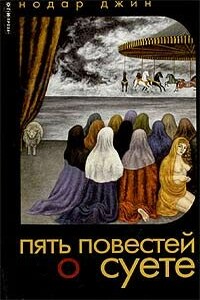
Нодар Джин родился в Грузии. Жил в Москве. Эмигрировал в США в 1980 году, будучи самым молодым доктором философских наук, и снискал там известность не только как ученый, удостоенный международных премий, но и как писатель. Романы Н. Джина «История Моего Самоубийства» и «Учитель» вызвали большой интерес у читателей и разноречивые оценки критиков. Последнюю книгу Нодара Джина составили пять философских повестей о суетности человеческой жизни и ее проявлениях — любви, вере, глупости, исходе и смерти.
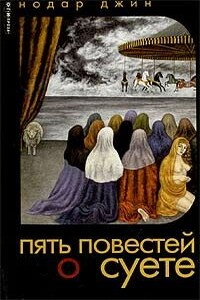
Нодар Джин родился в Грузии. Жил в Москве. Эмигрировал в США в 1980 году, будучи самым молодым доктором философских наук, и снискал там известность не только как ученый, удостоенный международных премий, но и как писатель. Романы Н. Джина «История Моего Самоубийства» и «Учитель» вызвали большой интерес у читателей и разноречивые оценки критиков. Последнюю книгу Нодара Джина составили пять философских повестей о суетности человеческой жизни и ее проявлениях — любви, вере, глупости, исходе и смерти.
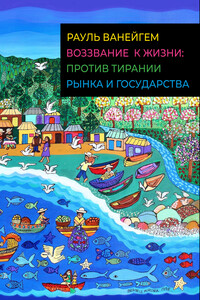
Трактат бельгийского философа, вдохновителя событий Мая 1968 года и одного из главных участников Ситуационистского интернационала. Издан в 2019 году во Франции и переведён на русский впервые. Сопровождается специальным предисловием автора для русских читателей. Содержит 20 документальных иллюстраций. В формате PDF A4 сохранен издательский макет книги.
В книге рассказывается история главного героя, который сталкивается с различными проблемами и препятствиями на протяжении всего своего путешествия. По пути он встречает множество второстепенных персонажей, которые играют важные роли в истории. Благодаря опыту главного героя книга исследует такие темы, как любовь, потеря, надежда и стойкость. По мере того, как главный герой преодолевает свои трудности, он усваивает ценные уроки жизни и растет как личность.
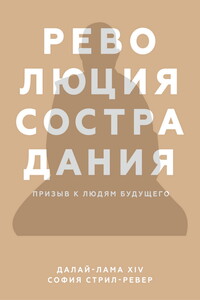
Убедительный и настойчивый призыв Далай-ламы к ровесникам XXI века — молодым людям: отринуть национальные, религиозные и социальные различия между людьми и сделать сострадание движущей энергией жизни.

Самоубийство или суицид? Вы не увидите в этом рассказе простое понимание о смерти. Приятного Чтения. Содержит нецензурную брань.
Автор, кандидат исторических наук, на многочисленных примерах показывает, что империи в целом более устойчивые политические образования, нежели моноэтнические государства.