Children of the Street - [5]
Christine’s red Opel, which was so small Dawson felt he could pick it up and carry it under his arm, was parked in front of the house, meaning she and Hosiah were home from the regular Sunday visit to her mother after church and Sunday school.
“I’m home!” he called out as he came in through the rear kitchen door.
“Hi, Dark.”
Christine was in the sitting room on the sofa as she read the paper.
“Hi, sweetie.” He kissed her on the forehead.
“Tough case?”
“Horrible. Dead man in Korle Lagoon.”
Christine winced, barely a ripple on the fine sheen of her complexion.
“I need some help on something,” Dawson said, sitting down beside her. Before he could get any further, Hosiah came running in and dived onto Dawson’s lap.
“Hi, Daddy!”
“Hey, champ!” Darko sat his son up straight and snuggled him against his chest.
“Guess what I made,” Hosiah said.
“A sports car?”
“No.”
“A truck?”
“No,” Hosiah said, laughing. “Come with me and I’ll show you. But you have to close your eyes first and I’ll tell you when you can open them.”
At his bedroom door, he said, “You can open your eyes now.”
In the middle of the floor of the small bedroom was one of Hosiah’s increasingly complex creations. A genius with his hands, he adroitly crafted model cars, trucks, and motorbikes out of empy cans and milk cartons, old matchboxes, bottle caps, rubber bands, and bits of cardboard. The end products were surprisingly fine toys, considering the crudity of the raw materials Hosiah worked with.
“Wow,” Dawson said. “Is that a spaceship?”
“Yes.” The boy held it proudly up to his father. “Look, Daddy. Here are the jets for takeoff. The pilot goes in here and he can see out of this window.”
The window was a square of plastic cut out from a water bottle. Recently, Hosiah had been expanding his repertoire from land vehicles to airplanes, and now, for the first time, a spacecraft.
“So, how far can the spaceship travel?”
“Um. To the moon, I think. No, to the sun.”
“Really? You know it’s going to be very hot there.”
Hosiah thought about that for a moment. “I’ll put something on it so it doesn’t burn.”
Dawson watched as Hosiah constructed a “heat shield,” his little round head bent in concentration. Dawson rubbed it gently. His son was seven now, suffering from congenital heart disease, yet full of a spirit that uplifted Dawson’s every day.
Christine appeared at the door. “Are we still going to the park?”
Dawson looked at his watch. They would have gone earlier had he not been called out. “Yes, we can still go. Hosiah, tidy your room and then we’ll go, okay?”
“Okay, Daddy.”
Back in the sitting room, Dawson asked Christine, “How was he today?”
“Actually, he’s done very well,” she said.
“Good. So we’ll play a little ball at the park but we’ll take it easy.”
“Right. What was it you were going to ask me?”
He told Christine about Sly and his uncle. “I want to get the boy into school.”
“I’ll see what I can do,” she said, “but you realize, even if we get him registered, he might never go.”
“I’ll try to make sure that doesn’t happen.”
She smiled slightly.
“What’s that look?” Dawson asked.
“You can’t stand Uncle Gamel getting away with not sending the boy to school.”
“You’re right. I can’t.”
That night Dawson, a confirmed insomniac, lay on his back, with the blackness pressing against his eyes as he thought about their earlier excursion to the Efua Sutherland Park. It hadn’t been too bad. He and Christine had played catch with Hosiah, throwing the ball as directly to his waiting hands as possible. That was better than playing soccer, where dribbling and running after the ball was more strenuous. They were walking a fine line between letting Hosiah be as active as a boy his age should be and limiting his exertions to what his heart, with its ventricular septal defect, could handle. His symptoms varied from day to day. He rationalized it as the defect changing in size. “The hole in my heart is small today, Daddy,” he would say.
So far, Hosiah had never given an indication that he felt something was wrong with him as a whole. That was a relief for Christine and Dawson, but they knew their son’s healthy adaptations, both physical and psychological, might not last forever.
His prescribed medications only patched the problem. The real solution, cardiac surgery, was staggeringly expensive. There was now a National Health Insurance Scheme, NHIS, but the very basic medical care it covered most certainly did not include heart surgery. For years, Dawson and Christine had been saving up, adding a generous contribution from an uncle of Christine’s, but the target was still practically unattainable. They had applied for a personal loan at Standard Bank, Ecobank, and Barclays, but hadn’t qualified at any of them. Besides, the interest rate was a horrible 21 percent.
Then, nine months ago, wonderful news had arrived. The GPS announced an official policy that it would pay all medical and surgical fees for its employees and their dependents. For a moment, Dawson’s and Christine’s hearts soared with the fantasy of submitting Hosiah’s medical report to the police service employee financial office, which would approve the surgery. But then reality struck like a sledgehammer.
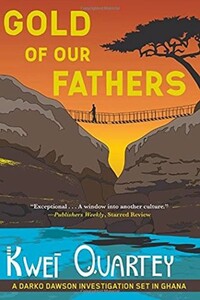
Darko Dawson, Chief Inspector in the Ghana police service, returns in this atmospheric crime series often compared to Alexander McCall Smith's The No. 1 Ladies' Detective Agency novels.Darko Dawson has just been promoted to Chief Inspector in the Ghana Police Service – the promotion even comes with a (rather modest) salary bump. But he doesn't have long to celebrate because his new boss is transferring him from Accra, Ghana's capital, out to remote Obuasi in the Ashanti region, an area now notorious for the illegal exploitation of its gold mines.When Dawson arrives at the Obuasi headquarters, he finds it in complete disarray.
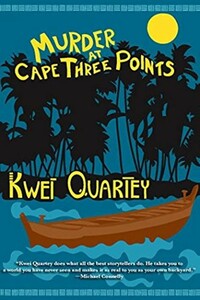
At Cape Three Points on the beautiful Ghanaian coast, a canoe washes up at an oil rig site. The two bodies in the canoe – who turn out to be a prominent, wealthy, middle-aged married couple – have obviously been murdered; the way Mr. Smith-Aidoo has been gruesomely decapitated suggests the killer was trying to send a specific message – but what, and to whom, is a mystery.The Smith-Aidoos, pillars in their community, are mourned by everyone, but especially by their niece Sapphire, a successful pediatric surgeon in Ghana's capital, Accra.
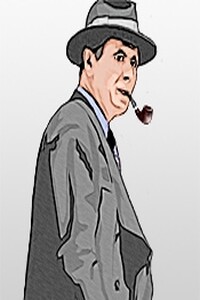
Опытный криминалист — инспектор Вернер, герой польского журнала «Пшекруй», с блеском решает сложные криминалистические задачи, то и дело встающие перед ним на его служебном поприще. Повсюду сопровождающий его сержант Фитт полон рвения, но не может соревноваться с инспектором в наблюдательности, поэтому нередко приходит к поспешным неверным выводам. Попробуйте и вы посостязаться с инспектором в умении замечать каждую мелочь и делать из общей картины логичный вывод.

Обнаружив однажды странное послание на клочке свежей газетенки, измотанный нескончаемым прозябанием Ласло и вообразить не смел, какой череде испытаний он подвергнется воспользовавшись им.

В книге рассказывается история главного героя, который сталкивается с различными проблемами и препятствиями на протяжении всего своего путешествия. По пути он встречает множество второстепенных персонажей, которые играют важные роли в истории. Благодаря опыту главного героя книга исследует такие темы, как любовь, потеря, надежда и стойкость. По мере того, как главный герой преодолевает свои трудности, он усваивает ценные уроки жизни и растет как личность.
В книге рассказывается история главного героя, который сталкивается с различными проблемами и препятствиями на протяжении всего своего путешествия. По пути он встречает множество второстепенных персонажей, которые играют важные роли в истории. Благодаря опыту главного героя книга исследует такие темы, как любовь, потеря, надежда и стойкость. По мере того, как главный герой преодолевает свои трудности, он усваивает ценные уроки жизни и растет как личность.
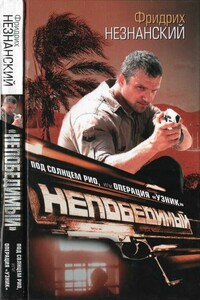
В СВР поступает информация о том, что бывший министр атомной энергетики в России Алексей Медведев, отправившийся на отдых в Бразилию, ведет переговоры со спецслужбами США о продаже секретных сведений. Руководство СВР уверено, что это ошибка, но проверка необходима и в Рио-де-Жанейро вместе с двумя агентами отправляется Егор Кремнев. Он даже не подозревает, что это несложное задание будет стоить ему свободы и только случайная встреча поможет выжить.Егор Кремнев даже представить не мог, что несложное задание в солнечном Рио-де-Жанейро по проверке министра атомной энергетики, который ведет двойную игру, обернется чудовищными неприятностями.
В книге рассказывается история главного героя, который сталкивается с различными проблемами и препятствиями на протяжении всего своего путешествия. По пути он встречает множество второстепенных персонажей, которые играют важные роли в истории. Благодаря опыту главного героя книга исследует такие темы, как любовь, потеря, надежда и стойкость. По мере того, как главный герой преодолевает свои трудности, он усваивает ценные уроки жизни и растет как личность.