Children of the Street - [2]
“Very good,” Dawson said. “Thank you.”
Dawson knew Police Constable Gyamfi from a previous case a year ago. He waved at the constable, who smiled and half waved, half saluted in return.
“Mr. Bright says he’s quite sure it’s a homicide,” Chikata said.
“Then it probably is,” Dawson said.
Deputy Superintendent Bright, a trained serologist, was head of the CSU team. His hunches were seldom wrong.
Dawson moved a little closer to the water, which was the color of tar and almost the same consistency. He winced at its relentless stench, but people living within smelling distance were used to it, or maybe just ignored it.
Bright and his two crime scene guys squelched around looking for an unlikely clue. There was so much garbage it would be a miracle if they found anything useful. Only Bright’s relentless thoroughness and commitment to excellence had deemed the search necessary. Others might have simply reeled the corpse in without bothering.
The garbage partially camouflaged the dead body, which was facedown. On casual glance, it could have been mistaken for a big clump of rubbish, and undoubtedly had been.
With glop sucking at his galoshes, Deputy Superintendent Bright joined Dawson and the other two men.
“Morning, Dawson.” His voice sounded like the bass notes of a bassoon. “Please excuse my appearance and odor.”
“Good morning, sir. I admire you for going in there.”
Bright looked down at his soiled outfit with a grimace. “These are the last of our hazardous materials garb, so fortunately or not, I won’t be doing this again for a while.”
“Any findings, sir?” Dawson asked.
“Besides the body? Nothing. Still suspect foul play, however. I know a dumped corpse when I see one. And this one is in terrible shape.”
“When are you bringing it in?”
“We’re almost ready for that now.”
“Can you wait a few minutes? I don’t want the boy to see that.”
“No problem, Dawson.”
“Thank you, sir. It’s good to have you around.” Dawson turned and trotted up the bank.
2
The boy was still with Police Constable Gyamfi, who was in his mid-twenties but looked so young he could have gone undercover as a high school student. As Dawson approached, Gyamfi’s face lit up with a smile of strong, white teeth-the kind that could snap the top off a beer bottle.
“Morning, Gyamfi,” Dawson said as they clasped hands. “How are you? It’s nice to see you again.”
“Yes, sir, and you too.”
“How’re the wife and new daughter?”
“Very well, sir, thank you, sir.”
“Good, I’m glad.”
Gyamfi was a recent import from the rural town of Ketanu in the Volta Region. With Dawson’s help and persistence, he had been transferred to the police force in Accra, not an easy achievement in the GPS. He was a good man with great integrity and promise.
Dawson looked down at the boy, who didn’t return the look. He wore torn cutoff jeans, a soiled black-and-white muscle shirt that was too big for him, and slippers that were falling apart on his dusty feet. He was staring at a point on the ground in front of him. Dawson knelt down.
“How are you? I’m Darko. What’s your name?”
The boy’s eyes flitted up and away. “Sly.”
Dawson held out his hand. Sly shook it after a second’s consideration.
“Thank you for what you did,” Dawson said. “You were brave to go to the police station. Do you know that?”
Sly nodded tautly. Dawson lifted his face with a touch to his chin.
“Are you all right?”
“Yes.”
“I’m not going to do anything to you. I only want to be your friend.”
Sly nodded again. Dawson stood and reached for the boy’s hand, pulling him up. “Let’s go for a walk.”
“Okay.”
“While we’re gone,” Dawson said to Gyamfi, “I want you to talk to these people in the crowd. We need to know if anyone saw anything this morning or last night in connection with the body. We need names, and we need a way to get back in touch with them. That might be hard around here, but do your best.”
“Yes, sir.”
“And always remember faces, Gyamfi. Try to make your mind a camera. You never know who you might run into later on.”
Dawson turned away with Sly and steered him around the pack of spectators. As he and the boy walked past, every head turned to watch them. Dawson took a quick but good look at all the faces, practicing what he had just preached to his constable. In reality, the chance was remote that they would get usable information from anyone. Watching policemen at work was okay, talking to them was not.
Dawson and Sly were now walking along the curve of the Odaw River’s east bank toward the shacks of the slum in the distance.
“How old are you, Sly?”
“Nine.”
“From northern Ghana?”
“Upper West Region.”
Dawson had made an educated guess. Most of Agbogbloshie’s residents came from northern Ghana.
“Where do you live?”
“Here in Sodom and Gomorrah.”
It was the bitter, ironic nickname for Agbogbloshie, Accra’s most notorious slum. Drugs, prostitution, rape, forty thousand squatters, and practically every year a new but unsuccessful government plan to relocate them.
Dawson and Sly walked the beaten path through mounds of trash containing the ubiquitous plastic bags and bottles, carcasses of old TVs, trashed scanners, mobile phones, air conditioners, refrigerators, fax machines, microwaves, dead computer monitors and defunct CPUs. To their left was a mountain of electronic waste piled higher than Dawson’s head.
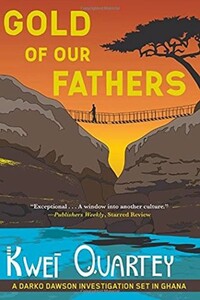
Darko Dawson, Chief Inspector in the Ghana police service, returns in this atmospheric crime series often compared to Alexander McCall Smith's The No. 1 Ladies' Detective Agency novels.Darko Dawson has just been promoted to Chief Inspector in the Ghana Police Service – the promotion even comes with a (rather modest) salary bump. But he doesn't have long to celebrate because his new boss is transferring him from Accra, Ghana's capital, out to remote Obuasi in the Ashanti region, an area now notorious for the illegal exploitation of its gold mines.When Dawson arrives at the Obuasi headquarters, he finds it in complete disarray.
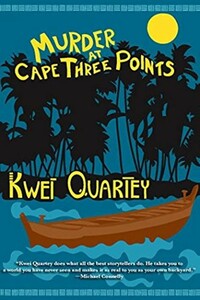
At Cape Three Points on the beautiful Ghanaian coast, a canoe washes up at an oil rig site. The two bodies in the canoe – who turn out to be a prominent, wealthy, middle-aged married couple – have obviously been murdered; the way Mr. Smith-Aidoo has been gruesomely decapitated suggests the killer was trying to send a specific message – but what, and to whom, is a mystery.The Smith-Aidoos, pillars in their community, are mourned by everyone, but especially by their niece Sapphire, a successful pediatric surgeon in Ghana's capital, Accra.
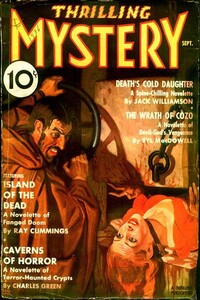
Герой этого рассказа возвращается в дом своего детства и находит своих братьев и сестру одичавшими и полубезумными. Почему они стали такими? Кто в этом виновен?

«Елена Мазина уже стояла в дверях, когда мужчина, ставший её очередным любовником, лениво, словно нехотя, спросил: – Мне тебе позвонить? – Нет, лучше я сама дам знать, если захочу тебя вновь увидеть…».

В книге рассказывается история главного героя, который сталкивается с различными проблемами и препятствиями на протяжении всего своего путешествия. По пути он встречает множество второстепенных персонажей, которые играют важные роли в истории. Благодаря опыту главного героя книга исследует такие темы, как любовь, потеря, надежда и стойкость. По мере того, как главный герой преодолевает свои трудности, он усваивает ценные уроки жизни и растет как личность.
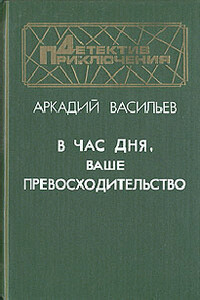
В остросюжетном романе писателя А. Васильева (1907—1972) увлекательно рассказывается о деятельности чекистов в годы гражданской и Великой Отечественной войн. Особый интерес представляет вторая часть книги, в которой показано, как главный герой романа проникает в штаб так называемой «Русской освободительной армии» генерала-изменника Власова…
В книге рассказывается история главного героя, который сталкивается с различными проблемами и препятствиями на протяжении всего своего путешествия. По пути он встречает множество второстепенных персонажей, которые играют важные роли в истории. Благодаря опыту главного героя книга исследует такие темы, как любовь, потеря, надежда и стойкость. По мере того, как главный герой преодолевает свои трудности, он усваивает ценные уроки жизни и растет как личность.
В книге рассказывается история главного героя, который сталкивается с различными проблемами и препятствиями на протяжении всего своего путешествия. По пути он встречает множество второстепенных персонажей, которые играют важные роли в истории. Благодаря опыту главного героя книга исследует такие темы, как любовь, потеря, надежда и стойкость. По мере того, как главный герой преодолевает свои трудности, он усваивает ценные уроки жизни и растет как личность.