Children of the Street - [6]
It turned out that the GPS would not prepay employees’ medical or surgical expenses under any circumstances of illness, major or minor. All payments would be strictly on a reimbursement basis. That put Dawson and Christine right back at square one: they would have to finance Hosiah’s operation at the Korle Bu Hospital Cardiothoracic Center and then present the receipt to the GPS. After that, there would be a long process of validating, cross-checking, and obtaining successive levels of approval, including the director general of GPS. And then, if they were lucky, they would receive the reimbursement after several months.
Another idea had come along about half a year ago. Edith Kingson, a senior clerk in the financial office at Korle Bu, had met Hosiah when Dawson once took him along to render a payment for a hospital visit. So delighted was she with the boy that she took Dawson aside and suggested he fill out a special “financial clemency petition” with an attached letter detailing Hosiah’s circumstances. She would personally try to push it through, but Edith was at pains to warn Dawson she could not guarantee that anything would come of it.
She was right to have tried to keep Dawson’s expectations low. In the six months since submitting the petition, he had periodically called Edith, but she had had no news for him.
Beside him, Christine normally slept so heavily that a thunderstorm would not wake her, but Dawson could tell from her breathing pattern that she wasn’t in deep sleep right now. She stirred and turned over.
“Dark?”
“Yes.”
“I can’t sleep either.”
“Surprising. For you.”
Christine moved in closer, tucking her head into the hollow of his shoulder. Her skin smelled of sweet and spice. He felt the tension in her body slowly dissipate, and she drifted back to sleep long before he did.
He woke at five-thirty. Christine would surface soon. He showered and was getting dressed when his mobile rang from the bed stand. He went out to the sitting room to take the call. He knew who it was from the caller ID.
“Dr. Biney, good morning!”
“Good morning, Inspector Dawson! How are you?”
“I’m doing well. And yourself?”
“No complaints, my good man. Forgive me for calling this early, but I wanted to catch you before you start your day.”
“No problem at all.”
Asum Biney was a superb doctor and now one of the best of the very few forensic pathologists in the country. He was the director of the Volta River Authority Hospital in the Eastern Region, where Dawson had first met him. He gave several days of his time every month to hospitals in Accra and elsewhere, routinely starting at dawn and heading home late at night.
“To what do I owe the honor, Doctor?”
“I’m doing a few days at the Police Hospital Mortuary because one of the docs is out on sick leave. I noticed this new case you have-the fellow discovered in the Korle Lagoon?”
“Yes. It’s very bad.”
“Indeed, and even with refrigeration, the decay will continue. We should get to it today as soon as possible.”
“Bless you, Dr. Biney. I was preparing for a nasty fight to get the case on before the end of this week, never mind today.”
“Well, I’m glad I could save you the agony. I’ll have the staff put it on for eight this morning.”
“I’ll be there.”
Dawson went to Hosiah’s room, where Christine was getting him up.
“I have to go.” He kissed them both. “See you tonight.”
“Bye, Daddy.”
“Careful, Dark.” Christine said that every day. She meant it.
“I will be.”
4
The phlegmatic Sergeant Baidoo, a man of few words and Dawson’s favorite CID driver, steered the made-in-India Tata police jeep over the rough, unpaved road that led to the Police Hospital Mortuary (PHM). It was a depressing gray stucco building browned off with decades of dust. It needed to be either remodeled and expanded or razed and rebuilt. Dawson liked the second alternative.
Baidoo parked under the flowering flame tree that lent a welcome patch of color to all that dreariness. Reception was to Dawson’s left as he went in. Straight ahead against the far wall were two old coffins piled one on top of the other. They had been there for years, part of the furniture now. He turned left to reception, where there was a sign on the wall that read JESUS CHRIST DIED FOR YOUR SINS. On seeing Dawson, the young lance corporal at the desk behind the counter sprang to his feet.
“Morning, massa,” he said, using the alternative word to “sir.” Maybe it was a legacy of the British colonial police service, when black officers referred to the white officers as their “masters,” but now massa was comfortably used by the junior ranks to address their superiors.
“Morning, Brempong,” Dawson said. “How are you?”
“Fine, massa.”
“Is Dr. Biney in?”
“Yes, massa. He’s inside.”
“Thank you.”
“Yessah.”
Dawson went through the double-door entry labeled STRICTLY OUT OF BOUNDS. With no forewarning, the autopsy room was directly behind that, which had caught Dawson off guard the first time he had come to PHM. There were only two autopsy tables for a backlog of corpses possibly a hundred times that. Four mortuary attendants were in constant motion, like traffic at a busy intersection. Dr. Biney was at the right-hand table. He was masked, but when he looked up and saw Dawson, his eyes crinkled at the corners with his smile.
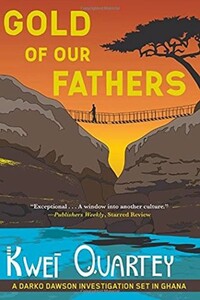
Darko Dawson, Chief Inspector in the Ghana police service, returns in this atmospheric crime series often compared to Alexander McCall Smith's The No. 1 Ladies' Detective Agency novels.Darko Dawson has just been promoted to Chief Inspector in the Ghana Police Service – the promotion even comes with a (rather modest) salary bump. But he doesn't have long to celebrate because his new boss is transferring him from Accra, Ghana's capital, out to remote Obuasi in the Ashanti region, an area now notorious for the illegal exploitation of its gold mines.When Dawson arrives at the Obuasi headquarters, he finds it in complete disarray.
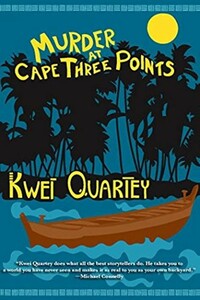
At Cape Three Points on the beautiful Ghanaian coast, a canoe washes up at an oil rig site. The two bodies in the canoe – who turn out to be a prominent, wealthy, middle-aged married couple – have obviously been murdered; the way Mr. Smith-Aidoo has been gruesomely decapitated suggests the killer was trying to send a specific message – but what, and to whom, is a mystery.The Smith-Aidoos, pillars in their community, are mourned by everyone, but especially by their niece Sapphire, a successful pediatric surgeon in Ghana's capital, Accra.
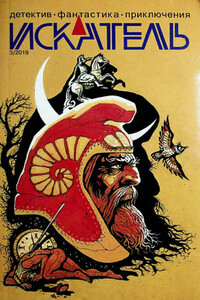
«ИСКАТЕЛЬ» — советский и российский литературный альманах. Издается с 1961 года. Публикует фантастические, приключенческие, детективные, военно-патриотические произведения, научно-популярные очерки и статьи. В 1961–1996 годах — литературное приложение к журналу «Вокруг света», с 1996 года — независимое издание. В 1961–1996 годах выходил шесть раз в год, по подписке не распространялся, в 1997–2002 годах — ежемесячно; с 2003 года выходил непериодически. В настоящее время выпускается ежемесячно, доступно получение по подписке. [Адаптировано для AlReader].
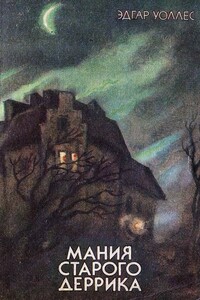
Эдгар Уоллес — один из популярнейших английских авторов детективного жанра, создавший за 34 года своей литературной деятельности 173 произведения, в том числе знаменитого «Кинг Конга». «Нет ничего увлекательнее романов Уоллеса!» — заявляла английская пресса 20-30-х годов.
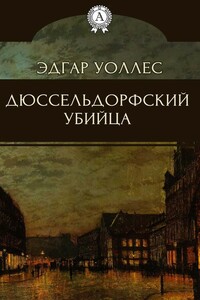
«Дюссельдорфский убийца» — детективный роман выдающегося британского писателя и драматурга Эдгара Уоллеса (1875–1932). Фрау Кун была очередной жертвой Дюссельдорфского убийцы: ее убили кинжалом поздним февральским вечером. Полиция и журналисты начали расследование, не подозревая, что убийцей является известный в городе человек. Уоллес Эдгар — популярный автор детективов, прозаик, киносценарист, основоположник жанра «триллер». Эдгар Уоллес Ричард Горацио — автор множества трудов: «Тайна булавки», «Зеленый Стрелок», «Лицо во мраке», «У трех дубов», «Мститель», «Шутник», «Пернатая змея», «Ворота измены», «Фальшивомонетчик», «Бандит» и других.
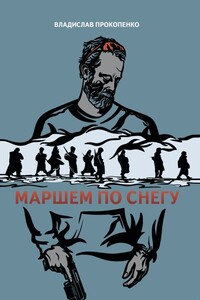
Политическая ситуация на Корейском полуострове близка к коллапсу. В высших эшелонах власти в Южной Корее, Японии и США плетется заговор… Бывших разведчиков не бывает — несмотря на миролюбивый характер поездки в Пхеньян, Артем Королев, в прошлом полковник Генштаба, а ныне тренер детской спортивной команды, попадает в самый эпицентр конфликта. Оказывается, что для него в этой игре поставлены на карту не только офицерская честь и судьба Родины, но и весь смысл его жизни.
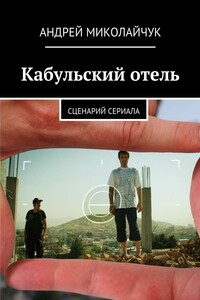
Когда на Youtube появилось прощальное видео Алексея, в котором он объясняется в любви к своей жене на фоне атаки талибов на британскую миссию в Афганистане, никто даже не подозревал о том, что это обыкновенный фотограф, который в попытке не потерять работу принял предложение сделать репортаж о старателях, добывающих изумруд.
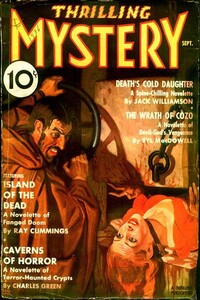
Герой этого рассказа возвращается в дом своего детства и находит своих братьев и сестру одичавшими и полубезумными. Почему они стали такими? Кто в этом виновен?