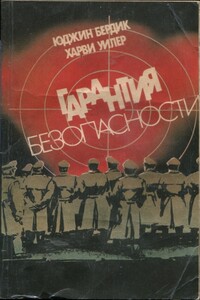
Children of the Street - [3]
“What were you doing this morning when you saw that dead man in the water?” he asked Sly.
“Burning cables.”
That was what caused the dense black smoke all along the banks of the Odaw. The boys burned TV and computer cables to get at the copper wires, which they sold locally for fifty pesewas per kilo, or about eighteen cents per pound.
Ahead was a line of teenage boys that made Dawson think of an assembly line, only this was disassembly. The first boy was breaking open the back of an old TV monitor using a rock. The second was degreasing some cables with a solvent. Farther along still, a cable-burning session was beginning. Five boys of ages ten to fifteen were crowded around a mass of prepped cables. All from northern Ghana, they addressed Sly in rapid-fire Hausa. Although Dawson wasn’t fluent in the language, it was obvious they were asking who he was. Sly’s response seemed to satisfy them because they nodded and smiled.
“I tell them you’re my friend,” Sly explained.
“Where did you learn English?” Dawson asked.
“I was schooling at my hometown before my father told me to come to Accra with my uncle.”
“Are you continuing school here?”
“No.”
“Why not?”
“My uncle says he won’t send me to school. He just wants me to sell copper and make money.”
Dawson said nothing to that, for now anyway.
The Hausa boys used insulation foam as kindling and a cigarette lighter to start the burn. Poking the cables with sticks brought the needed rush of oxygen and created a miniature inferno with a blast of deadly black smoke. Even though he was upwind from it, Dawson caught a good whiff and backed away slightly, thinking of the toxicity of the fumes. With his foot, he flipped over a piece of plastic from a computer monitor and found a label that read SCHOOL DISTRICT OF PHILADELPHIA. Junked, unusable equipment that the rich countries passed off as charitable donations ended up right here in Agbogbloshie.
“Ask them if any of them saw the dead person back there or heard anything about it,” Dawson said to Sly.
The boy obliged. His friends, intent on their task, replied briefly.
“They didn’t see anything,” Sly said. “They haven’t heard anything.”
Dawson nodded. He hadn’t expected much more than that. Fact was, if the dead person wasn’t a friend of theirs or otherwise important, it just wasn’t of that much interest to them. Someone died. So what?
“Let’s go,” Dawson said to Sly. A little farther along he put his hand on the boy’s head like he was palming a soccer ball. “Burning that stuff is dangerous. There’s poison in the smoke and you’re breathing it inside your body. You understand?”
Sly nodded, but uncertainly. Dawson wasn’t sure he really did get it. He ruffled his companion’s short, wiry hair. “You’re a good boy, Sly. Is your uncle at home?”
Sly was hesitant about something.
“You don’t like your uncle?” Darko asked.
“Yes, I like him,” Sly said.
But the changed tone of his voice, broken up like a bleat, told Dawson he wasn’t telling the truth.
“Don’t be afraid,” Dawson said. “I only want to talk to him.”
Roaming the open land bordered by the Ring Road on the west and the edge of the Odaw River on the east were a few grazing horses and a herd of placid, foraging cows, brought all the way from the northern territories by migrants who had lived as nomads. It was a bizarre mixing of rural lifestyle with the urban slum. Only in Accra, Dawson thought. Only in Accra.
Deep within Agbogbloshie, Sly walked with easy assurance, as if floating over the rocky ground. He skipped nonchalantly across gutters filled to overflowing with garbage encased in opaque, grayish black glop. He ducked under laundry hung out to dry on clotheslines crisscrossing like railway tracks. He took narrow, abruptly swerving passages between rows of rickety homes constructed of wood that just begged for a conflagration.
Life went on here with the same inevitability it does anywhere else. People worked and traded, children played, women got their nails done, men had their hair cut, and a group of shirtless teenage boys watched soccer on a communal TV.
Here and there, Dawson caught a whiff of marijuana, or “wee,” as it was popularly known. From his nasal passages, it went like a blast to a pleasure spot inside his brain. He felt that tug of desire that told him he had not yet conquered his vice. Five months completely clean. One day at a time.
People asked Sly who his companion was. He gave the same answer every time. “He’s Darko, my friend.” It was best that way. They didn’t take to policemen. If casual queries about the corpse in the lagoon yielded little to no useful information, it was still more than Dawson would get if people knew he was a detective.
They passed a small mosque that stood out as one of the few brick buildings in Agbogbloshie. A man inside was prostrate on his prayer mat.
“There is my house,” Sly said, slowing down and pointing. “Where those boys are playing.”
Four teenagers were kicking and heading a soccer ball back and forth to one another without allowing it to touch the ground. A man sat in front of a windowless, eight-foot-square wooden shack raised off the ground on short stilts.
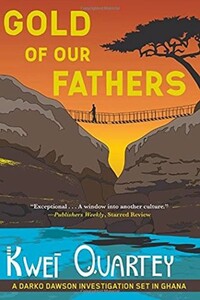
Darko Dawson, Chief Inspector in the Ghana police service, returns in this atmospheric crime series often compared to Alexander McCall Smith's The No. 1 Ladies' Detective Agency novels.Darko Dawson has just been promoted to Chief Inspector in the Ghana Police Service – the promotion even comes with a (rather modest) salary bump. But he doesn't have long to celebrate because his new boss is transferring him from Accra, Ghana's capital, out to remote Obuasi in the Ashanti region, an area now notorious for the illegal exploitation of its gold mines.When Dawson arrives at the Obuasi headquarters, he finds it in complete disarray.
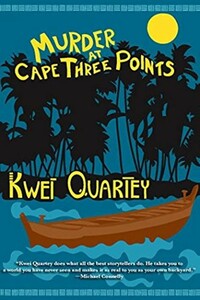
At Cape Three Points on the beautiful Ghanaian coast, a canoe washes up at an oil rig site. The two bodies in the canoe – who turn out to be a prominent, wealthy, middle-aged married couple – have obviously been murdered; the way Mr. Smith-Aidoo has been gruesomely decapitated suggests the killer was trying to send a specific message – but what, and to whom, is a mystery.The Smith-Aidoos, pillars in their community, are mourned by everyone, but especially by their niece Sapphire, a successful pediatric surgeon in Ghana's capital, Accra.

В самом начале нового века, а может быть и в конце старого (на самом деле все подряд путались в сроках наступления миллениума), Катя Малышева получила от бывшего компаньона Валентина поручение, точнее он попросил оказать ему платную любезность, а именно познакомиться с заслуженной старой дамой, на которую никто в агентстве «Аргус» не мог угодить. Катя без особой охоты взялась за дело, однако очень скоро оно стало усложняться. Водоворот событий увлек Катю за собой, а Валентину пришлось её искать в печальных сомнениях жива она или уже нет…

Наталия Новохатская Предлагает серию развернутых описаний, сначала советской (немного), затем дальнейшей российской жизни за последние 20 с лишком лет, с заметным уклоном в криминально-приключенческую сторону. Главная героиня, она же основной рассказчик — детектив-самоучка, некая Катя Малышева. Серия предназначена для более или менее просвещенной аудитории со здоровой психикой и почти не содержит описаний кровавых убийств или прочих резких отклонений от здорового образа жизни. В читателе предполагается чувство юмора, хотя бы в малой степени, допускающей, что можно смеяться над собой.
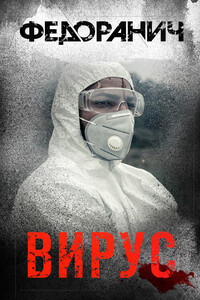
Смерть – какая она? Страшная? Или наоборот – освободительная? Кто решает кому жить, а кому нет? Журналист Максим Котов недавно пережил самую страшную потерю. Неизвестный вирус унёс жизнь его ребёнка. «Так бывает…» – сказали врачи. Но Максим уверен, что смерть его дочери – не случайность, а часть большого заговора. И в этом заговоре его ребенку была отведена роль пешки, которой с легкостью пожертвовали ради достижения «большой цели». Котов решает найти виновного и отомстить. Но чем больше он углубляется в расследование, тем запутаннее становится история.
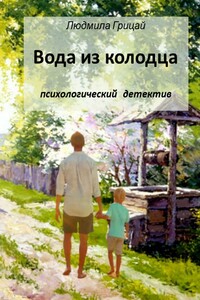
Эта история начинается с ограбления с трагическим финалом: немолодой хозяин загородного дома погибает от рук неизвестных преступников. Однако в этой истории оказывается не так все просто, и сам погибший несет ответственность за то, что с ним произошло. Рассказ «Вода из колодца» седьмой в ряду цикла «Дыхание мегаполиса». Главным героем этого цикла является следователь Дмитрий Владимиров, который на этот раз должен разобраться в хитросплетениях одной запутанной семейной драмы.