Западноевропейское искусство от Джотто до Рембрандта - [16]
After the death of the warrior pope Julius II Giovanni de Medici became Roman pope. Raphael painted the portrait of Pope Leo X with Cardinals Giulio de'Medici and Luigi de'Rossi in 1517 (the fateful year when Martin Luther, whom the Pope excommunicated in 1520, nailed his theses to the door of the castle church in Wittenburg). Raphael has shown Leo X as he was in an unsparing portrait – corpulent, shrewd, pleasure-looking. Raphael endowed his subject with a new mass and volume. His analysis of the character was unexpected and profound. Raphael has shown the Pope who was incapable of holding the Roman Catholic Church together.
One of Raphael's last and greatest paintings was the Transfiguration of Christ, painted in 1517. In contrast to the traditional rendering of the subject, Raphael painted an accompanying incident as well. It was told by Matthew and Luke. When Peter, James, and John had accompanied Christ to the top of a high mountain, the remaining Apostles were unable without his presence to cast out the demons from the possessed boy. The lowei section is composed of the agitated figures of the Apostles and the youth plunged into semidarkness. The upper loop is composed of Christ, Moses, Elijah, and three Apostles. Christ and the prophets fly in the air as if lifted up by the spiritual experience. In this vision of Christ Raphael embodied his beliefs.
The great painter died on Good Friday, April 6, 1520, at the age of thirty-seven. His funeral was held in the Pantheon and the Transfiguration was placed above his bier.
To his contemporaries Raphael's death seemed the end of an era, but a closer look shows that, in a way, the High Renaissance synthesis of Classical and Christian had already started to dissolve. Inevitably, it was an unstable equilibrium. Nonetheless the great solution remained, on the walls of the Vatican, the ceiling of the Sistine Chapel, and in the churches and palaces of Florence and Rome. Leonardo, Michelangelo and Raphael left a vision of the powers of the human being and the grandeur of human imagination that had not been approached since the days of the ancient Greeks. These solutions continued to inspire artists in every century after the short-lived High Renaissance itself passed into history.
Make sure you know how to pronounce the/allowing words:
Raphael; Urbino; messiah; tiara; Wittenburg; Martin Luther; Pantheon; Eucharist; Elijah; Matthew; Luke; Ingres; luminous
Marriage of the Virgin – «Обручение Марии»
Madonna of the Meadows – «Мадонна в зелени»
Disputa (Disputation over the Sacrament) – «Богословие» или «Диспута»
Schools of Athens- «Афинская школа»
Sistine Madonna – «Сикстинская Мадонна»
Transfiguration of Christ – «Преображение»
Pope Leo X with Cardinals Giulio de'Medici and Luigi de'Rossi – «Портрет папы Льва X с кардиналом Джулиано де Медичи и Луиджи де Росси»
Stanza della Segnatura – Станца делла Сеньятура «зал Подписи»
Eucharist – евхаристия, святое причастие
The Vatican – Ватикан
Good Friday – Великая пятница, пятница на страстной
неделе
I. Read the text. Mark the following statements true or false
1. In Raphael's art the High Renaissance ideal of harmony comes to its most complete expression.
2. In 1505 in Rome Raphael achieved immediate success.
3. The Sistine Madonna recalls the Madonna of the Rocks.
4. Raphael, invited by Sixtus iv to paint the Stanza of the Vatican, retained the position as court painter until his death.
5. Raphael came to the threshold of the Baroque.
6. The 20-th century painters turned to Raphael as the messiah.
II. How well have you read? Can you answer the following questions?
1. Whose styles did Raphael absorb?
2. What did Raphael paint in 1504? What is depicted in this picture?
3. What was Raphael fond of painting during his three-year stay in Florence? Which one was the loveliest? How did Raphael group the figures?
4. What was the first room frescoed by Raphael? What frescoes is it possible to single out from the complex iconographic programme? What do these frescoes represent? What brought Raphael to the threshold of the Baroque style?
5. What painting represents the pinnacle of Raphael's achievements? How are the Virgin and the Child depicted? What do the saints symbolize?
6. Whose portrait did Raphael paint in 1517? What year was it? How did Raphael portray the sitter? What did he want to show?
7. What was Raphael's greatest painting? What was its subject? Was it a traditional rendering of the subject? What is the lower section composed of? What is the upper loop composed of? What did Raphael embody in this vision? Where was this painting placed?
8. What was Raphael's death to his contemporaries? What does a closer look at the short-lived High Renaissance show?
III. I. Give Russian equivalents of the following phrases
the pinnacle of the achievements; messiah of the art; to put a personal stamp on; succeeding centuries; to abandon the static harmony for dynamic compositions; a threshold of the Baroque; to endow the subject with; Good Friday; to commemorate the death of; to pass into history; patron saint of the hour of death; the fateful year; an unsparing portrait; the traditional rendering of the subject; a synthesis of Classical antiquity and Christian spirituality; an unstable equilibrium; to inspire artists in every century; the ultimate in the High Renaissance vision.
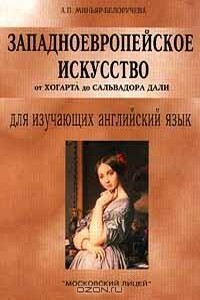
Тексты настоящего пособия охватывают почти три века истории западноевропейского искусства от Хогарта до Сальвадора Дали. Это позволяет обучаемым наряду с усвоением обширного лексического материала, приобрести культурологические знания, поскольку тексты содержат информацию о жизни и творчестве крупнейших западно-европейских художников XVIII – XX вв. Система упражнений направлена на усвоение лексического материала и развитие навыков устной речи.Данная книга является второй частью цикла учебных пособий «Западноевропейское искусство (для изучающих английский язык)».
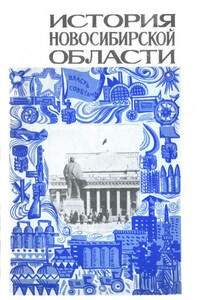
Учебное пособие по истории Новосибирской области для учащихся 9-10 классов школ Новосибирской области. Издание 1977 г. Охватывает период с начала XX века до середины 70-х гг. XX века. Соответствует школьной программе по истории СССР. Содержит фактические и цифровые данные, характеризующие развитие области в период социализма. В книге используются таблицы и CSS, поэтому для чтения лучше использовать программу Cool Reader3. Для пользующихся другими программами, таблицы дублируются в графическом формате.
В учебнике рассматриваются особенности формирования современной системы международных отношений, региональные проблемы, а также роль и место Российской Федерации, других стран СНГ в современных международных отношениях.Книга предназначена для студентов профильных вузов и факультетов, а также всех интересующихся проблемами международных отношений.
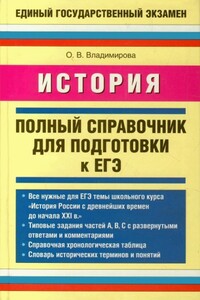
В справочнике, адресованном выпускникам и абитуриентам, в полном объеме дан материал курса «История России», который проверяется на едином государственном экзамене.Структура книги соответствует кодификатору элементов содержания по предмету, на основе которого составлены экзаменационные задания – контрольно-измерительные материалы ЕГЭ.В справочнике представлены следующие разделы курса: «История России с древности до начала XVII в.», «История России XVII–XVIII вв.», «Россия в XIX в.», «Россия в ХХ – начале XXI в.».Краткая форма изложения обеспечивает максимальную эффективность самостоятельной подготовки к экзамену.
В книге рассказывается история главного героя, который сталкивается с различными проблемами и препятствиями на протяжении всего своего путешествия. По пути он встречает множество второстепенных персонажей, которые играют важные роли в истории. Благодаря опыту главного героя книга исследует такие темы, как любовь, потеря, надежда и стойкость. По мере того, как главный герой преодолевает свои трудности, он усваивает ценные уроки жизни и растет как личность.
Непосредственной сдаче экзамена или зачета по любой учебной дисциплине всегда предшествует краткий период, когда студент должен сосредоточиться, систематизировать свои знания. Выражаясь компьютерным языком, он должен «вывести информацию из долговременной памяти в оперативную», сделать ее готовой к немедленному и эффективному использованию. Специфика периода подготовки к экзамену или зачету заключается в том, что студент уже ничего не изучает (для этого просто нет времени): он лишь вспоминает и систематизирует изученное.Предлагаемое пособие поможет студентам в решении именно этой задачи применительно к курсу «Правоохранительные органы».Структура и содержание пособия соответствуют требованиям Государственного образовательного стандарта высшего профессионального образования.Издание предназначено студентам юридических вузов.
В книге рассказывается история главного героя, который сталкивается с различными проблемами и препятствиями на протяжении всего своего путешествия. По пути он встречает множество второстепенных персонажей, которые играют важные роли в истории. Благодаря опыту главного героя книга исследует такие темы, как любовь, потеря, надежда и стойкость. По мере того, как главный герой преодолевает свои трудности, он усваивает ценные уроки жизни и растет как личность.