Западноевропейское искусство от Джотто до Рембрандта - [18]
The monarch of the Venetian School in the sixteenth century was Titian. A robust mountaineer came to Venice as a boy from the Alpine town of Pieve di Cadore and lived well into his nineties. The young painter was trained in the studios of both Gentille Bellini and Giovanni BellinI. Then he assisted Giorgione with the lost frescoes that once decorated the exteriors of Venetian palaces.
Once independent, Titian succeeded in establishing colour as the major determinant. Although he visited central Italy only in 1545-46, Titian was aware, probably, by means of engravings, of what was going on in Florence and Rome and assimilated High Renaissance innovations to his own stylistic aims. Titian generally began with a red ground, which communicated warmth to his colouring; over that he painted figures and background often in brilliant hues.
Titian's life was marked by honours and material rewards. He made himself wealthy. His palace in Venice was the centre of a near-princely court, fulfilling the worldly ideal of the painter's standing as formulated by Leonardo da VincI. In 1553 Titian began his acquaintance with the Emperor Charles V. There is a legend that the Emperor, on a visit to Titian's studio, stooped to pick up a brush the painter had dropped. Titian was called twice to the imperial court.
An early work, painted by Titian about 1515, is known as Sacred and Profane Love. The subject of this enigmatic picture has never been satisfactorily explained. Two women who look like sisters sit on either side of an open sarcophagus, which is also a fountain in the glow of late afternoon. One is clothed, another is nude save for a white scarf. The shadowed landscape behind the clothed sister leads up to a castle, toward which a horseman gallops while rabbits play in the dimness. Behind the nude sister the landscape is filled with light, and huntsmen ride behind a hound about to catch a hare, while the shepherds tend their flocks before a village with a church tower, touched with evening light. Cupid stirs the waters in the sarcophagus-fountain. The picture becomes a glorification of the beauty and redeeming power of love. Sometimes it is interpreted as the passage from virginity through the water of suffering, a kind of baptism, to a new life in love.
Titian made a series of mythological paintings for a chamber in the palace of the duke of Ferrara. One of these, the Bacchanal of the Andrians, of about 1520, is based on the description by the third-century Roman writer Philostratus of a picture he saw in a villa near Naples. The inhabitants of the island of Andros disport themselves in a shady grove. The freedom of the poses (within Titian's triangular system) is completely new. Titian has taken the greatest visual delight from the contrast of warm flesh with shimmering drapery and light with unexpected dark.
Like his mythological pictures, Titian's early religious paintings are affirmations of health and beauty. The Assumption of the Virgin, 1515-18, is his sole venture into the realm of the colossal. It represents the moment when the soul of the Virgin was reunited with her dead body. Above the powerful figures of the Apostles on earth, Mary is lifted physically into a golden Heaven on a glowing cloud by numerous child angels, where she is awaited by God the Father. The bright reds, blues, whites of drapery, the rich light of the picture carry Titian's triumphant message through the spacious interior of the Gothic Church of the Frari in Venice.
In the Madonna of the House of Pesaro, 1519-26, Titian applied his triangular compositional principle to the traditional Venetian Madonna group. The symmetry is broken up by a radical view from one side. The scene is a portico of the Virgin's palace. At the steps plunging diagonally into depth Titian painted the kneeling members of the Pesaro family and an armoured figure who gives the Virgin as a trophy a Turk, taken in battle. The columns are seen diagonally, their capitals are outside the frame. At the top clouds float before the columns, on which stand child angels with the Cross. The colours are rich and deep.
Titian's portraits do not often sparkle with colour as the male costume of the sixteenth century was black. In his Man with the Glove Titian's triangular principle is embodied in the balanced relationship of the gloved and ungloved hands to the shoulders and the youthful face. The carefully modelled hands and features are characteristic of Titian's portraits. Even in this picture, dominated by black and by the soft greenishgray background, colour is everywhere dissolved in the glazes, which mute all sharp contrasts.
A subject that occupied Titian in his mature years is the nude recumbent Venus – a pose originally devised by Giorgione. In 1538 Titian painted the Venus of Urbino for the duke of Camerino. The figure relaxes in ease on a coach in a palace interior whose inlaid marble floor and wall hangings make gold, greenish, soft red-and-brown foil for her beautiful body, the floods of her warm, light brown hair. Pure colour rules in the picture of Titian's middle period. In his later years form appealed to Titian less; substance itself was almost dissolved in the movement of colour.
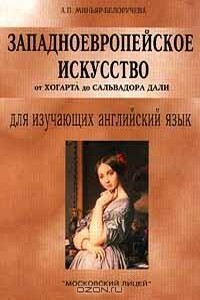
Тексты настоящего пособия охватывают почти три века истории западноевропейского искусства от Хогарта до Сальвадора Дали. Это позволяет обучаемым наряду с усвоением обширного лексического материала, приобрести культурологические знания, поскольку тексты содержат информацию о жизни и творчестве крупнейших западно-европейских художников XVIII – XX вв. Система упражнений направлена на усвоение лексического материала и развитие навыков устной речи.Данная книга является второй частью цикла учебных пособий «Западноевропейское искусство (для изучающих английский язык)».
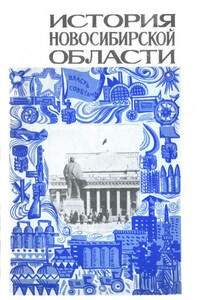
Учебное пособие по истории Новосибирской области для учащихся 9-10 классов школ Новосибирской области. Издание 1977 г. Охватывает период с начала XX века до середины 70-х гг. XX века. Соответствует школьной программе по истории СССР. Содержит фактические и цифровые данные, характеризующие развитие области в период социализма. В книге используются таблицы и CSS, поэтому для чтения лучше использовать программу Cool Reader3. Для пользующихся другими программами, таблицы дублируются в графическом формате.

В учебнике рассматриваются особенности формирования современной системы международных отношений, региональные проблемы, а также роль и место Российской Федерации, других стран СНГ в современных международных отношениях.Книга предназначена для студентов профильных вузов и факультетов, а также всех интересующихся проблемами международных отношений.
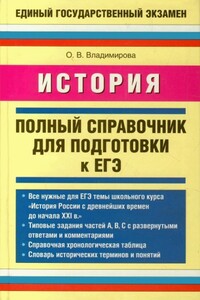
В справочнике, адресованном выпускникам и абитуриентам, в полном объеме дан материал курса «История России», который проверяется на едином государственном экзамене.Структура книги соответствует кодификатору элементов содержания по предмету, на основе которого составлены экзаменационные задания – контрольно-измерительные материалы ЕГЭ.В справочнике представлены следующие разделы курса: «История России с древности до начала XVII в.», «История России XVII–XVIII вв.», «Россия в XIX в.», «Россия в ХХ – начале XXI в.».Краткая форма изложения обеспечивает максимальную эффективность самостоятельной подготовки к экзамену.
В книге рассказывается история главного героя, который сталкивается с различными проблемами и препятствиями на протяжении всего своего путешествия. По пути он встречает множество второстепенных персонажей, которые играют важные роли в истории. Благодаря опыту главного героя книга исследует такие темы, как любовь, потеря, надежда и стойкость. По мере того, как главный герой преодолевает свои трудности, он усваивает ценные уроки жизни и растет как личность.
Непосредственной сдаче экзамена или зачета по любой учебной дисциплине всегда предшествует краткий период, когда студент должен сосредоточиться, систематизировать свои знания. Выражаясь компьютерным языком, он должен «вывести информацию из долговременной памяти в оперативную», сделать ее готовой к немедленному и эффективному использованию. Специфика периода подготовки к экзамену или зачету заключается в том, что студент уже ничего не изучает (для этого просто нет времени): он лишь вспоминает и систематизирует изученное.Предлагаемое пособие поможет студентам в решении именно этой задачи применительно к курсу «Правоохранительные органы».Структура и содержание пособия соответствуют требованиям Государственного образовательного стандарта высшего профессионального образования.Издание предназначено студентам юридических вузов.
В книге рассказывается история главного героя, который сталкивается с различными проблемами и препятствиями на протяжении всего своего путешествия. По пути он встречает множество второстепенных персонажей, которые играют важные роли в истории. Благодаря опыту главного героя книга исследует такие темы, как любовь, потеря, надежда и стойкость. По мере того, как главный герой преодолевает свои трудности, он усваивает ценные уроки жизни и растет как личность.