Trio - [21]
When Roger had his next party she wondered whether to go or not but he told her there were some business contacts there he wanted her to meet. He introduced her to Lena. Lena was working in Soho, singing in a nightclub not far from the office. Although her English was very good she had a thick German accent and Joan had to concentrate hard to make out the sense. She was talking about Roger and how he had promised her some sort of record deal. They hoped to make a record soon.
‘Have you written it?’ Joan asked.
‘No,’ Lena threw back her head and laughed. She had bronze skin and her hair was streaked with gold and honey. She had very pale grey eyes. Joan thought she could have been a model or a film star if the singing didn’t work out.
‘Roger is the writer,’ Lena said.
Joan pulled a face.
‘You think it’s a problem? No good?’
Joan shrugged. ‘You’d be better off doing it yourself.’
‘No. I can sing, but writing? Pouff!’ she waved her hands in dismissal. ‘What is wrong with Roger doing it?’
‘First of all, it’ll take him forever, and then it will be…’ she leaned close and enunciated carefully, ‘dull, square, boring.’ She had heard his songs and tried to think of comments that wouldn’t get her sacked.
‘Joan, you write me a song.’
‘But I’ve never…’
‘If you don’t, I’ll have to do Roger’s. Please?’
‘He wouldn’t like it.’
‘We’ll pick a name for you, he won’t know.’ Lena was animated, her face alight with the plan. ‘What would you like to be called?’
‘I can’t…’ She protested.
‘Joan -’ Lena grabbed her hands – ‘my friend, please. Just try, promise you’ll try.’ She stared at Joan, an open look to her, eyes dancing, a smile stretching her lips. ‘Please?’
‘I’ll try. But it might be rubbish.’
‘You’ll try?’
‘Yes.’
Lena pulled her close and kissed her on both cheeks. Joan laughed with surprise.
‘And what name?’
The question blew Joan straight back to St Ann’s, to the registrar documenting the birth. And what name? Laboriously writing with a thick fountain pen. Her name and address, a careful line across the section for the father’s details, and then, pen poised, he turned his shiny round face to her and peered over his glasses. And what name? Nearly two years ago now.
‘Joan?’ Lena nudged her elbow. ‘You OK?’
‘Day dreaming,’ she said. ‘I’ll think of something.’ And she tried to force her smile into her eyes too.
Lilian
‘And this is Pamela,’ Peter announced, lifting up the carrycot. ‘Pamela Mary Gough.’
‘She’s tiny,’ his mother observed. She sounded pleasant enough but Lilian noticed that she made no move to touch her first grandchild. Frightened of waking her, or something else?
‘Why don’t you get settled and I’ll tell Bernard you’re here. Kettle’s on.’ She hurried away and Lilian took off her jacket and took it out to the pegs in the hall. She could hear Alicia calling Bernard in from the garden. He made models in his shed. Planes and boats, no – ships. He got upset if you called them boats. His fine attention to detail and his skills at his hobby went hand in hand with a complete lack of skills and gross insensitivity where people were concerned.
‘Hrrumph!’ had been his greeting when Peter first took her home. He was an electrician by trade, with his own business. Though Lilian often wondered how his customers coped with his offhand manner. The pair of them had never had a conversation. She dreaded these visits, Peter less so, though he readily acknowledged that his father was miserable company and that her family were more easy-going. ‘You and Sally are chatterboxes,’ he joked. ‘You wouldn’t notice if someone was mealy-mouthed, because you’d be talking nineteen to the dozen.’
Lilian wondered how much religion came into it. The Goughs were Protestants – Methodists, a creed that shunned pomp and circumstance, frowned on drink and, it seemed to Lilian, were uncomfortable with any emotional expression too. They could sing, though. Sang her lot out of church at the wedding. Peter had converted to become a Catholic. He’d studied and promised to follow the faith and now here she was encouraging him to go against the dogma. But the alternative was unbearable.
Peter had been an only child. His mother had never spoken about whether that was by choice. Lilian had a sister, Sally. They had quarrelled a lot as children but were close now they’d grown up and their parents were gone. Lilian had always thought three children would be a nice number. Three. Three miscarriages she’d had. And each time Peter’s father had been too stiff and awkward to even refer to it. Had hardly come near her while she was there, as though what she had was contagious.
‘It’s just his way,’ Peter defended him. ‘He doesn’t mean anything by it.’
And now there was Pamela?
Bernard appeared for lunch and the four of them settled to eat. Roast beef, Yorkshire puddings, roast potatoes, braised red cabbage, peas and carrots and thick gravy. It was seventy-eight degrees outside but the Sunday roast was made come hell or high water.
Peter talked about his promotion and the work he was doing in Sheffield. His mother chucked in the odd comment. An occasional nod or grunt from Bernard the only indication he was listening. No one mentioned Pamela. Lilian longed for her to wake up so she could tend to her and show her off. After apricot crumble and custard she helped Alicia wash up. Lilian talked about Pamela for a while – how she was a slow feeder and kept nodding off on the bottle. She had to tickle her feet to keep her awake sometimes. That she loved her bath and Peter sometimes bathed her at the weekends. But Alicia’s response was so muted Lilian felt like she was talking to herself.
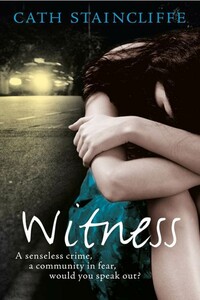
"A painfully honest exploration of an ordinary family under stress… A stunning piece of work." – Ann CleevesFour bystanders in the wrong place at the wrong time. Witnesses to the shocking shooting of a teenage boy. A moment that changes their lives forever. Fiona, a midwife, is plagued by panic attacks and unable to work. Has she the strength to testify? Mike, a delivery driver and family man, faces an impossible decision when his frightened wife forces him to choose – us or the court case. Cheryl, a single-mother, doesn't want her child to grow up in the same climate of fear.
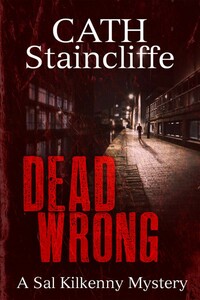
Single mother and private eye, Sal Kilkenny, has two very frightened clients on her hands. One, young mother Debbie Gosforth, is a victim; the other, Luke Wallace, is afraid he is a murderer. While Sal tries to protect Debbie from a stalker, she has to investigate the murder of Luke's best friend.

Your husband, your family, your freedom. What would you sacrifice for love? A love story, a modern nightmare and an honest and incisive portrayal of a woman who honours her husband's wish to die and finds herself in the dock for murder.When Deborah reluctantly helps her beloved husband Neil end his life and conceals the truth, she is charged with murder. As the trial unfolds and her daughter Sophie testifies against her, Deborah, still reeling with grief, fights to defend her actions. Twelve jurors hold her fate in their hands, if found guilty she will serve a life sentence.
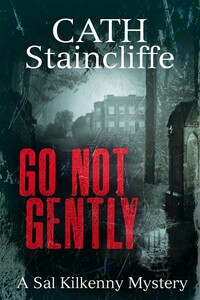
From the author of LOOKING FOR TROUBLE, a further crime novel featuring private investigator Sal Kilkenny. When a man is distraught at his wife's apparent infidelity, he enlists the help of Sal to confirm his suspicions, only to find himself a widower soon afterwards. From there Sal's other case also begins to take a disturbing and violent turn.
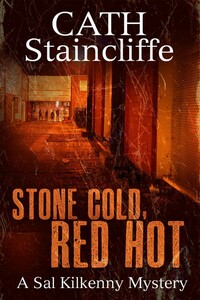
When private eye Sal Kilkenny is asked to discover the whereabouts of Jennifer Pickering, disinherited by her family twenty years ago, it seems that Jennifer does not want to be found. Despite her initial reservations, as the events of the past gradually unfold, single-mum Sal finds that she is becoming engrossed in the case. There are dark secrets waiting to be uncovered but can Sal break the conspiracy of silence that surrounds this mystery? As she spends her days tracing Jennifer, Sal's nights become shattered by an emotional and often dangerous assignment with the Neighbour Nuisance Unit on one of Manchester's toughest housing estates.
The fourth Blue Murder novel written by the creator of the hit ITV police drama starring Caroline Quentin as DCI Janine Lewis.A well-respected family GP is found shot dead outside his surgery; who could possibly want to kill him? As DCI Janine Lewis and her team investigate they uncover stories of loyalty, love, deception, betrayal and revenge.Praise for the Blue Murder books'Complex and satisfying in its handling of Lewis's agonised attempts to be both a good cop and a good mother.' The Sunday Times'Uncluttered and finely detailed prose.' Birmingham Post'Beautifully realised little snapshots of the different characters' lives… Compelling stuff.' Sherlock Magazine'A swift, satisfying read.' City Life'Precise and detailed delineation of contemporary family relationships.' Tangled Web'Lewis seems set to become another very popular string to Staincliffe's bow as one of the leading English murder writers.' Manchester Metro'Pace and plenty of human interest.' Publishing News'Blending the warmth of family life with the demands of a police investigation.'Manchester Evening News'Juggling work and family is a challenge of modern life and encountering realistically portrayed women with family responsibilities is a pleasure.
Новых владельцев фермы, затерянной среди белорусских болот, ожидает чудовищная находка: фрагменты тел, спрятанные в заброшенном сарае. Под подозрением оказываются пациенты психиатрической лечебницы, расположенной неподалеку. Иначе и быть не может, ведь за колючей проволокой содержатся люди, уже успевшие совершить жестокие преступления. Главный врач больницы не спешит защищать своих подопечных, он хочет знать правду. Он лично просит о помощи Алексея Тронова, надеясь, что его проект отнесется к клинике не так предвзято, как полиция. Тронов, заинтригованный необычным делом, соглашается помочь.

Наталия Новохатская Предлагает серию развернутых описаний, сначала советской (немного), затем дальнейшей российской жизни за последние 20 с лишком лет, с заметным уклоном в криминально-приключенческую сторону. Главная героиня, она же основной рассказчик — детектив-самоучка, некая Катя Малышева. Серия предназначена для более или менее просвещенной аудитории со здоровой психикой и почти не содержит описаний кровавых убийств или прочих резких отклонений от здорового образа жизни. В читателе предполагается чувство юмора, хотя бы в малой степени, допускающей, что можно смеяться над собой.

Смерть – какая она? Страшная? Или наоборот – освободительная? Кто решает кому жить, а кому нет? Журналист Максим Котов недавно пережил самую страшную потерю. Неизвестный вирус унёс жизнь его ребёнка. «Так бывает…» – сказали врачи. Но Максим уверен, что смерть его дочери – не случайность, а часть большого заговора. И в этом заговоре его ребенку была отведена роль пешки, которой с легкостью пожертвовали ради достижения «большой цели». Котов решает найти виновного и отомстить. Но чем больше он углубляется в расследование, тем запутаннее становится история.

Эта история начинается с ограбления с трагическим финалом: немолодой хозяин загородного дома погибает от рук неизвестных преступников. Однако в этой истории оказывается не так все просто, и сам погибший несет ответственность за то, что с ним произошло. Рассказ «Вода из колодца» седьмой в ряду цикла «Дыхание мегаполиса». Главным героем этого цикла является следователь Дмитрий Владимиров, который на этот раз должен разобраться в хитросплетениях одной запутанной семейной драмы.