The Kindest Thing - [5]
Graduating with a 2:2, I knew I didn’t want to work as a photographer. Perhaps I should have considered animation, though my drawing skills were average at best, or becoming a stylist, but at the start of the eighties there were precious few jobs for arts graduates.
Neil, who’d finished a year ahead of me, had gone on to do a teacher-training course. Jobs in history weren’t ten a penny either. By rights he should have started a teaching job that September. But I’d talked him into our Greek trip. We both worked for a temp agency through July and August to raise the money, then had two months away.
We arrived in Athens in the middle of the night. The air was hot and full of dust, which left our skin feeling gritty.
There was no bus to the port at Piraeus till dawn so we sat in the scrub on the airport approach road waiting for sunrise. At one point a car drew up, airport security, and a man in a crisp uniform and peaked cap harangued us until we got up and dragged our rucksacks back to the building. There was nowhere to sit and nothing to eat or drink.
When the bus came we repeated the word ‘Piraeus’ to the driver, who took some drachmas and motioned us down the aisle. The front windows were framed with coloured fringing and sprigs of plastic flowers. Central on the dashboard stood a large plastic glow-in-the-dark Madonna, and rosary beads dangled from the rear-view mirror.
‘My mother’d love it,’ Neil murmured.
The bus juddered its way along winding roads and through the crowded jumble of the city, the muddle of apartments, small shops and businesses, to the port. When we got off, the place was quiet. Nothing open. I wondered where all the fishermen were. Hunger and lack of sleep were making me grumpy but then a corner shutter rose and a small, round, wrinkled man plonked a table and two chairs outside. We made our way over and stepped inside. There was a garish menu with photos of sickly-looking food. I pointed to a cheese roll, treacle cake, coffee. Neil nodded for the same. We ate outside at the rickety table and watched the gulls swerving down for debris on the quayside. The day was already warm and the food set me right. The sea was a pure deep blue and I took a long breath of air and watched Neil. Early on, I often feared he would leave me. That was what men did. I hid it well. He never realized. Of course, I imagined he’d betray me for another woman. Instead it was neurones crumbling and muscles wasting away that stole him from me.
We were the only tourists on the ferry. Well off the package holiday routes, Syra was, according to the guidebook, a thriving ship-building island with a strong local economy and deserted beaches. It was also several hours on the boat from Piraeus. The Greeks on board were all laden with parcels and packages. Most of them wore black or black and white. They seemed curious about us, eyes sliding our way. As they chatted, I wondered if we were the subject of their conversation – the scruffy hippies with their backpacks.
We set off with a clamour and the smell of diesel in the air. The engine clattered loudly and made it impossible to talk. But after an hour or so, the roaring noise cut out abruptly. One of the crew, a man with skin like an old satchel and grizzled hair, climbed down into the hatch. For several minutes he and the captain exchanged words. He emerged now and then to throw up his arms and grimace. One of the older women, dressed all in black, remonstrated with the captain.
How long were we going to be stuck there? My dreams of lunch in some small taverna followed by a swim and sex in the shade of a beachside eucalyptus tree shrivelled as the minutes ticked by. The sun was high and fierce now. There was no land anywhere in sight, no rocks, no other vessels, no lighthouse or buoys.
The crewman emerged, wiping oil from his hands onto a rag, and another noisy debate erupted with several of the passengers chipping in. After a few minutes of this the crewman spat over the side of the deck and lit a cigarette. The captain and a young lad, who I guessed was his son, began to lower a dinghy into the water. The crewman climbed into it and, after a few attempts, started the outboard motor. Most of the passengers retreated to the shade in the lounge area in the middle of the boat.
‘He’s going for help,’ I said to Neil. ‘Will he go to Piraeus?’
‘Think so – there’s nowhere nearer.’
I sat back down and closed my eyes, my face tilted at the sun. I savoured the heat. I could feel myself sliding into sleep, but struggled awake, aware of the hard iron struts on the bench biting into the bones of my back. ‘I’m so tired,’ I murmured to Neil.
‘We could go over there.’ He gestured to a corner under the stairs. It was in the shade and dry. There’d just be room to lie down. We left our rucksacks where they were and moved over.
We lay side by side, facing each other. The floor was hard; my hip bone soon ached. I used a hand to cushion my ear. ‘I wish I could teleport.’
Neil smiled.
‘Click my fingers and we’d be in our room.’
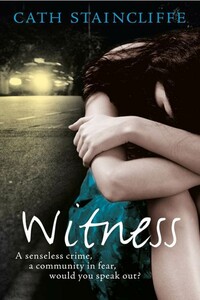
"A painfully honest exploration of an ordinary family under stress… A stunning piece of work." – Ann CleevesFour bystanders in the wrong place at the wrong time. Witnesses to the shocking shooting of a teenage boy. A moment that changes their lives forever. Fiona, a midwife, is plagued by panic attacks and unable to work. Has she the strength to testify? Mike, a delivery driver and family man, faces an impossible decision when his frightened wife forces him to choose – us or the court case. Cheryl, a single-mother, doesn't want her child to grow up in the same climate of fear.
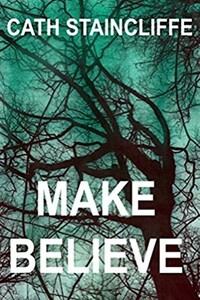
Blue Murder: Make BelieveThe third Blue Murder novel written by the creator of the hit ITV police drama starring Caroline Quentin as DCI Janine Lewis.For nine days the people of Manchester have been looking for missing three-year-old Sammy Wray then DCI Janine Lewis is called to a residential street where a child's body has been found. It's a harrowing investigation and Janine's personal problems make leading the inquiry even tougher. Is this the case that will break her?Praise for the Blue Murder books'Complex and satisfying in its handling of Lewis's agonised attempts to be both a good cop and a good mother.'The Sunday Times'Uncluttered and finely detailed prose.'Birmingham Post'Beautifully realised little snapshots of the different characters' lives… Compelling stuff.'Sherlock Magazine'A swift, satisfying read.'City Life'Precise and detailed delineation of contemporary family relationships.'Tangled Web'Lewis seems set to become another very popular string to Staincliffe's bow as one of the leading English murder writers.'Manchester Metro'Pace and plenty of human interest.'Publishing News'Blending the warmth of family life with the demands of a police investigation.'Manchester Evening News'Juggling work and family is a challenge of modern life and encountering realistically portrayed women with family responsibilities is a pleasure.
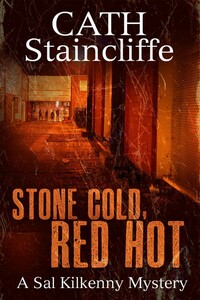
When private eye Sal Kilkenny is asked to discover the whereabouts of Jennifer Pickering, disinherited by her family twenty years ago, it seems that Jennifer does not want to be found. Despite her initial reservations, as the events of the past gradually unfold, single-mum Sal finds that she is becoming engrossed in the case. There are dark secrets waiting to be uncovered but can Sal break the conspiracy of silence that surrounds this mystery? As she spends her days tracing Jennifer, Sal's nights become shattered by an emotional and often dangerous assignment with the Neighbour Nuisance Unit on one of Manchester's toughest housing estates.
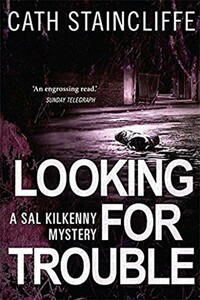
She's a single parent. A private eye. And liking it. Until, that is, Mrs Hobbs turns up asking Sal Kilkenny to find her missing son. Sal's search takes her through the Manchester underworld, a world of deprivation and petty theft, of well-heeled organised crime and ultimately, murder. Would she have taken the job on if she had known what she was getting into? Probably, because Sal is fired with the desire to see justice done, to avenge the death of a young lad whose only crime was knowing too much.The first Sal Kilkenny Mystery, short-listed for the Crime Writers' Association best first novel award and serialised on BBC Radio 4, Woman's Hour.
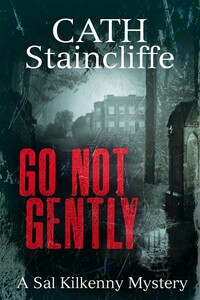
From the author of LOOKING FOR TROUBLE, a further crime novel featuring private investigator Sal Kilkenny. When a man is distraught at his wife's apparent infidelity, he enlists the help of Sal to confirm his suspicions, only to find himself a widower soon afterwards. From there Sal's other case also begins to take a disturbing and violent turn.
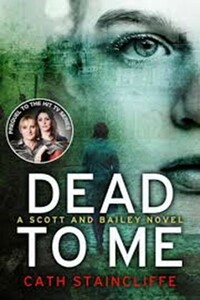
A daughter's deathA teenage girl is found brutally murdered in her squalid flat.A mother's loveHer mother is devastated. She gave her child up to the care system, only to lose her again, and is convinced that the low-life boyfriend is to blame.Two ordinary women, one extraordinary jobDC Rachel Bailey has dragged herself up from a deprived childhood and joined the Manchester Police. Rachel's boss thinks her new recruit has bags of raw talent but straight-laced DC Janet Scott, her reluctant partner, has her doubts.Together Scott and Bailey must hunt a killer, but a life fighting crime can be no life at all…

Частный детектив Андрей Шальнев оказывается вовлеченным в сложную интригу: ему нужно выполнить заказ криминального авторитета Искандера - найти Зубра, лидера конкурирующей группировки. Выполняя его поручение, Андрей неожиданно встречает свою старую знакомую - капитана ФСБ Кристину Гирю, участвующую под прикрытием в спецоперации по ликвидации обеих банд.

From the creator of the groundbreaking crime-fiction magazine THUGLIT comes…DIRTY WORDS.The first collection from award-winning short story writer, Todd Robinson.Featuring:SO LONG JOHNNIE SCUMBAG – selected for The Year's Best Writing 2003 by Writer's Digest.The Derringer Award nominated short, ROSES AT HIS FEET.THE LONG COUNT – selected as a Notable Story of the Year in Best American Mystery Stories 2005.PLUS eight more tales of in-your-face crime fiction.

В основу этой повести положены действительные события. 14 июля 1969 года из историко-художественного музея города Сольвычегодска была похищена пелена «Богоматерь Владимирская», изготовленная в мастерских Строгановых в первой половине XVII века. Долгое время о ней ничего не было известно, пока автор случайно не обнаружил ее в Коряжме в одной частной коллекции.Конечно, последовавшие за этим события несколько изменены, как заменены и имена действующих лиц.
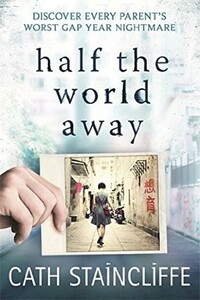
Lori Maddox chooses to spend the year after university travelling and visits China where she finds casual work as a private English tutor. Back in Manchester, her parents Joanna and Tom, who separated when Lori was a toddler, follow her adventures on her blog. When Joanna and Tom hear nothing for weeks they become increasingly concerned, travelling out to Chengdu in search of their daughter. Landing in a totally unfamiliar country, Joanna and Tom are forced to turn detective, following in their daughter's footsteps.
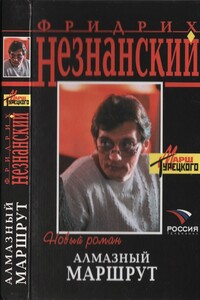
Эта книга от начала до конца придумана автором. Конечно, в ней использованы некоторые подлинные материалы как из собственной практики автора, бывшего российского следователя и адвоката, так и из практики других российских юристов. Однако события, место действия и персонажи, безусловно, вымышлены. Совпадения имен и названий с именами и названиями реально существующих лиц и мест могут быть только случайными.В центре Москвы происходят убийства известных ювелиров. Но близкие уверяют, что из квартир ничего не пропало.
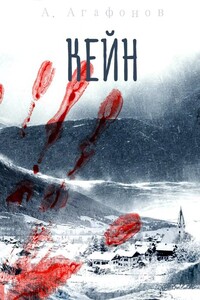
Чемодан с миллионом долларов, кучка головорезов, желающих его вернуть, и это в городишке, отрезанном от мира. Что может быть хуже? Ах, да….кровососущий монстр.От Автора:Данный рассказ является частью трилогии «Последний рубеж» и повествовал о молодости Кейн и его знакомству с Изабелл. Сюжет рассказа блуждал у меня в голове больше года, и дошел до кондиции, когда нужно перенести его на бумагу. Сама «трилогия Рубежа» будет представлена публике — когда меня устроит результат. Но, если сей рассказ будет достаточно популярен, и у читателей будет желание увидеть продолжение, то я вполне могу написать ещё одну-две истории повествующие о похождениях молодого Кейна, тем самым сформировав из них полноценный роман.Так что не стесняйтесь оставлять комментарии, тыкать носом в нелогичности.