The Human Flies - [5]
As far as the other neighbours were concerned, the wheelchair-bound Andreas Gullestad had as usual been at home all day. Mrs Lund had stayed in with her young son. According to the caretaker’s wife, Mr Lund had left at around eight in the morning and not returned until nine o’clock in the evening. The only phone call to the Lunds’ flat was when he called home around four hours before that. Sara Sundqvist had gone out to a morning lecture at half past nine and come home again at a quarter past four. Darrell Williams had gone out just before nine in the morning and come back just before eight in the evening. Konrad Jensen was working a late shift that week. He left in his car around midday and came in the door only a few steps behind Williams. The only resident the caretaker’s wife had registered leaving the building again later was Darrell Williams. He had gone out for an evening stroll at five to ten and returned fifteen minutes later.
The caretaker’s wife had not seen any strangers in the building on the day of the murder and it was highly unlikely that anyone would have managed to sneak past without being seen. Only she and the residents had a key to the back door. Everyone else had to come in through the front entrance and past her. And on Thursday, 4 April she had been able to see the back door more or less constantly for the six hours prior to the murder.
Before I left her, I asked the caretaker’s wife whether she had noticed anything unusual from her post, especially in the hours before and after the murder.
‘There is one thing,’ she replied, and got up. She indicated that I should follow her into a small back room.
On the table was a large blue raincoat with a hood and a red scarf.
‘I found both of these on top of the rubbish bin by the back door this morning. I’ve never seen any of the residents wearing either the raincoat or the scarf. Both items look more or less brand new, and they both appear to have been washed before they were thrown away, because they are still damp. I didn’t see anyone throwing them away, but they were not there when I went to throw out some leftovers early yesterday afternoon. That’s certainly worth mentioning, isn’t it?’
And I had to agree with her. It was definitely unusual enough to mention that someone had thrown away an almost new and recently washed raincoat on the very day that there was a murder in the building. The blue raincoat was immediately added to my list of questions to ask the residents.
II
So, Darrell Williams lived in Flat 3B. He was a large, dark-haired American with a firm handshake and an unexpectedly pleasant voice. He showed me his diplomat’s passport, which gave his age as forty-five, though he looked younger. He was at least six foot tall and no doubt weighed well over fifteen stone, but still had little surplus fat. He spoke remarkably good Norwegian, with only the faintest American twang.
When telling me about himself, Darrell Williams explained that his slightly unusual Christian name was due to his Irish ancestry. His grandparents had emigrated to the United States in the 1870s, following the Great Famine. He himself was born and raised in New York, and was the son of a well-known lawyer. Darrell Williams had given up his own law degree in order to sign up for military service after America joined the war, and took part in the Normandy landings in the summer of 1944. The following year, he had come to Norway just after its liberation as a young lieutenant in the US delegation. He soon found himself a Norwegian girlfriend and a post in the American military mission and stayed on in Norway until the spring of 1948. He had learned Norwegian back then and had so many fond memories from that time that he had, nearly twenty years later, applied for a vacant position as attaché at the embassy in Oslo when the opportunity arose. In the intervening years, he had pursued a career in the military and risen to the rank of major, before making the switch to diplomacy in the early 1960s.
In answer to my question regarding his civil status, Darrell Williams’s smile was relaxed and full of self-irony.
‘I got married in the USA in 1951, but the high point of the marriage was when we split up three years later. It resulted in too many arguments and no children. My wife claimed that she left me for a certain man, which would appear to be untrue as she then went on to marry someone else, and to have a child with yet another man!’
The diplomat spoke openly of his disastrous marriage. As a single man with no children, the diplomatic service had allowed him to fulfil his childhood dream of seeing more of Asia and Europe. Over the past decade he had been posted to a number of embassies, but could, ‘with his hand on his heart’, honestly say that he had never seen a capital as beautiful as Oslo.
The embassy had both organized and paid for the flat. And Darrell Williams had no complaints about it, only that due to long working hours and official dinners, he was not here very much, so he did not know the other people in the building particularly well. Williams thought the caretaker and his wife to be ‘orderly and helpful’. The handicapped man on the ground floor was ‘a very cultured and friendly man’ who spoke good English and could discuss Jack London and his other favourite American authors. The young Swedish student also seemed to be ‘nice and knowledgeable’ in the few conversations that Williams had had with her. The taxi driver on the ground floor was a perhaps ‘a simple soul’ and kept a very low profile, but he was interested in football and other sport, so Williams exchanged the odd word with him now and then. They had stopped for a chat about the forthcoming Norwegian Cup game when they bumped into each other by the stairs on the night of the murder.
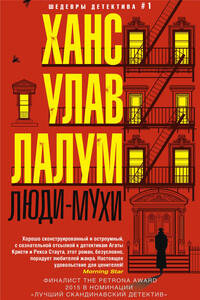
Убит бывший лидер норвежского Сопротивления и бывший член кабинета министров Харальд Олесен. Его тело обнаружено в запертой квартире, следов взлома нет, орудие убийства отсутствует. На звук выстрела к двери Олесена сбежались все соседи, но никого не увидели. Инспектор уголовного розыска Колбьёрн Кристиансен считает, что убийство, скорее всего, совершил кто-то из них. Более того, он полагает, что их показания лживы.
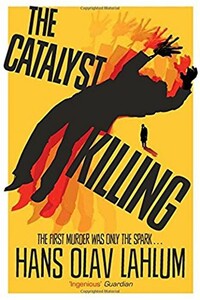
The third mystery in the hugely compelling, bestselling international crime series from Norway's answer to Agatha Christie, Hans Olav Lahlum, The Catalyst Killing will have you guessing to the final clue. The first murder was only the spark… 1970: Inspector Kolbjorn Kristiansen, known as K2, witnesses a young woman desperately trying to board a train only to have the doors close before her face. The next time he sees her, she is dead… As K2 investigates, with the help of his precocious young assistant Patricia, he discovers that the story behind Marie Morgenstierne's murder really began two years ago, when a group of politically active young people set out on a walking tour in the mountains.

From the international bestselling author, Hans Olav Lahlum, comes Chameleon People, the fourth murder mystery in the K2 and Patricia series.1972. On a cold March morning the weekend peace is broken when a frantic young cyclist rings on Inspector Kolbjorn 'K2' Kristiansen's doorbell, desperate to speak to the detective.Compelled to help, K2 lets the boy inside, only to discover that he is being pursued by K2's colleagues in the Oslo police. A bloody knife is quickly found in the young man's pocket: a knife that matches the stab wounds of a politician murdered just a few streets away.The evidence seems clear-cut, and the arrest couldn't be easier.

A gripping, evocative, and ingenious mystery which pays homage to Agatha Christie, Satellite People is the second Norwegian mystery in Hans Olav Lahlum's series. Oslo, 1969: When a wealthy man collapses and dies during a dinner party, Norwegian Police Inspector Kolbjorn Kristiansen, known as K2, is left shaken. For the victim, Magdalon Schelderup, a multimillionaire businessman and former resistance fighter, had contacted him only the day before, fearing for his life. It soon becomes clear that every one of Schelderup's 10 dinner guests is a suspect in the case.

Содержание: 1. Блаженный грешник 2. Одинокий островитянин 3. Анатомия анатомии 4. Спокойной ночи 5. Исповедь на электрическом стуле 6. Прибавка в весе 7. Пустая угроза 8. Лазутчик в лифте 9. Не трясите фамильное древо 10. Смерть на астероиде 11. До седьмого пота 12. Такой вот день… 13. Дьявольщина 14. Аллергия 15. Милейший в мире человек 16. Победитель 17. Девушка из моих грез 18. Да исторгнется сердце неверное! 19. Как аукнется… 20. Человек, приносящий несчастье 21. Рождественский подарок 22. Изобретение.
Оба романа, помещенные в книге, — об убийцах. Однако психологические портреты этих убийц так различны, как разнообразны и непохожи человеческие судьбы. Что приводит человека к преступлению? И вообще, преступник — это человек или чудовище? Весь ход повествования заставляет читателя не раз задавать себе эти вопросы и пытаться ответить на них.
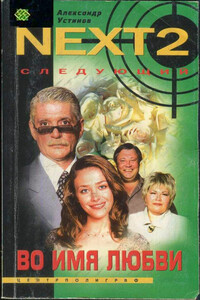
Книга написана по сценарию известного российского драматурга А.В. Тимма.Шайка Ангелины Виннер продолжает борьбу. Им удается похитить Ольгу Кирсанову, жену убитого хозяина «Империи». Сын Ольги Ваня ради спасения матери отказывается от своих прав на фирму. Враждебный лагерь празднует победу, но… преждевременно! В руках у Лавра козырная карта — завещание, и, обнародовав его, он ломает планы своих врагов. Остановятся ли бандиты, или кто-то снова окажется их следующей жертвой?
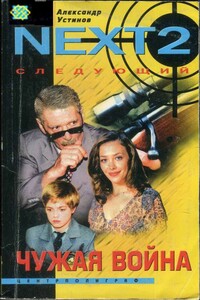
Книга написана по сценарию известного российского драматурга А.В. Тимма.Франц Хартман и Ангелина Виннер, подстроившие автокатастрофу, в которой погиб хозяин «Империи» Владимир Кирсанов, намерены идти до конца. Теперь они замышляют убийство его жены Ольги и несовершеннолетнего сына Вани, наследника «трона». Волею случая Лавру суждено сыграть роль доброго ангела в судьбе женщины и ребенка.
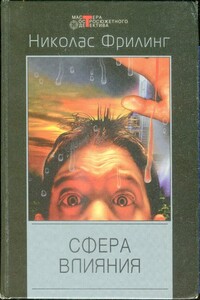
Обстоятельный и дотошный инспектор амстердамской полиции Ван дер Вальк расследует странное убийство домохозяйки («Ать-два!»). Героям известного автора детективов предстоят жестокие испытания, прежде чем справедливость восторжествует.
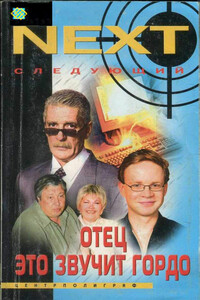
Книга написана по сценарию известного российского драматурга А.В. Тимма. На страницах романа вы встретитесь со старыми знакомыми, полюбившимися вам по сериалу «NEXT», — благородным и великодушным Лавром, его сыном Федором, добродушным весельчаком Санчо и решительной Клавдией. Увлекательное повествование вводит в мир героев, полный настоящих рыцарских подвигов и романтических приключений.