The Boy Scouts In Russia - [35]
Now they took the turn. Took it on two wheels-on one! For a moment it seemed that they must upset. Then, by a miracle, the car righted itself. For a moment it seemed about to straighten itself out and resume its flight. And then, together, Fred and Boris saw what lay before them, and Boris tried frantically to swing the car out. In the road lay the wreck of a huge van.
It was too much for Boris. He did swerve the car, but it struck the wreck. There was a deafening crash, and then they were hurled out onto the turf by the roadside, while the motor roared and flames leaped out over the wreck. CHAPTER XVI
BETWEEN THE GRINDSTONES
For a moment Fred was stunned by the force of his fall. But it was only for a moment, since, by something that was very like a miracle, he was unhurt. He got up and looked around, a little dazed, for Boris. In a moment he saw him lying very still, his white face lighted up by the flames from the burning car. He ran over and he was vastly relieved to see that his cousin was conscious.
"My leg is broken, I think," said Boris, speaking quickly. "Fred, you must run for it alone. You will be able to get to the Russian lines. But hurry! They are coming, I'm sure! They must have heard the crash!"
"Do you think I'm going to leave you here?" asked Fred, indignantly. "We'll sink or swim together, Boris!"
"Why should two of us suffer when one can escape?" asked Boris. "Besides, you've got to go, Fred, for my sake as well as for your own. They'll treat me well enough. But if they catch us here wearing German uniform coats-well, you know what that would mean!"
Fred was startled. He had not thought of that.
"Take my coat and helmet and get away as fast as you can," urged Boris. "Then I can say that I have been in the car. They'd know that, of course, but I could make them believe that I was in it against my will, and that the two men in uniform they saw had escaped. If they catch you, they'll send you back to headquarters and you'll be recognized there at once. Then they'd do to me whatever they did to you, just because I was caught in your company. No, it's the only chance for either of us, Fred, and you've got to take it quickly."
The idea of abandoning a friend, and much more one who had come to mean so much to him as did Boris, seemed terrible to Fred. And yet it was impossible for him to refute Boris's argument. His cousin was right. And now he could hear the voices of approaching men. Naturally, if the Germans on the culvert thought that a car containing two German officers had been wrecked, they would come to the rescue. There was no time to be lost.
"I suppose you're right, Boris," he said, with a groan. "But it's the hardest thing I've ever had to do! But it is so. It would make it worse for you if I stayed. That's the only reason I'll go, though! You believe that, don't you?"
"Of course I do!" said Boris. "Haven't you proved what sort you are, when you risked your life to try to help me to get away at the parsonage? Go! Hurry! Get this coat and helmet off me!"
So Fred set to work. He had to move Boris to get the coat off, and the Russian groaned with the pain of his broken leg. Fred dared not wait, now that he had made up his mind to fly, even to see the extent of the injury, much less to apply first aid. Had there been time, he might have made Boris comfortable, for, like all well trained Boy Scouts, he understood the elementary principles of bandaging and had made more than one temporary setting in splints for broken bones. But he knew that the Germans would be there in a minute or two, and he had no reason to suppose that they would lack common humanity. They would care for Boris. Probably they had a surgeon back at the culvert, or fairly near at hand, at any rate.
"Get off the road," said Boris, gritting his teeth. "My head is swimming, and I'm afraid I'm going to faint or do some such foolish thing! But don't stay in the road. They're sure to go along, looking for you."
Fred had reasoned that out for himself. And now, when he had rolled up Boris's coat and helmet into a bundle, he leaped a narrow ditch and plunged into a thick mass of bushes. He did not know the country here, and had no notion of what sort of cover he might find. But luck was with him though for a moment he thought he had stumbled into a disastrous predicament. The ground gave way beneath him suddenly and he felt himself falling. He relaxed instinctively, and came down on hands and knees on a mass of leaves and twigs. He had fallen into a sort of shallow pit, but deep enough to shelter him. It seemed to him to be like a deadfall, such as he knew trappers sometimes make. The place was ideal for such a use, but now no steel-jawed trap yawned for him. And it was only a moment before he realized that this was just the hiding-place for him-and one, moreover, for which he himself might have searched in vain.
"They'll never look for me as near the wreck as this," he said to himself. "They'll spread out probably, but I think I'll be safe here. As safe as anywhere, and it will give me a chance to find out what's happening, too."

Текст воспроизведен по изданию: Письма Бичурина из Валаамской монастырской тюрьмы // Народы Азии и Африки, № 1. 1962.

Плачевная ситуация в российских деревнях известна всем. После развала масштабной системы государственного планирования исчезли десятки и сотни тысяч хозяйств, произошел массовый отток населения из сельских районов, были разворованы последние ценности. Исправление ситуации невозможно без эффективного самоуправления в провинции.Организованный в 1997 году Институт общественных и гуманитарных инициатив (ИОГИ) поставил перед собой цель возрождения сельских районов Архангельской области и добился уникальных результатов.

В настоящее издание включены все основные художественные и публицистические циклы произведений Г. И. Успенского, а также большинство отдельных очерков и рассказов писателя.
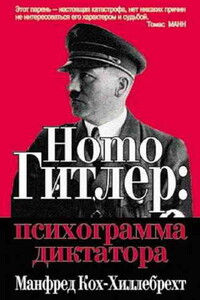
До сих пор историки многого не знают о Гитлере. Каковы были мотивы его мыслей и поступков? На чем основана легенда о его громадных знаниях и сверхчеловеческих способностях влиять на людей? Автор этой книги, немецкий профессор, в результате долгих и кропотливых исследований создал психограмму человека, возглавлявшего III рейх.

В настоящей книге Конан Дойл - автор несколько необычных для читателя сюжетов. В первой части он глубоко анализирует произведения наиболее талантливых, с его точки зрения, писателей, как бы открывая "волшебную дверь" и увлекая в их творческую лабораторию. Во второй части книги читатель попадает в мистический мир, представленный, тем не менее, так живо и реально, что создается ощущение, будто описанные удивительные события происходят наяву.
В книге рассказывается история главного героя, который сталкивается с различными проблемами и препятствиями на протяжении всего своего путешествия. По пути он встречает множество второстепенных персонажей, которые играют важные роли в истории. Благодаря опыту главного героя книга исследует такие темы, как любовь, потеря, надежда и стойкость. По мере того, как главный герой преодолевает свои трудности, он усваивает ценные уроки жизни и растет как личность.