Stone Cold Red Hot - [20]
The teenagers glugged at the cans, toked on the joint. They moved closer to the house. Then in turn they ran up and hammered on the door, screaming and shouting. After a minute or two they’d swap places, like a sick relay race. The men began to sing a dirge; “Go home, go home, fuck off, go home…” to the tune of Amazing Grace. As the ditty finished they broke into a fast chant, obscene and racist. I caught fragments, I didn’t know how much the microphone on the camera would pick up, enough I hoped. “Coons and wogs, they eat dogs, ay allez oop…”
I hated them. I wanted to silence them, kick their stupid, racist heads in. Not a civilised response, I know, just a gut reaction.
Next time, if there had to be a next time, I’d leave the window ajar to catch more of what they were saying.
I heard a movement behind me – Mr Poole opening the door. He’d had the sense to turn the landing light out.
“I’ve spotted Brennan and the twins and Whittaker and his boy. There’s another lad as well, shaved head, overweight?”
“Bunter, that’s what they call him. Darren is his real name. He lives next door but one. He’s a bit slow. They lead him on, that lot, take advantage of him and he gets into trouble. He doesn’t understand half of what’s going on – just wants to be part of the gang. Grown men.” I heard him sigh. “What, on god’s earth, makes them do this?” Frustration strained his voice.
The songs and the chants went on, more cans were consumed. The empty ones were hurled at the house, the group cheered whenever a window was hit. They repeatedly went up and kicked the front door.
“I’m going to ring the police now,” I said to Mr Poole, “I don’t want it to get any worse.”
It took the police twenty minutes to arrive. In the meantime I filmed Darren peeing against the Ibrahim’s door, egged on by the others who cheered when he’d finished. I was shaking, my teeth gritted shut. Where was Mrs Ahmed and her three children? Settled in the kitchen as far as possible from the threats at the front? Could she get the children off to sleep and sit and listen alone? Or did she put the telly on to drown them out; try and follow the stories from the images, the babble of English hard for her to understand? Did the shouts and thumps bring back the horrors she had lived through in Somalia, swamping her with fear making her hands shake and her mouth dry? How did she cope?
“Get a chair next time,” yelled Brennan, “do it through the letterbox.”
“She might suck it for yer,” roared Whittaker.
The group howled with laughter. The twins made wanking motions with their fists. Where were the bloody police?
At last the squad car appeared and as it drove down the Close the gang became quiet. They moved nearer together, ribaldry over.
The police got out of the car. I kept filming. Brennan greeted one of them by name. “Alright, Benny.” He said there’d been reports of a disturbance. Innocent faces were pulled.
“Carl Benson,” Mr Poole whispered, referring to the younger policeman, “local lad.”
“I live on here,” said Brennan, “this is my street. Can’t a man walk down his own street?”
“Free country, innit?” asked Whittaker. “Used to be anyway, till we were swamped by immigrants, taking houses and jobs.”
“Come on, now, time for home,” said the other policeman.
“Why, eh? Why?” Brennan was all outrage, hands spread wide. “We haven’t done nothing, this is harassment, this is.”
There was no reply. The police stood there. Implacable but not looking half as hard as the men they faced.
It was Whittaker who gave the signal at last. “Freezin’ out here anyway. Funny smell an’ all. Like a farmyard.” One of the twins snorted. I saw Carl Benson’s face tighten, his adam’s apple bob.
“Got a dirty movie back at the house, few more cans.” They began to walk away.
“Darren?” A woman’s voice calling. “Darren, come on now.” Darren’s face fell, he turned away from the group, rolled his shoulders in an embarrassed shrug.
“Go on, Bunter,” teased Micky Whittaker, “beddy-byes.”
The police stood and watched until the group had gone into the houses at the bottom of the Close. The older man got in the car. Carl Benson crossed to Mr Poole’s. We went downstairs and Mr Poole let him in. I confirmed that I’d called the police and told him what I’d seen, he noted it all down in his book. I explained that I was video-recording events for a possible court case – it was all on tape. Yes, I would be happy to be a witness if required.
“It’s Carl, isn’t it?” Mr Poole said.
“Yeah,” he blushed a little.
“How’s your Mum doing?”
“Alright, they’ve put a ramp in now and a downstairs bathroom. It’s a lot better.”
“‘Bout time and all. Give her my regards.”
“Yeh, right. Best be off.”
“Glad it was them,” said Mr Poole as we returned to the kitchen. “There’s one copper round here and all he ever wanted to do was race round in fast cars – now he does it for a living – like the Sweeney. If he wasn’t a copper he’d be a villain.”
“It’s possible to be both at the same time.”
“Aye and he probably is. But Carl’s a good lad.”
I left Mr Poole to his filing and went back upstairs.

"A painfully honest exploration of an ordinary family under stress… A stunning piece of work." – Ann CleevesFour bystanders in the wrong place at the wrong time. Witnesses to the shocking shooting of a teenage boy. A moment that changes their lives forever. Fiona, a midwife, is plagued by panic attacks and unable to work. Has she the strength to testify? Mike, a delivery driver and family man, faces an impossible decision when his frightened wife forces him to choose – us or the court case. Cheryl, a single-mother, doesn't want her child to grow up in the same climate of fear.

1960, Manchester. Three young Catholic women find themselves pregnant and unmarried. In these pre-Pill days, there is only one acceptable course of action: adoption. So Megan, Caroline and Joan meet up in St Ann's Home for Unmarried Mothers to await the births of their babies. Three little girls are born, and placed with their adoptive families. Trio follows the lives of these mothers and daughters over the ensuing years.
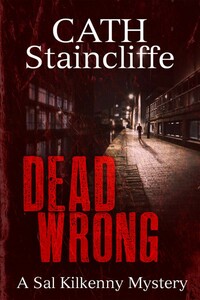
Single mother and private eye, Sal Kilkenny, has two very frightened clients on her hands. One, young mother Debbie Gosforth, is a victim; the other, Luke Wallace, is afraid he is a murderer. While Sal tries to protect Debbie from a stalker, she has to investigate the murder of Luke's best friend.

Your husband, your family, your freedom. What would you sacrifice for love? A love story, a modern nightmare and an honest and incisive portrayal of a woman who honours her husband's wish to die and finds herself in the dock for murder.When Deborah reluctantly helps her beloved husband Neil end his life and conceals the truth, she is charged with murder. As the trial unfolds and her daughter Sophie testifies against her, Deborah, still reeling with grief, fights to defend her actions. Twelve jurors hold her fate in their hands, if found guilty she will serve a life sentence.
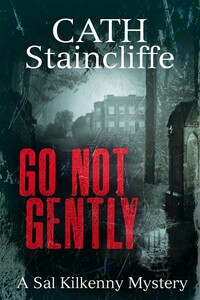
From the author of LOOKING FOR TROUBLE, a further crime novel featuring private investigator Sal Kilkenny. When a man is distraught at his wife's apparent infidelity, he enlists the help of Sal to confirm his suspicions, only to find himself a widower soon afterwards. From there Sal's other case also begins to take a disturbing and violent turn.

The fourth Blue Murder novel written by the creator of the hit ITV police drama starring Caroline Quentin as DCI Janine Lewis.A well-respected family GP is found shot dead outside his surgery; who could possibly want to kill him? As DCI Janine Lewis and her team investigate they uncover stories of loyalty, love, deception, betrayal and revenge.Praise for the Blue Murder books'Complex and satisfying in its handling of Lewis's agonised attempts to be both a good cop and a good mother.' The Sunday Times'Uncluttered and finely detailed prose.' Birmingham Post'Beautifully realised little snapshots of the different characters' lives… Compelling stuff.' Sherlock Magazine'A swift, satisfying read.' City Life'Precise and detailed delineation of contemporary family relationships.' Tangled Web'Lewis seems set to become another very popular string to Staincliffe's bow as one of the leading English murder writers.' Manchester Metro'Pace and plenty of human interest.' Publishing News'Blending the warmth of family life with the demands of a police investigation.'Manchester Evening News'Juggling work and family is a challenge of modern life and encountering realistically portrayed women with family responsibilities is a pleasure.
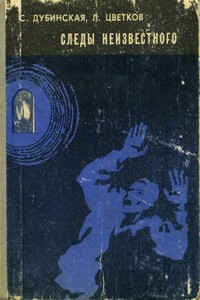
Все, о чем расскажет вам сборник, происходило в действительности. В силу ряда причин мы изменили только имена и в нескольких случаях — место действия.Мы благодарим работников управления внутренних дел Мурманского облисполкома за помощь, без которой эти очерки не могли быть написаны.Авторы.

Одержимому высокой идеей человеку невольно покоряются и чистые сердца, и погрязшие в грехах души — этой идеей Ги де Кара обязательно увлечётся читатель романа «Храм ненависти». Он интересен и любителю психологического романа, и поклоннику детектива.
В книге рассказывается история главного героя, который сталкивается с различными проблемами и препятствиями на протяжении всего своего путешествия. По пути он встречает множество второстепенных персонажей, которые играют важные роли в истории. Благодаря опыту главного героя книга исследует такие темы, как любовь, потеря, надежда и стойкость. По мере того, как главный герой преодолевает свои трудности, он усваивает ценные уроки жизни и растет как личность.
В книге рассказывается история главного героя, который сталкивается с различными проблемами и препятствиями на протяжении всего своего путешествия. По пути он встречает множество второстепенных персонажей, которые играют важные роли в истории. Благодаря опыту главного героя книга исследует такие темы, как любовь, потеря, надежда и стойкость. По мере того, как главный герой преодолевает свои трудности, он усваивает ценные уроки жизни и растет как личность.
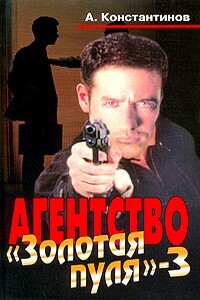
«Золотая пуля». Так называют в городе агентство, в котором работают журналисты-инвестигейторы (или, в переводе на русский — «расследователи»). Возглавляет это вымышленное агентство Андрей Обнорский — герой романов Андрея Константинова и снятого по этим романам телесериала «Бандитский Петербург». В «Золотой пуле»-3 вы встретитесь не только с Обнорским, но и с его соратниками-журналистами: Николаем Повзло, Зурабом Гвичия, Светланой Завгородней, Нонной Железняк, Георгием Зудинцевым и другими. Все они попадают порой в опасные, а порой и комичные ситуации.

Евгения Кручинина, сотрудница частного детективного агентства, оказалась свидетельницей убийства одного из своих клиентов, а спустя некоторое время случайно спасла другого. Как выяснилось, эти двое много лет назад играли в одном любительском спектакле. Самое странное, что почти все участники этого спектакля погибли... Что это? Цепь совпадений? А может быть, некий беспощадный убийца воспользовался случаем свести счеты со всеми своими врагами? Ранее роман издавался под названием "Смерть тебе не изменит".