Stone Cold Red Hot - [18]
His kitchen had never been modernised and some of the items, like the fifties dresser with its sliding frosted glass doors, were collectors items now for those into retro and kitsch. He made the tea slowly, methodically and we took the drinks into the lounge.
“So how did you come to be doing this?” he asked. “Private investigator.”
“Enterprise Allowance Scheme.”
He guffawed. “I heard of people setting up painting and decorating that way and catering but they let you do that?”
“Oh, there were all sorts,” I said, “a juggler and an interior designer. I think the strangest of my lot was a snake breeder.” I thought back to the training sessions; lectures on self-employment, VAT and tax. A motley group of us, out of work but full of schemes and dreams.
“You got money on top of your benefit?”
“Yeah. Forty quid a week for a year, then sink or swim. They reckoned two-thirds of us would sink.”
“You didn’t.”
“Near thing sometimes though.”
“They don’t have that now,” he said.
The steam from the tea misted my glasses, something I wasn’t used to. I pulled back and they cleared. “I can’t keep track,” I said.
“Seems to be going the American way; welfare to work, cutting people’s money if they won’t take a job. I can’t see as how it’s going to make anything better, not round here. Folks aren’t going to be any better off, doing a dead-end job for the same money as the dole, that’s not going to change people’s futures, is it?”
I shrugged, probably not. And there but for the grace of god…
“And what about these single parents?” He persisted. “Some lasses round here have two and three kiddies, they’re looking after them best as they can, and it’s hard for some of them, I can tell you. And now the government wants them to go out to work and pay someone else to mind their children. They might want to mind them themselves. Ought to pay them to do it. That’s what my wife used to say – raising a family is work and it ought to be accounted for.”
But meanwhile? I thought. I drank my tea. “Some of them might want the chance to work,” I said.
“All power to them,” he said. “But if we go down the road of pushing people into jobs they don’t want; that or starve. That’s not what we set up the Welfare State for,” his voice shook and got louder, “we wanted to protect the most vulnerable – for the good of us all. Create a strong society. Give people the basics, decent housing, decent food, healthcare when they need it, everyone paying in, everyone benefits. Common interest, if we lose sight of that…” He broke off, rubbed his face with his hands. “I’m sorry,” he said, “on my soap-box, hard habit to break.”
Shouting from outside startled both of us. I went and pulled aside the curtain. A crowd of youths were on the pavement, five of them. Two were leaning against my car. They were laughing and joking. Mr Poole joined me, he took off his glasses and screwed up his eyes.
“The two with ginger hair, on the car,” he said, “they’re Brennan’s twins, can’t tell ‘em apart. I don’t know the two in the middle and the lanky one on the right is Micky Whittaker.”
He had a shaved head and a pattern marked on his scalp. “What’s that on his head?”
“A tattoo, bulldog.”
“His father is mixed up with some neo Nazi group.”
“Yes and his father gave his life fighting the fascists. Died in Malaya, and now sonny boy’s running round celebrating Hitler’s birthday.” Contempt riddled his voice.
“I’d better get them off the car,” I said. “I pulled my coat back on and Mr Poole followed me to the door. I opened it and called out. “Can you get off the car, please.”
Jeers and catcalls. One of the twins mimicked me, “Can you get off the car, please,” and the other echoed him.
“Needs scrapping,” Micky Whittaker kicked a tyre with his boot. “We can do it for yer, you’ll get the insurance.”
I resisted joining in the banter and repeated my request.
“We’re not hurting it,” said one of the twins “are we?” he turned to the others.
“No,” they chorused.
“Get off the car.”
“Alright, alright,” said the other twin.
“She’s shitting herself,” one of them sniggered.
My cheeks burned but I tried not to react.
“Come on, lads,” Mr Poole’s voice was hard but not threatening.
“Alright, grandad, who’s yer visitor?”
He took a step down and went to the gate. “She’s my niece, up from London and her auntie is poorly in the hospital so I’d appreciate a bit of peace and quiet while she’s staying here, OK?”
There were shuffles and sniggers and a soft “‘kin‘ell” from one of them as they shambled off down the road.
Chapter seven
Half an hour later the motorbike I’d seen on arriving became the focus for some excitement. The driver roared it up and down the Close screeching to a halt at the bottom where the gang had congregated.
I told Mr Poole that I’d film some of this for the record.
“If you need anything,” he said, “just give us a yell. I’ll be in the back room,” he gestured in that direction.
“What time do you go to bed?” I felt slightly foolish asking but I didn’t want to disturb him.
“Oh, I’ll be up till you’re done.”
“Are you sure, it’ll be after two?”

"A painfully honest exploration of an ordinary family under stress… A stunning piece of work." – Ann CleevesFour bystanders in the wrong place at the wrong time. Witnesses to the shocking shooting of a teenage boy. A moment that changes their lives forever. Fiona, a midwife, is plagued by panic attacks and unable to work. Has she the strength to testify? Mike, a delivery driver and family man, faces an impossible decision when his frightened wife forces him to choose – us or the court case. Cheryl, a single-mother, doesn't want her child to grow up in the same climate of fear.

1960, Manchester. Three young Catholic women find themselves pregnant and unmarried. In these pre-Pill days, there is only one acceptable course of action: adoption. So Megan, Caroline and Joan meet up in St Ann's Home for Unmarried Mothers to await the births of their babies. Three little girls are born, and placed with their adoptive families. Trio follows the lives of these mothers and daughters over the ensuing years.
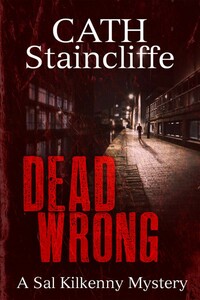
Single mother and private eye, Sal Kilkenny, has two very frightened clients on her hands. One, young mother Debbie Gosforth, is a victim; the other, Luke Wallace, is afraid he is a murderer. While Sal tries to protect Debbie from a stalker, she has to investigate the murder of Luke's best friend.

Your husband, your family, your freedom. What would you sacrifice for love? A love story, a modern nightmare and an honest and incisive portrayal of a woman who honours her husband's wish to die and finds herself in the dock for murder.When Deborah reluctantly helps her beloved husband Neil end his life and conceals the truth, she is charged with murder. As the trial unfolds and her daughter Sophie testifies against her, Deborah, still reeling with grief, fights to defend her actions. Twelve jurors hold her fate in their hands, if found guilty she will serve a life sentence.
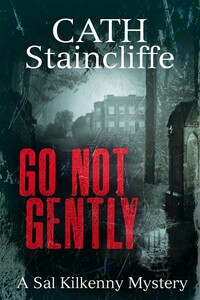
From the author of LOOKING FOR TROUBLE, a further crime novel featuring private investigator Sal Kilkenny. When a man is distraught at his wife's apparent infidelity, he enlists the help of Sal to confirm his suspicions, only to find himself a widower soon afterwards. From there Sal's other case also begins to take a disturbing and violent turn.

The fourth Blue Murder novel written by the creator of the hit ITV police drama starring Caroline Quentin as DCI Janine Lewis.A well-respected family GP is found shot dead outside his surgery; who could possibly want to kill him? As DCI Janine Lewis and her team investigate they uncover stories of loyalty, love, deception, betrayal and revenge.Praise for the Blue Murder books'Complex and satisfying in its handling of Lewis's agonised attempts to be both a good cop and a good mother.' The Sunday Times'Uncluttered and finely detailed prose.' Birmingham Post'Beautifully realised little snapshots of the different characters' lives… Compelling stuff.' Sherlock Magazine'A swift, satisfying read.' City Life'Precise and detailed delineation of contemporary family relationships.' Tangled Web'Lewis seems set to become another very popular string to Staincliffe's bow as one of the leading English murder writers.' Manchester Metro'Pace and plenty of human interest.' Publishing News'Blending the warmth of family life with the demands of a police investigation.'Manchester Evening News'Juggling work and family is a challenge of modern life and encountering realistically portrayed women with family responsibilities is a pleasure.

В книге рассказывается история главного героя, который сталкивается с различными проблемами и препятствиями на протяжении всего своего путешествия. По пути он встречает множество второстепенных персонажей, которые играют важные роли в истории. Благодаря опыту главного героя книга исследует такие темы, как любовь, потеря, надежда и стойкость. По мере того, как главный герой преодолевает свои трудности, он усваивает ценные уроки жизни и растет как личность.
В книге рассказывается история главного героя, который сталкивается с различными проблемами и препятствиями на протяжении всего своего путешествия. По пути он встречает множество второстепенных персонажей, которые играют важные роли в истории. Благодаря опыту главного героя книга исследует такие темы, как любовь, потеря, надежда и стойкость. По мере того, как главный герой преодолевает свои трудности, он усваивает ценные уроки жизни и растет как личность.
В книге рассказывается история главного героя, который сталкивается с различными проблемами и препятствиями на протяжении всего своего путешествия. По пути он встречает множество второстепенных персонажей, которые играют важные роли в истории. Благодаря опыту главного героя книга исследует такие темы, как любовь, потеря, надежда и стойкость. По мере того, как главный герой преодолевает свои трудности, он усваивает ценные уроки жизни и растет как личность.
В книге рассказывается история главного героя, который сталкивается с различными проблемами и препятствиями на протяжении всего своего путешествия. По пути он встречает множество второстепенных персонажей, которые играют важные роли в истории. Благодаря опыту главного героя книга исследует такие темы, как любовь, потеря, надежда и стойкость. По мере того, как главный герой преодолевает свои трудности, он усваивает ценные уроки жизни и растет как личность.
В книге рассказывается история главного героя, который сталкивается с различными проблемами и препятствиями на протяжении всего своего путешествия. По пути он встречает множество второстепенных персонажей, которые играют важные роли в истории. Благодаря опыту главного героя книга исследует такие темы, как любовь, потеря, надежда и стойкость. По мере того, как главный герой преодолевает свои трудности, он усваивает ценные уроки жизни и растет как личность.
В книге рассказывается история главного героя, который сталкивается с различными проблемами и препятствиями на протяжении всего своего путешествия. По пути он встречает множество второстепенных персонажей, которые играют важные роли в истории. Благодаря опыту главного героя книга исследует такие темы, как любовь, потеря, надежда и стойкость. По мере того, как главный герой преодолевает свои трудности, он усваивает ценные уроки жизни и растет как личность.