Stone Cold Red Hot - [17]
I parked outside Mr Poole’s and looked across at the Ibrahim’s. There were two rough rectangles of black paint daubed on the brickwork beneath the lounge window and on the door – presumably to cover up graffiti left by their tormentors.
I picked up the sports bag which held the camcorder, my mobile phone and my handbag, got out of the car and locked it. There was a group of youths at the bottom of the close, clustered round a motorbike. They cast glances my way, one of them made a comment and there was a shout of laughter from the others and a medley of obscenities. I wondered whether my disguise was inciting any more interest than I would have done without it. I’d limited it to a few basic features – glasses with bright red frames, red lipstick, a lightweight grey wig and a stone-coloured mac. The glasses and wig came courtesy of my friend Diane who has a thing about trying out a new look every week or two and who lets me use her cast-offs when she goes off them. I can’t often use her clothes – Diane is a very big woman, she’s several sizes larger than me and makes most of her own stuff as the shops don’t cater to her size or her wacky tastes. The glasses were clear lenses (I ask you) so at least I could see through them without endangering anybody, the wig (grey? what possessed her to buy grey?) was light enough to bear wearing for a few hours without getting a headache though it did make me itch round the hairline and the coat was a bargain buy that I’ve never worn. I kept trying it on but it just wasn’t me.
With this costume my hope was that anyone who met me would only remember an older woman with red specs.
Mr Poole was a large, well-built man with a mane of silver-grey hair, jowelly cheeks, a bulbous nose. Behind tortoiseshell glasses I could see small brown eyes, above them eyebrows run wild. He wore dark trousers and shirt and an old-fashioned cable knit cardigan, the sort with leather buttons.
“Come in, come in,” he stood aside and waved me through. Once he’d shut the door he took a moment to look at me, made no comment on what he found then announced, “I’ll show you round, there’s three windows look across the street. This one,” he took me into the front room, “and two upstairs.”
“It’s very good of you to let me use the place.”
“Well, someone’s got to do something. It gets my goat, it really does, the way they behave. Barbaric. I’d say they was like animals but that would be an insult to the animals. Now, you can see through here.”
We moved into the bay window. I could see through the nets into the house opposite and it was a reasonable view but I was aware that this was Mr Poole’s living room and I would be shooting in the dark to avoid discovery. I thought I’d be better upstairs, a better chance to scan the street with less disruption for him.
We looked upstairs. “I don’t use either of these,” he said, “I sleep at the back, it’s quieter. This is the bigger one,” he switched on the light and a jumble of cardboard boxes and furniture appeared. “I use it for storage,” he said, “mind you, I’ve no use for half this lot, keep meaning to have a clear out, get the Sally Army round to take it away but I never find the time.”
The smaller room had more of the same but the view was slightly obscured by a telegraph pole so I settled on the larger one.
“I’ll close the curtains,” I said, “while I get sorted out. Can I use one of these chairs? Thanks. And when I film I’ll part the curtains but I’ll have the lights off so I can’t be seen.”
Mr Poole watched while I moved some of the stuff around until I could place the chair a couple of feet away from the window. I set up the tripod and fixed the camera on. I’d no need to hand hold it while I was filming from the one position. If I did need to move the camera there was a quick release button securing it to the tripod. I turned off the light then opened the curtains a few inches either side until I could pan right across from left to right without filming curtain. I could zoom in on the Ibrahims’ house and pull back to incorporate houses on either side and much of the nearby street. I couldn’t see the main road from here but the bottom end of the Close was visible and I could film there if I swung the camera right at an angle. I shot a few seconds than played it back in the camera to check everything was working alright.
“Probably be a couple of hours before anything gets going,” he said, “Mr Brennan likes to get a few jars down him before he starts picking a fight.”
“Does he live on the Close?”
“At the end, him and Whittaker, they’ve the houses either side of the alley at the bottom. It’s been hell up here these last couple of years.”
“They told me there’ve been a lot of complaints.”
“That’s right. Even though most people are afraid to say anything – scared that there’ll be comeback if they do. You can’t blame them, especially the young ones with kiddies. Leastways I’ve only myself to worry about. Come on down I’ll make you a cuppa tea.”
He pointed out the toilet and bathroom on the way downstairs, “Help yourself, whenever you need.”
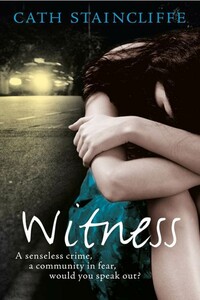
"A painfully honest exploration of an ordinary family under stress… A stunning piece of work." – Ann CleevesFour bystanders in the wrong place at the wrong time. Witnesses to the shocking shooting of a teenage boy. A moment that changes their lives forever. Fiona, a midwife, is plagued by panic attacks and unable to work. Has she the strength to testify? Mike, a delivery driver and family man, faces an impossible decision when his frightened wife forces him to choose – us or the court case. Cheryl, a single-mother, doesn't want her child to grow up in the same climate of fear.
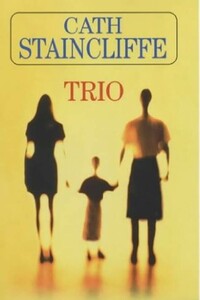
1960, Manchester. Three young Catholic women find themselves pregnant and unmarried. In these pre-Pill days, there is only one acceptable course of action: adoption. So Megan, Caroline and Joan meet up in St Ann's Home for Unmarried Mothers to await the births of their babies. Three little girls are born, and placed with their adoptive families. Trio follows the lives of these mothers and daughters over the ensuing years.
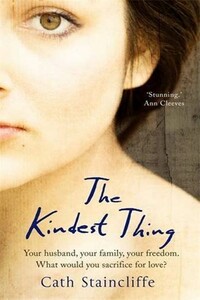
Your husband, your family, your freedom. What would you sacrifice for love? A love story, a modern nightmare and an honest and incisive portrayal of a woman who honours her husband's wish to die and finds herself in the dock for murder.When Deborah reluctantly helps her beloved husband Neil end his life and conceals the truth, she is charged with murder. As the trial unfolds and her daughter Sophie testifies against her, Deborah, still reeling with grief, fights to defend her actions. Twelve jurors hold her fate in their hands, if found guilty she will serve a life sentence.
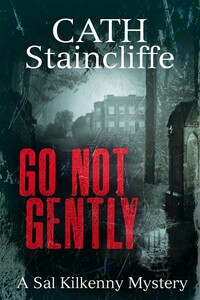
From the author of LOOKING FOR TROUBLE, a further crime novel featuring private investigator Sal Kilkenny. When a man is distraught at his wife's apparent infidelity, he enlists the help of Sal to confirm his suspicions, only to find himself a widower soon afterwards. From there Sal's other case also begins to take a disturbing and violent turn.
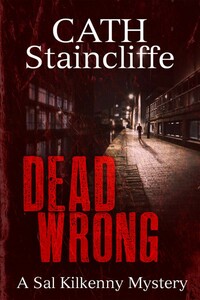
Single mother and private eye, Sal Kilkenny, has two very frightened clients on her hands. One, young mother Debbie Gosforth, is a victim; the other, Luke Wallace, is afraid he is a murderer. While Sal tries to protect Debbie from a stalker, she has to investigate the murder of Luke's best friend.

The fourth Blue Murder novel written by the creator of the hit ITV police drama starring Caroline Quentin as DCI Janine Lewis.A well-respected family GP is found shot dead outside his surgery; who could possibly want to kill him? As DCI Janine Lewis and her team investigate they uncover stories of loyalty, love, deception, betrayal and revenge.Praise for the Blue Murder books'Complex and satisfying in its handling of Lewis's agonised attempts to be both a good cop and a good mother.' The Sunday Times'Uncluttered and finely detailed prose.' Birmingham Post'Beautifully realised little snapshots of the different characters' lives… Compelling stuff.' Sherlock Magazine'A swift, satisfying read.' City Life'Precise and detailed delineation of contemporary family relationships.' Tangled Web'Lewis seems set to become another very popular string to Staincliffe's bow as one of the leading English murder writers.' Manchester Metro'Pace and plenty of human interest.' Publishing News'Blending the warmth of family life with the demands of a police investigation.'Manchester Evening News'Juggling work and family is a challenge of modern life and encountering realistically portrayed women with family responsibilities is a pleasure.

В книге рассказывается история главного героя, который сталкивается с различными проблемами и препятствиями на протяжении всего своего путешествия. По пути он встречает множество второстепенных персонажей, которые играют важные роли в истории. Благодаря опыту главного героя книга исследует такие темы, как любовь, потеря, надежда и стойкость. По мере того, как главный герой преодолевает свои трудности, он усваивает ценные уроки жизни и растет как личность.
В книге рассказывается история главного героя, который сталкивается с различными проблемами и препятствиями на протяжении всего своего путешествия. По пути он встречает множество второстепенных персонажей, которые играют важные роли в истории. Благодаря опыту главного героя книга исследует такие темы, как любовь, потеря, надежда и стойкость. По мере того, как главный герой преодолевает свои трудности, он усваивает ценные уроки жизни и растет как личность.
В книге рассказывается история главного героя, который сталкивается с различными проблемами и препятствиями на протяжении всего своего путешествия. По пути он встречает множество второстепенных персонажей, которые играют важные роли в истории. Благодаря опыту главного героя книга исследует такие темы, как любовь, потеря, надежда и стойкость. По мере того, как главный герой преодолевает свои трудности, он усваивает ценные уроки жизни и растет как личность.
В книге рассказывается история главного героя, который сталкивается с различными проблемами и препятствиями на протяжении всего своего путешествия. По пути он встречает множество второстепенных персонажей, которые играют важные роли в истории. Благодаря опыту главного героя книга исследует такие темы, как любовь, потеря, надежда и стойкость. По мере того, как главный герой преодолевает свои трудности, он усваивает ценные уроки жизни и растет как личность.
В книге рассказывается история главного героя, который сталкивается с различными проблемами и препятствиями на протяжении всего своего путешествия. По пути он встречает множество второстепенных персонажей, которые играют важные роли в истории. Благодаря опыту главного героя книга исследует такие темы, как любовь, потеря, надежда и стойкость. По мере того, как главный герой преодолевает свои трудности, он усваивает ценные уроки жизни и растет как личность.
В книге рассказывается история главного героя, который сталкивается с различными проблемами и препятствиями на протяжении всего своего путешествия. По пути он встречает множество второстепенных персонажей, которые играют важные роли в истории. Благодаря опыту главного героя книга исследует такие темы, как любовь, потеря, надежда и стойкость. По мере того, как главный герой преодолевает свои трудности, он усваивает ценные уроки жизни и растет как личность.