Spider in the Corner of the Room - [23]
My pulse keeps racing and I need to calm down, so I look to Patricia. Numbers. Figures. ‘What is the sum of all the positive integers?’ I answer before she can reply. ‘You would assume infinite, would you not?’
‘Er-’
‘Well, you would be wrong. It is not infinite.’ I stand up, pace, turning the envelope over in my fingers over and over. Stopping, I slip one finger under the flap and rip it open. Its contents spill into my palm. ‘Only numbers are infinite,’ I babble. ‘Nothing else can continue forever.’ I blink at the letter, at the ivy-green ink.
‘Doc? You okay?’
I begin to read. The words-they swirl around my head like leaves caught in a crosswind.
‘Doc, you’re crying.’
I touch my eyes. They are moist, but how? I do not cry. Not me, not in front of people. It’s as if prison has changed me.
I read on. My mother says she is disappointed in me, upset for me, that she has prayed for me, begged the Lord for forgiveness on my behalf. She has attended mass at the cathedral in Salamanca, knelt in the pews, stooped at the foot of Jesus and asked him why this has happened. I wipe my eyes, the tears clouding my sight, my throat tight, raw. There is more. Ramon, she claims, has calmed the neighbours, friends, but, oh the worry. What will happen to me, she says. Hard to make sense of the world when your daughter has been convicted of murder. When your daughter is guilty of murder.
‘What is it?’ Patricia says, but I barely register her voice.
My heart rate accelerates. I do not move. I read the word. Then read it again. Guilty. G.U.I.L.T.Y.
‘Doc, you’re worrying me now.’
But my oesophagus is too taut to speak. I give the letter to Patricia. She reads it. I concentrate on breathing, on trying to push aside the words: disappointed, guilty, emotions I experience but cannot display. Emotions my mother feels and, in her distress, has told to me, in black and white.
Patricia scans the page. Her eyes go wide, then she looks to me. ‘Jesus, Doc, that’s…I’m so sorry.’ She looks again at the letter. ‘It says here she wants you to call her, wants to know how you are.’
I sniff, wipe my nose with my sleeve. ‘It does?’
Patricia hands me the letter.
‘She never attended my trial,’ I say after a moment. ‘She was ill for a while.’ I read the letter, the part where my mother requests I contact her. She was never close to me, Mama, but she was always there, looked after me day to day, checked I was where I needed to be. When I was with Papa, Mother hovered by the sides, like a bird on a window ledge, who, at any given moment, could lift her wings and fly away.
‘Why don’t you sit down?’ Patricia says.
I shake my head. ‘My mother is a defence lawyer, did you know that?’
‘No, I didn’t.’
I nod. ‘She is a politician. She was voted last year into el Congreso, the Spanish congress. She is a Parlimentaria for the centre-right.’ I look at the green ink. ‘The Church backed her all the way. Decades after they joined leagues with Franco, the Catholic Church is still trying to keep control of Spain, of people’s lives.’ Then I laugh, but I don’t know why. The absurdity of it? The sickening truth?
‘Fecking religion,’ Patricia says, shaking her head. ‘Causes more bleedin’ problems than it solves. A heap of the Catholic priests in Ireland were found up to all sorts. And when people were poor and starving on the streets long back, there were the priests, fat and warm in their rectories.’
I rub my thumbs on the envelope, the paper.
‘I remember when I was nine,’ I say. ‘I had to accompany my mother to a meeting at Salamanca Cathedral. Our au pair was away. My mother told me to sit and wait in the seat outside Father Reznik’s office, but I could not. I walked into the vestry and that is when I saw them. My mother and the priest…kissing.’ My mother’s writing swims on the page. ‘She handed the Father a sealed package. I stood, watched, could not look away. For some reason, I knew something was not right. Before they could see me, I ran back to my seat. I never told anyone.’ A tear escapes. Hurt, bewilderment. ‘Why is it no one is who they seem?’
Patricia shrugs. ‘God knows.’
An anger rushes to my cheeks. ‘God does not know. If he did know, if he did exist even, he wouldn’t allow it all to happen.’
I hold the letter and rub the paper. My mother kissed Father Reznik. A priest. A Catholic priest. I saw it, I am so sure. And now I can’t find him, don’t even know who he is, who he really works for or why-if he even existed at all. Just a made-up persona, a name, a being, plucked out of the air like an apple from a tree. Forbidden. Wrong. And now the convent priest who helped me is dead. Dead. And I am incarcerated, a man who pretended for years to be my friend, to be a man of God emerging before me instead as a snake. Because that’s what happened, didn’t it? That’s what we discovered, what the priest found out? That Father Reznik was a liar? I drag my nails over my scalp and look at the letter, at the creeping ink, and without thinking any more, without wondering what I am doing or why, I rip.
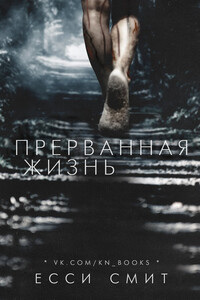
Я — чистый холст, и даже художник во мне не знает, чем его заполнить. Моя жизнь началась в тот день, когда я сбежала и очнулась в больнице. Сбежала от реальности. Сбежала от страха. Сбежала от Него. До этого момента ничего не существовало, и я уверена, что, с такой быстротечностью дней, впереди меня тоже ничего не ждет. Но я стараюсь. Пытаюсь жить для дедули, который не покидает меня с тех пор, как я проснулась. Но все попытки бесполезны. Я вновь сбегаю, чтобы начать новую жизнь на небольшом острове, где не нужно оправдывать ничьи ожидания.

«Эксгумация» — превосходный психологический триллер одного из наиболее ярких представителей современной британской прозы. Роман, написанный Тоби Литтом в 2000 году, стал бестселлером в Великобритании и многих других странах. Главный герой книги, Конрад, подвергается нападению киллера в момент встречи со своей подругой-моделью Лили в фешенебельном лондонском ресторане. Лили погибает, сам Конрад оказывается в коме. Как только силы возвращаются к нему, он, с умением искушенного опытом детектива, начинает свое собственное расследование.

Найджел, Гарольд и Карма – обычные люди. Такие же, как мы с вами. Но кто сказал, что «обычные люди» не могут стать образцом настоящего насилия? Нью-Йорк. 2017-й год. Лучшее время и место для того, чтобы жить счастливо. Но они не могут. И у каждого на это своя причина: одиночество, зависть, неразделенная любовь.. Думаете, что вы никогда не переступите черту? Они тоже так думали. Но у жизни на нас свои планы.
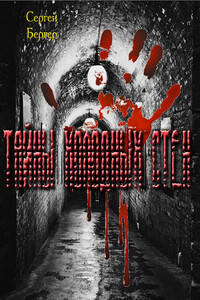
Расследование серии зверских убийств в городе Карлайл, приводит Гарри Ренделла — детектива из убойного отдела, в особняк графа Альфреда Кобба. В место, которое с порога пытается забрать вас в пучину. В обитель тьмы, которая выбрала этот дом колыбелью для своего перерождения.Детективу предстоит узнать историю этого дома, которая, словно мозаика раскидана по душам обитателей особняка. И чем больше появляется частей, тем глубже в Нигредо уходит сознание Гарри, рисуя новых обитателей дома словно художник.Но где кончается реальность и начинается иллюзия? Кому верить, когда ты абсолютно один во враждебном мире?И найдётся ли в его убитой горем душе немного света?Света, который приведёт его к выходу из этого гнилого места…
В книге рассказывается история главного героя, который сталкивается с различными проблемами и препятствиями на протяжении всего своего путешествия. По пути он встречает множество второстепенных персонажей, которые играют важные роли в истории. Благодаря опыту главного героя книга исследует такие темы, как любовь, потеря, надежда и стойкость. По мере того, как главный герой преодолевает свои трудности, он усваивает ценные уроки жизни и растет как личность.