Spider in the Corner of the Room - [12]
‘Do you have something to unscrew this?’
Dr Andersson hesitates then, without speaking, opens a drawer and hands me a screwdriver. I unclip the back of the laptop and dismantle it. When all the insides of the laptop are spread out on the desk, I look up. ‘Time me on your watch.’
‘What?’
I point to her wrist. ‘Your watch. It has a stop clock function. I am going to reassemble this computer. Time me.’
She pauses, then slowly takes off her watch and lays it on the table.
Ignoring the intensity of her stare, I begin to reassemble the laptop. My fingers fly, putting everything back together. It is easy, like adding one to one, or drawing a circle on a piece of paper. Once each item is returned to its position, I pick up the screwdriver, replace the pins and secure the cover. I set down the screwdriver and flip over the laptop so it sits on the desk, right side up.
Dr Andersson clicks her watch and stretches out her hand. Her fingers skim the edge of the laptop.
‘What was my time?’ I ask.
‘Hmmm? Oh, thirty-seven seconds.’ Her eyes are still on the laptop. She looks to me, then drifts her gaze to the shelf above my head. ‘Try this,’ she says and, standing, reaches to the shelf and hands me something.
I take it. A Rubik’s Cube.
‘Can you do it?’
I turn the cube in my hand, study the colours. The red stands out more than the others, so much so that I have to squint.
‘How fast can you solve it?’
I hold up the cube. Its colours are all mixed up. ‘Press your stopwatch.’
She touches the button and I start. Swift. Skilled. I twist the sides, study each move, each turn until, just like that, the colours match. I bang it down on the desk, hardly a ripple in my breath.
Dr Andersson checks her watch but says nothing.
‘What was my time?’
She looks up yet still does not speak.
‘In 2011 at the Melbourne Winter Open Competition,’ I say, ‘the Rubik’s Cube record was set at 5.66 seconds. So that means-’
‘You did it in 4.62.’
I go still. I have never done it so quickly before. Four point six two seconds. My hand-to-eye coordination is accelerating, but why? How? I hold up my hands, study my fingers, blink at them as if they were precious diamonds, sparkling jewels.
Dr Andersson taps her chin. ‘That speed, that really is quite remarkable.’ She picks up a pen. ‘You have a high IQ, correct?’
I continue to stare at my hands. ‘Yes.’
‘Photographic memory?’
‘Yes.’ My hands return to my lap. I need to tap my thumb a little, let out the stress.
‘How are you at spotting patterns?’
‘Very good. A family priest used to help me when I was a little younger.’
‘A priest? Goodness.’ She sets down her pen, slips one leg over the other. ‘Okay, Maria, here’s what I think: it is possible the prison environment is affecting your Asperger’s. It certainly wouldn’t be the first time. All the sights, sounds, smells for your brain to process. Asperger’s is thought to be a result of widespread irregularity in the brain, a neurodevelopmental anomaly that could be controlled by environmental influences. There was a recent study in the US on it. Perhaps that is what we are seeing here with you.’
I think about this. ‘Prison is modifying my brain?’
‘In an accelerated fashion, yes. Maybe. But not modifying per se-that implies curtailing you. Let’s just say affecting your mind, hmm?’
I touch my head where my brain sits, my modified, neurodevelopmentally affected brain. There are times when I detest it, being me, my head, my neuro issues. Hate it. Locked into myself. Jailed by my own white and grey matter.
Dr Andersson swings her chair towards a cupboard behind her and opens the door. I rake my hands through my hair, scratching my scalp deliberately-my penance.
‘Maria, I just need to take some blood samples now.’
I drop my hands. My internal alarm bells ring. ‘Why do you require bloods?’
She hangs her head to the side. ‘Oh, just routine.’
‘But you are a psychiatrist…not a medic.’
She shuts the cupboard and faces the table. ‘I have a remit to monitor patients.’ She sets out five tubes and a blood-work bag already labelled with my name and prison number.
‘But I am an inmate, not a patient.’ I start to feel uneasy, agitated. I scratch the desk with my nail. ‘What tests are you sending to pathology?’
She unpeels the syringe wrapping. ‘I am sending a full blood count.’ She unwraps the additional four vials and picks up the one already loaded with the needle. ‘Okay?’
‘No.’ I shake my head, scratch harder. ‘No. My blood work is normal. And a full blood count request does not require five tubes of blood.’ I scrape the wood of the desk again and again. This is not routine. Over and over in my head, I repeat: This is not routine.
Dr Andersson lets out a sigh. ‘Look, Maria, I’m sure your blood work is normal. I’m sure it will come back fine. You are a doctor. A medical doctor.’ She says the word ‘medical’ slowly. ‘But you are here now. In Goldmouth. In prison. And in prison, there are different rules. And the rule, right now, is that I have to take blood. From you. Today.’ She pauses, softens. ‘I know it is a change for you,
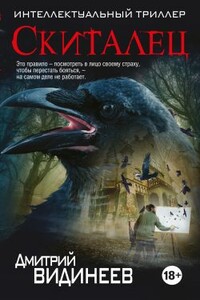
Алина совсем ничего не знала про своего деда. Одинокий, жил в деревне, в крепком двухэтажном доме. На похоронах кто-то нехорошо высказался о нем, но люди даже не возмутились. После похорон Алина решила ненадолго остаться здесь, тем более что сын Максимка быстро подружился с соседским мальчишкой. Черт, лучше бы она сразу уехала из этой проклятой деревни! В ту ночь, в сырых сумерках, сын нашел дедов альбом с рисунками. Алина потом рассмотрела его, и сердце ее заледенело от ужаса. Зачем дед рисовал этот ужас?!! У нее еще было время, чтобы разглядеть нависшую угрозу и понять: обнаружив ночью альбом с рисунками, она перешагнула черту, за которой начинается территория, полная мерзких откровений.
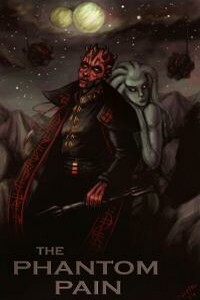
В книге рассказывается история главного героя, который сталкивается с различными проблемами и препятствиями на протяжении всего своего путешествия. По пути он встречает множество второстепенных персонажей, которые играют важные роли в истории. Благодаря опыту главного героя книга исследует такие темы, как любовь, потеря, надежда и стойкость. По мере того, как главный герой преодолевает свои трудности, он усваивает ценные уроки жизни и растет как личность.

Пока маньяк-убийца держит в страхе весь город, а полиция не может его поймать, правосудие начинают вершить призраки жертв…

Любовь и ненависть, дружба и предательство, боль и ярость – сквозь призму взгляда Артура Давыдова, ученика 9-го «А» трудной 75-й школы. Все ли смогут пройти ужасы взросления? Сколько продержится новая училка?
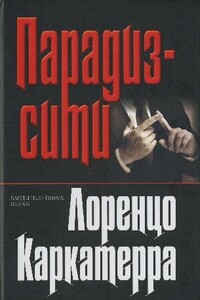
Вот уже почти двадцать лет Джанкарло Ло Манто — полицейский из Неаполя — личный враг мафиозной семьи Росси. Он нанес ей миллионный ущерб, не раз уходил от наемных убийц и, словно заговоренный, не боясь смерти, снова бросался в бой. Потому что его война с мафией — это не просто служебный долг, это возмездие за убийство отца, друзей, всех тех, кто не захотел покориться и жить по законам преступного мира. Теперь Ло Манто предстоит вернуться в Нью-Йорк, город его детства, город его памяти, для последнего решающего поединка.
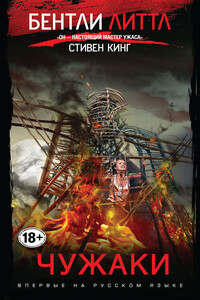
Во время разгульного отдыха на знаменитом фестивале в пустыне «Горящий человек» у Гэри пропала девушка. Будто ее никогда и не существовало: исчезли все профили в социальных сетях и все офи-циальные записи, родительский дом абсолютно пуст. Единственной зацепкой становятся странные артефакты – свитки с молитвами о защите от неких Чужаков. Когда пораженного содержанием свитков парня похищают неизвестные, он решает, что это Чужаки пришли за ним. Но ему предстоит сделать страшное открытие: Чужак – он сам…