Satellite People - [26]
In short, I found nothing of any relevance to the current investigation, but did make a note of the chequered family history.
As for the two Resistance men who were murdered during the war, I first made a phone call to Petter Johannes Wendelboe. I felt no need, however, to press him for names this time, and in the end I went through the archive of unsolved murders from 1941. The armed skirmishes from the 1940s were a thing of the past, and the fight against the occupying forces really became fierce only in the final year of the war.
I quickly found the two cases in question, but could not see of what relevance they might be. The names were Hans Petter Nilsen and Bjørn Varden, who were aged thirty-eight and twenty-eight respectively, and lived in Bekkestua in Bærum, and Grønnegate in Oslo. Both had indeed been found shot dead in their bedrooms in the morning, Nilsen on 12 May and Varden on 5 September. Nilsen had lived alone and was found by a colleague when he failed to turn up to work. Varden was married and was found by his wife, who had been sleeping in another room with their small baby. No physical traces of the murderer were found in either case, and it was presumed that he either had keys, or managed to get in and out through an open window. The fact that both victims had been shot with the same weapon, a German-manufactured 9x19mm calibre Walther pistol, strengthened the theory that they had both been killed by the same person. The case was closed in spring 1943, however, due to lack of evidence, and there was nothing to indicate that it was ever followed up. A complaint from Bjørn Varden’s wife, which had been filed without comment in 1949, was the only document from after the war. The word ‘dead’ was now written across both files in red letters.
The file concerning Ole Kristian Wiig’s death on Liberation Day in 1945 was somewhat thicker. There was a death certificate that confirmed Wiig had died as a result of two bullet wounds to the head. There were also statements from two police constables at the scene of the crime who both said that they had been standing outside the house when they suddenly heard a shot on the first floor.
They saw Magdalon Schelderup at the window, who gestured to them that they should come up. They stormed up the stairs and found Wiig dead on the floor of the Nazi’s study. A few feet away, a young member of the Resistance was standing, paralysed, with a gun in his hand. Just as they came into the room, Magdalon Schelderup had snatched the gun from his hands and then declared that he had seen the murder. Bratberg was apparently too confused to give a statement there and then and was arrested on the spot.
Magdalon Schelderup’s written statement was an accurate account of his explanation given at the scene of the crime. Bratberg had seemed distressed and confused all day and had suddenly shot Wiig without warning. Schelderup had added a rather sad sentence at the end to say that Bratberg was obviously mentally disturbed and that he and the others in the group should have noticed this earlier. The gun belonged to Bratberg and had his and Schelderup’s fingerprints on it, as could be expected, given that Schelderup had taken the gun from him.
Bratberg’s written statement was a chapter unto itself. I did not know whether to laugh or cry when I read it. According to Arild Bratberg, Wiig and Schelderup had been arguing when he came into the room and Wiig had been waving a piece of paper furiously in Schelderup’s face. Schelderup had suddenly darted over to Bratberg, snatched his gun from him and shot Wiig. Schelderup had then opened the window and waved to someone. After which he walked calmly round the table whistling, swinging the gun loosely in his hand and breaking into the popular song ‘Better and Better Day by Day’. When Bratberg said in horror that Wiig had been hit, Schelderup had, in his words, initially replied: ‘Yes, but that’s not so strange; after all, there’s a war going on out there!’ He had then commented that it was not unusual to have a lie-down in the early afternoon, and added with a smile: ‘And anyway, it’s only a toy gun. Try for yourself!’ Schelderup had then passed the gun to Bratberg, only to grab it from him again when the two policemen came into the room. As to the critical question of where the piece of paper was that he claimed to have seen, Bratberg stated that Schelderup had swallowed it before the policemen entered.
Of all the many strange statements I had read, this was the most confused and desperate. The psychiatrist appointed by the court declared that Bratberg was mentally unstable, and he was sentenced to indefinite detention. According to later attachments, he had been detained in a closed prison ward until 1954 and had then been transferred to the mental asylum at Gaustad. He was released on probation in 1960, but had then been sectioned again following relapses in 1962, 1964, 1965 and 1967. The picture of a seriously mentally ill person who had committed a tragic and meaningless crime was clear enough. It was not difficult to understand why the case had had such a devastating effect on Ole Kristian Wiig’s sister and her family. But I did find it hard to see what relevance it might have to Magdalon Schelderup’s death.

Убит бывший лидер норвежского Сопротивления и бывший член кабинета министров Харальд Олесен. Его тело обнаружено в запертой квартире, следов взлома нет, орудие убийства отсутствует. На звук выстрела к двери Олесена сбежались все соседи, но никого не увидели. Инспектор уголовного розыска Колбьёрн Кристиансен считает, что убийство, скорее всего, совершил кто-то из них. Более того, он полагает, что их показания лживы.
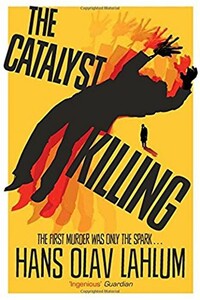
The third mystery in the hugely compelling, bestselling international crime series from Norway's answer to Agatha Christie, Hans Olav Lahlum, The Catalyst Killing will have you guessing to the final clue. The first murder was only the spark… 1970: Inspector Kolbjorn Kristiansen, known as K2, witnesses a young woman desperately trying to board a train only to have the doors close before her face. The next time he sees her, she is dead… As K2 investigates, with the help of his precocious young assistant Patricia, he discovers that the story behind Marie Morgenstierne's murder really began two years ago, when a group of politically active young people set out on a walking tour in the mountains.

From the international bestselling author, Hans Olav Lahlum, comes Chameleon People, the fourth murder mystery in the K2 and Patricia series.1972. On a cold March morning the weekend peace is broken when a frantic young cyclist rings on Inspector Kolbjorn 'K2' Kristiansen's doorbell, desperate to speak to the detective.Compelled to help, K2 lets the boy inside, only to discover that he is being pursued by K2's colleagues in the Oslo police. A bloody knife is quickly found in the young man's pocket: a knife that matches the stab wounds of a politician murdered just a few streets away.The evidence seems clear-cut, and the arrest couldn't be easier.

Oslo, 1968: ambitious young detective Inspector Kolbjorn Kristiansen is called to an apartment block, where a man has been found murdered. The victim, Harald Olesen, was a legendary hero of the Resistance during the Nazi occupation, and at first it is difficult to imagine who could have wanted him dead. But as Detective Inspector Kolbjorn Kristiansen (known as K2) begins to investigate, it seems clear that the murderer could only be one of Olesen's fellow tenants in the building. Soon, with the help of Patricia – a brilliant young woman confined to a wheelchair following a terrible accident – K2 will begin to untangle the web of lies surrounding Olesen's neighbors; each of whom, it seems, had their own reasons for wanting Olesen dead.

Как часто вы ловили себя на мысли, что делаете что-то неправильное? Что каждый поступок, что вы совершили за последний час или день, вызывал все больше вопросов и внутреннего сопротивления. Как часто вы могли уловить скольжение пресловутой «дорожки»? Еще недавний студент Вадим застает себя в долгах и с безрадостными перспективами. Поиски заработка приводят к знакомству с Михаилом и Николаем, которые готовы помочь на простых, но весьма странных условиях. Их мотивация не ясна, но так ли это важно, если ситуация под контролем и всегда можно остановиться?

Из экспозиции крымского художественного музея выкрадены шесть полотен немецкого художника Кингсховера-Гютлайна. Но самый продвинутый сыщик не догадается, кто заказчик и с какой целью совершено похищение. Грабители прошли мимо золотого фонда музея — бесценной иконы «Рождество Христово» работы учеников Рублёва и других, не менее ценных картин и взяли полотна малоизвестного автора, попавшие в музей после войны. Читателя ждёт захватывающий сюжет с тщательно выписанными нюансами людских отношений и судеб героев трёх поколений.
Александра никому не могла рассказать правду и выдать своего мужа. Однажды под Рождество Роман приехал домой с гостем, и они сразу направились в сауну. Александра поспешила вслед со свежими полотенцами и халатами. Из открытого окна клубился пар и были слышны голоса. Она застыла, как соляной столп и не могла сделать ни шага. Голос, поразивший её, Александра узнала бы среди тысячи других. И то, что обладатель этого голоса находился в их доме, говорил с Романом на равных, вышибло её из равновесия, заставило биться сердце учащённо.

Валентин Владимиров живет тихой семейной жизнью в небольшом городке. Но однажды семья Владимировых попадает в аварию. Жена и сын погибают, Валентин остается жив. Вскоре виновника аварии – сына известного бизнесмена – находят задушенным, а Владимиров исчезает из города. Через 12 лет из жизни таинственным образом начинают уходить те, кто был связан с ДТП. Поговаривают, что в городе завелась нечистая сила – привидение со светящимся глазами безжалостно расправляется со своими жертвами. За расследование берется честный инспектор Петров, но удастся ли ему распутать это дело?..

Если вы снимаете дачу в Турции, то, конечно, не ждете ничего, кроме моря, солнца и отдыха. И даже вообразить не можете, что столкнетесь с убийством. А турецкий сыщик, занятый рутинными делами в Измире, не предполагает, что очередное преступление коснется его собственной семьи и вынудит его общаться с иностранными туристами.Москвичка Лана, приехав с сестрой и ее сыном к Эгейскому морю, думает только о любви и ждет приезда своего возлюбленного, однако гибель знакомой нарушает безмятежное течение их отпуска.

Каждый думает, что где-то его жизнь могла бы сложиться удачнее. Такова человеческая натура! Все мы считаем, что достойны лучшего. А какова реальность? Всегда ли наши мечты соответствуют действительности? Не стоит винить свою Родину во всех бедах, свалившихся на вашу голову. В конечном счете, ваша судьба находится исключительно в ваших руках. В этом остросюжетном детективе перед читателем открывается противоречивая Америка, такая соблазнительная и жестокая. Практичные американцы не только говорят на другом языке, но они и думают по-другому! Как приспособиться к новой жизни, не наляпав ошибок? Да и нужно ли? Данный детектив входит в серию «Злополучные приключения», в которых остросюжетная линия тесно переплетена с записками путешественника и отменно приправлена искромётным юмором автора.