Satellite People - [23]
The first paragraph of the will was a sentence to say that the manager Hans Herlofsen, as thanks for his long and loyal service, was to have waived the ‘small amount’ still outstanding on his ‘private loan drawn up in 1949’. There then followed a short sentence to say that ‘the promissory note and associated written material’ had been destroyed.
The second paragraph of the testament was one sentence only where Magdalon Schelderup left his wife Sandra Schelderup two million kroner.
The third paragraph consisted of two sentences where Magdalon Schelderup acknowledged that he was the father of his secretary Synnøve Jensen’s unborn child and left her the sum of 200,000 kroner for ‘subsistence costs and necessary expenses during the remainder of the pregnancy’.
The fourth paragraph was the longest and most complicated. It stated that the remainder of Magdalon Schelderup’s wealth and assets should be divided equally between his children on 6 May 1970. The three grown children would each receive for immediate payment no more than their legal minimum share of 200,000 kroner.
I thanked the lawyer for his help and assured him that I would be there for the reading of the will, and requested that the contents should remain confidential until it was read out to the deceased’s family and friends.
It was only once I had put down the receiver that I realized that I had not asked whether any previous versions of the will existed, and if that were the case, what was said there. When I tried to call the lawyer back it was engaged both times, so I decided to leave it until after the reading. There was more than enough work to be done in the meantime.
II
The pathologist’s preliminary report was as expected. Magdalon Schelderup had died of heart failure, caused by an extreme allergic reaction to nuts. He had been in good shape for his age, but had no chance of surviving such an attack. His heart and body were otherwise those of a sixty-nine-year-old man who had worked hard all his life, and the nut allergy had obviously been extremely severe.
The reports in the newspaper did not pose any problems, but neither did they help to solve the mystery. The Labour Party conference dominated the headlines. The communist paper, Friheten, had a report on the front page under the headline ‘Key capitalist murdered’ and hinted at a conspiracy amongst ‘Norway’s corrupt capitalist elite’. Other newspapers were more cautious and waited to see the consequences of the death, but instead wrote reams about the deceased’s wealth and earlier profiles. Aftenposten was the only paper to publish a list of the supper guests and concluded its report by saying that ‘we are delighted to confirm that the already famous Detective Inspector Kolbjørn “K2” Kristiansen has been assigned to the case, and wait with bated breath to see whether he can scale the heights of his previous success in this apparently very mysterious case’. I read this with great satisfaction, but also with increasing anxiety, knowing how far I could fall.
I then swiftly put the papers to one side in order to pursue Patricia’s priorities, moving from the matter of Magdalon Schelderup’s will to the question of what sort of letter he had thought of sending on Monday to one or several of his Sunday supper guests.
There were no unsent letters to be found in the deceased’s office or bedroom. Both rooms were so orderly that it was hard to imagine that anything important or current could be hidden there. Magdalon Schelderup’s office housed a bookshelf with an array of books about business, but no archives of any note.
Sandra Schelderup told me curtly on the telephone that she did not know of any unsent letters from recent days, but also that she did not often ask about any major or minor details of the business. Her husband had on one occasion joked that she need not worry her pretty head about his business drive, only his sex drive. In other words, I would have to ask the manager about any important documents related to the business, and his secretary about more trivial matters.
Mrs Schelderup sounded somewhat bitter and tense today, but I could understand that. She perked up when I mentioned the will and said that she looked forward to a swift conclusion. She hesitated for a moment, but then agreed to the will being read at Schelderup Hall at three o’clock that afternoon.
The manager, Herlofsen, was in the company’s office in the centre of town and answered the telephone on the second ring. He had nothing of any interest to add in the way of unsent letters. He could confirm that any business documents were promptly sent to his office. However, there had not been anything of any significance in recent weeks, and outgoing post that was not related to business was not his department. In short, there was unfortunately a zero per cent chance that he could help me on this occasion other than recommending that I contact Magdalon Schelderup’s secretary.
I promised to do this, but added that I needed to ask him some personal questions. There was a few moments’ silence on the other end of the receiver. Then I offered to come and see him in his office in town. He swiftly replied that he would rather come to see me at the police station in order to avoid upsetting the staff in the office. He asked if it would be possible for him to come during his lunch break, so that there would be no unnecessary disruption to the day’s work. I immediately said yes to this, and he promised to be there at midday. Then he put down the receiver with remarkable haste.
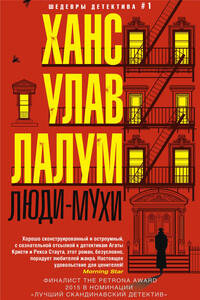
Убит бывший лидер норвежского Сопротивления и бывший член кабинета министров Харальд Олесен. Его тело обнаружено в запертой квартире, следов взлома нет, орудие убийства отсутствует. На звук выстрела к двери Олесена сбежались все соседи, но никого не увидели. Инспектор уголовного розыска Колбьёрн Кристиансен считает, что убийство, скорее всего, совершил кто-то из них. Более того, он полагает, что их показания лживы.
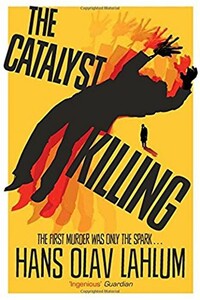
The third mystery in the hugely compelling, bestselling international crime series from Norway's answer to Agatha Christie, Hans Olav Lahlum, The Catalyst Killing will have you guessing to the final clue. The first murder was only the spark… 1970: Inspector Kolbjorn Kristiansen, known as K2, witnesses a young woman desperately trying to board a train only to have the doors close before her face. The next time he sees her, she is dead… As K2 investigates, with the help of his precocious young assistant Patricia, he discovers that the story behind Marie Morgenstierne's murder really began two years ago, when a group of politically active young people set out on a walking tour in the mountains.

From the international bestselling author, Hans Olav Lahlum, comes Chameleon People, the fourth murder mystery in the K2 and Patricia series.1972. On a cold March morning the weekend peace is broken when a frantic young cyclist rings on Inspector Kolbjorn 'K2' Kristiansen's doorbell, desperate to speak to the detective.Compelled to help, K2 lets the boy inside, only to discover that he is being pursued by K2's colleagues in the Oslo police. A bloody knife is quickly found in the young man's pocket: a knife that matches the stab wounds of a politician murdered just a few streets away.The evidence seems clear-cut, and the arrest couldn't be easier.
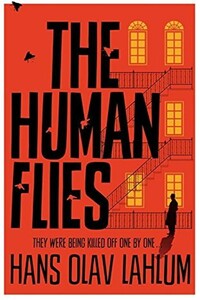
Oslo, 1968: ambitious young detective Inspector Kolbjorn Kristiansen is called to an apartment block, where a man has been found murdered. The victim, Harald Olesen, was a legendary hero of the Resistance during the Nazi occupation, and at first it is difficult to imagine who could have wanted him dead. But as Detective Inspector Kolbjorn Kristiansen (known as K2) begins to investigate, it seems clear that the murderer could only be one of Olesen's fellow tenants in the building. Soon, with the help of Patricia – a brilliant young woman confined to a wheelchair following a terrible accident – K2 will begin to untangle the web of lies surrounding Olesen's neighbors; each of whom, it seems, had their own reasons for wanting Olesen dead.
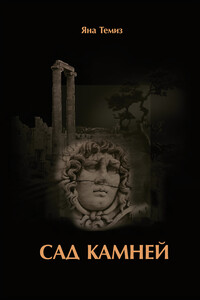
Если вы снимаете дачу в Турции, то, конечно, не ждете ничего, кроме моря, солнца и отдыха. И даже вообразить не можете, что столкнетесь с убийством. А турецкий сыщик, занятый рутинными делами в Измире, не предполагает, что очередное преступление коснется его собственной семьи и вынудит его общаться с иностранными туристами.Москвичка Лана, приехав с сестрой и ее сыном к Эгейскому морю, думает только о любви и ждет приезда своего возлюбленного, однако гибель знакомой нарушает безмятежное течение их отпуска.
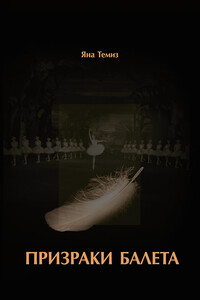
Если весь мир – театр, то балетный театр – это целый мир, со своими интригами и проблемами, трагедиями и страстями, героями и злодеями, красавицами и чудовищами. Далекая от балета Лиза, живущая в Турции, попадает в этот мир совершенно случайно – и не предполагает, что там ей предстоит принять участие в расследовании загадочного убийства и встретиться с любовью… или это вовсе не любовь, а лишь видимость, как всё в иллюзорном мире театра?Этот роман не только о расследовании убийства – он о музыке и о балете, о турецком городе Измире и живущих в нем наших соотечественниках, о людях, преданных театру и готовых ради искусства на все… даже на преступление.
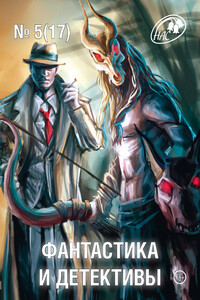
В номере:Денис Овсянник. Душа в душуИгорь Вереснев. Спасая ЭрикаОксана Романова. МощиТатьяна Романова. Санкторий.

Каждый думает, что где-то его жизнь могла бы сложиться удачнее. Такова человеческая натура! Все мы считаем, что достойны лучшего. А какова реальность? Всегда ли наши мечты соответствуют действительности? Не стоит винить свою Родину во всех бедах, свалившихся на вашу голову. В конечном счете, ваша судьба находится исключительно в ваших руках. В этом остросюжетном детективе перед читателем открывается противоречивая Америка, такая соблазнительная и жестокая. Практичные американцы не только говорят на другом языке, но они и думают по-другому! Как приспособиться к новой жизни, не наляпав ошибок? Да и нужно ли? Данный детектив входит в серию «Злополучные приключения», в которых остросюжетная линия тесно переплетена с записками путешественника и отменно приправлена искромётным юмором автора.
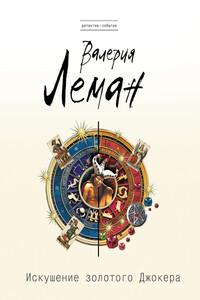
Загадка сопровождает карты Таро не одну сотню лет. А теперь представьте колоду, сделанную из настоящего золота, с рисунками, нанесенными на пластины серебром. Эти двадцать две карты смело можно назвать бесценными. Стоит ли удивляться, что того, кто владеет ими, преследует многовековое проклятие…
В книге рассказывается история главного героя, который сталкивается с различными проблемами и препятствиями на протяжении всего своего путешествия. По пути он встречает множество второстепенных персонажей, которые играют важные роли в истории. Благодаря опыту главного героя книга исследует такие темы, как любовь, потеря, надежда и стойкость. По мере того, как главный герой преодолевает свои трудности, он усваивает ценные уроки жизни и растет как личность.