Satellite People - [22]
I croaked a ‘yes’, but that was already only just.
‘Excellent. Then you will check tomorrow whether there are any unsent letters in his office or bedroom, and then, if necessary, ask his wife, his secretary and his manager. Find out what more Hans Herlofsen and Magdalena Schelderup have to say in their defence. Take with you anything that you find of interest in the war archives regarding the Dark Prince and the circumstances surrounding Ole Kristian Wiig’s death on Liberation Day in 1945. Might a rather unromantic but possibly very interesting supper at my place tomorrow at half past five tempt you?’
I replied that unless there were any unexpected surprises in the course of the day that would be very tempting indeed. She thanked me politely, then added somewhat more discourteously that I should call Rønning, Rønning & Rønning immediately, in order to solve the hopefully more manageable mystery of Magdalon Schelderup’s will.
I took the hint and put down the receiver. I needed a few minutes to gather my wits before I looked up the number for Edvard Rønning Junior in the telephone directory. With alarmed delight I recognized the fact that I still lagged behind as soon as Patricia’s reasoning accelerated, but that my investigation was already picking up pace before I had even had my first meeting with her.
XV
Following a couple of abortive attempts, I managed to get hold of Edvard Rønning Junior at home at around ten o’clock. He informed me that the deceased had requested that the will be read at Schelderup Hall, and had provided a list of those he wished to be present. However, there were no specific instructions as to when the will should be read, as had been the case with Harald Olesen. I therefore suggested that it should be the following afternoon, on the condition that as head of the murder investigation I should be informed of the most salient points in the will. Rønning Junior pointed out that officially a court ruling was required, but added that he ‘had no objections per se, provided that the solution ensured that the will was read in accordance with the wishes of the deceased’. There was, however, a temporary practical problem in that the will was in his office, which was now closed for the weekend.
The practical-versus-principle compromise was that Mr Rønning Junior would be in the office by half past eight on Monday morning and would phone me immediately to let me know the contents of the will. He would then instruct his office to telephone or telegraph those people named on the list to request their presence at the reading of the will in the deceased’s home at three o’clock that afternoon. I assured him that this would be easy enough to organize, as the deceased’s nearest and dearest had all been instructed to stay in town and were unlikely to have made plans for the following day. I felt that we were both more relaxed towards the end of the conversation and I saw no reason to make more problems than I already had with the investigation. We thanked each other courteously for being so accommodating and even put the receiver down at the same time.
It was only then that it crossed my mind that I had yet to make a very important phone call – to the commanding officer. It struck me instantly that the case might be taken from me before it had even started. I could under no circumstances wait until the following day for fear that one of my colleagues might hear about the case in the meantime and snatch it from me. So I looked up the commanding officer’s home number on my telephone list and dialled straight away.
Fortunately I caught my boss before he went to bed, and as luck would have it, he was in the better of his two known moods. He listened patiently for ten minutes to my account of the start of this peculiar case, then for another two minutes while I reminded him of my success as head of investigation for last year’s most spectacular murder case. Then to my delight he interrupted me to say that it was his wish that I should also head this murder investigation, certainly until further notice. He added that there might be changes if too many days passed without a breakthrough, and that he would like a short report of the day’s events every evening. He merrily quoted the former foreign minister, Halvdan Koht: ‘That is my opinion, and I must respect it!’ I had heard him say this several times before, but laughed heartily all the same and did not object in any way to his conclusions.
I was in bed by eleven o’clock, as I knew that Monday could well be a long and demanding day. But I lay there unable to sleep until about midnight, but still had not managed to find an answer to the Magdalon Schelderup mystery. I was barely able to pick out one of the guests as a more likely murderer than the others.
DAY THREE: The Box That Contained Something Strange
I
Edvard Rønning Junior was an exceptionally correct young man. He telephoned me at the office, as agreed, at precisely half past eight on Monday, 12 May 1969, and read Magdalon Schelderup’s will to me from heading to signature. It did not take more than a couple of minutes, even though he read at an irritatingly slow speed. The will was dated 6 May the same year and comprised four short paragraphs. After the previous day’s interviews, the content struck me as particularly interesting, although I had to admit that the significance of it remained unclear.

Убит бывший лидер норвежского Сопротивления и бывший член кабинета министров Харальд Олесен. Его тело обнаружено в запертой квартире, следов взлома нет, орудие убийства отсутствует. На звук выстрела к двери Олесена сбежались все соседи, но никого не увидели. Инспектор уголовного розыска Колбьёрн Кристиансен считает, что убийство, скорее всего, совершил кто-то из них. Более того, он полагает, что их показания лживы.
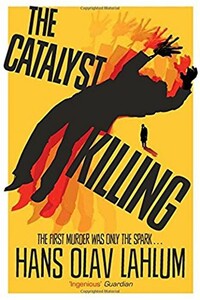
The third mystery in the hugely compelling, bestselling international crime series from Norway's answer to Agatha Christie, Hans Olav Lahlum, The Catalyst Killing will have you guessing to the final clue. The first murder was only the spark… 1970: Inspector Kolbjorn Kristiansen, known as K2, witnesses a young woman desperately trying to board a train only to have the doors close before her face. The next time he sees her, she is dead… As K2 investigates, with the help of his precocious young assistant Patricia, he discovers that the story behind Marie Morgenstierne's murder really began two years ago, when a group of politically active young people set out on a walking tour in the mountains.

From the international bestselling author, Hans Olav Lahlum, comes Chameleon People, the fourth murder mystery in the K2 and Patricia series.1972. On a cold March morning the weekend peace is broken when a frantic young cyclist rings on Inspector Kolbjorn 'K2' Kristiansen's doorbell, desperate to speak to the detective.Compelled to help, K2 lets the boy inside, only to discover that he is being pursued by K2's colleagues in the Oslo police. A bloody knife is quickly found in the young man's pocket: a knife that matches the stab wounds of a politician murdered just a few streets away.The evidence seems clear-cut, and the arrest couldn't be easier.

Oslo, 1968: ambitious young detective Inspector Kolbjorn Kristiansen is called to an apartment block, where a man has been found murdered. The victim, Harald Olesen, was a legendary hero of the Resistance during the Nazi occupation, and at first it is difficult to imagine who could have wanted him dead. But as Detective Inspector Kolbjorn Kristiansen (known as K2) begins to investigate, it seems clear that the murderer could only be one of Olesen's fellow tenants in the building. Soon, with the help of Patricia – a brilliant young woman confined to a wheelchair following a terrible accident – K2 will begin to untangle the web of lies surrounding Olesen's neighbors; each of whom, it seems, had their own reasons for wanting Olesen dead.

Если весь мир – театр, то балетный театр – это целый мир, со своими интригами и проблемами, трагедиями и страстями, героями и злодеями, красавицами и чудовищами. Далекая от балета Лиза, живущая в Турции, попадает в этот мир совершенно случайно – и не предполагает, что там ей предстоит принять участие в расследовании загадочного убийства и встретиться с любовью… или это вовсе не любовь, а лишь видимость, как всё в иллюзорном мире театра?Этот роман не только о расследовании убийства – он о музыке и о балете, о турецком городе Измире и живущих в нем наших соотечественниках, о людях, преданных театру и готовых ради искусства на все… даже на преступление.

Владелица небольшого ресторанного бизнеса Голди знает цену деньгам.Когда на счету остается всего пара долларов, а экс-супруг, преуспевающий врач-гинеколог, выплачивает мизерные алименты на содержание их сына Арча с неохотой, рассчитывать приходится только на саму себя.Голди берется за любую работу, которую только можно найти, даже если это предложение организовать бранч в частной школе для отпрысков самых богатых и влиятельных жителей города Аспен-Мидоу.Однако, планируя это торжественное мероприятие, она даже представить не могла, что так удачно начавшийся для ее маленького бизнеса день закончится настоящей трагедией…

В номере:Денис Овсянник. Душа в душуИгорь Вереснев. Спасая ЭрикаОксана Романова. МощиТатьяна Романова. Санкторий.

Каждый думает, что где-то его жизнь могла бы сложиться удачнее. Такова человеческая натура! Все мы считаем, что достойны лучшего. А какова реальность? Всегда ли наши мечты соответствуют действительности? Не стоит винить свою Родину во всех бедах, свалившихся на вашу голову. В конечном счете, ваша судьба находится исключительно в ваших руках. В этом остросюжетном детективе перед читателем открывается противоречивая Америка, такая соблазнительная и жестокая. Практичные американцы не только говорят на другом языке, но они и думают по-другому! Как приспособиться к новой жизни, не наляпав ошибок? Да и нужно ли? Данный детектив входит в серию «Злополучные приключения», в которых остросюжетная линия тесно переплетена с записками путешественника и отменно приправлена искромётным юмором автора.

Загадка сопровождает карты Таро не одну сотню лет. А теперь представьте колоду, сделанную из настоящего золота, с рисунками, нанесенными на пластины серебром. Эти двадцать две карты смело можно назвать бесценными. Стоит ли удивляться, что того, кто владеет ими, преследует многовековое проклятие…
В книге рассказывается история главного героя, который сталкивается с различными проблемами и препятствиями на протяжении всего своего путешествия. По пути он встречает множество второстепенных персонажей, которые играют важные роли в истории. Благодаря опыту главного героя книга исследует такие темы, как любовь, потеря, надежда и стойкость. По мере того, как главный герой преодолевает свои трудности, он усваивает ценные уроки жизни и растет как личность.