Satellite People - [19]
‘The names are not strictly relevant here. Now, is my understanding correct, that both you and Magdalon Schelderup took part in liquidation operations in the latter part of the war?’
He nodded.
‘Yes, we both had to carry that burden. My wife did not participate in any such operations, but each and every man in the group took part in one or more. Even the young Hans Herlofsen was involved in one liquidation only a few months before liberation.’
I made some more quick notes. Hans Herlofsen obviously had a more dramatic past than his present jovial demeanour betrayed.
‘And was this in any way connected to the situation on Liberation Day?’
Wendelboe shook his head firmly.
‘Not at all. That was completely separate, and far more tragic than anything we experienced during the war.’
For a moment, there was silence in the room. Then there was a loud sob, which I realized must have come from Mrs Wendelboe. Her husband sent her a couple of long looks, then carried on talking when she did not.
‘In 1944-5 there were three leaders in our group: Magdalon Schelderup, Ole Kristian Wiig and myself. Ole Kristian Wiig was the youngest of us, but also the most ideological and the best. During the war we often talked about it and agreed that the world would be his oyster afterwards if he only survived. And I believe so even more keenly in retrospect. Unlike Magdalon and myself, Ole Kristian encapsulated the political spirit of the time. He had a background in the Labour Party youth league and was precisely the kind of new young man they appointed to important posts in the years immediately following the war.’
I now noticed that Mrs Wendelboe had started to weep. She was crying silently, but all the more intensely for that. Within seconds the tears were flowing. And, annoyingly, it was her husband who once again had to tell me the reason.
‘Ole Kristian Wiig was my wife’s younger brother. So we knew each other extremely well, even before the war.’
I shifted my gaze to Mrs Wendelboe, who was sitting as still as a statue on the sofa. The only movement in her face was the tears that continued to stream down her cheeks.
I mumbled my condolences and asked whether they had had any more siblings – and immediately regretted doing so. Mrs Wendelboe’s eyes blazed. Her composure in the midst of her grief was impressive. She remained seated with stoic calm for a short while, but when she then spoke, her voice was firm.
‘No. There were only the two of us. He was so kind and bright that I was more than happy always to be in his shadow. Ole Kristian did not have a family himself, but instead was the best uncle in the world to my children. For the full five years of the war I lived without a thought for myself, but in constant fear that something might happen to my husband, my children or my little brother.’
There was another moment of silence. Her husband and I waited patiently until she was ready to continue.
‘I remember the incredible relief that I felt on 8 May 1945 as if it were only yesterday. Ole Kristian lived close to us in Ski and had a key to our house. He was the one who came running across the lawn, overjoyed, to wake us with the news that the Germans had capitulated and that all our suffering was over. I remember thinking to myself that the sun had never shone so brilliantly on Norway as it did that morning. Ole Kristian left us for a few hours, and then the light vanished just as suddenly from my life. And it has never returned. It feels as though I have been living in a twilight ever since, even on the brightest summer day.’
Mrs Wendelboe once again fell silent and sat motionless on the sofa. It was a relief when her husband finally came to her rescue.
‘It was an extremely sad and emotional experience for us all. It happened that very afternoon. We’d set about preparing a celebratory meal. Ole Kristian had gone to sort out a few things, but had promised to be back by three. It was an unusual day, of course, but we started to get a bit anxious when half past three came and went without any sign of him. At a quarter to four, we sighed with relief when Magdalon Schelderup’s big black car swung into view down the road. We assumed that Ole Kristian was with him. But our joy was short-lived. We could soon see that Magdalon was alone in the car and that he was driving towards us at a dangerous speed. My wife took my hand and said that something was wrong, even before Magdalon stopped the car. We could see from his face that something ghastly had happened. Magdalon was not a man who was easily moved, but on that day his emotional turmoil was clear to all. He came over to us and embraced us, told us that there had been a terrible accident and that Ole Kristian was dead.’
Now, almost twenty-five years later, time had once again stopped for Mrs Wendelboe. Even her tears had stopped falling and she sat as if petrified. Her husband gently took her arm before he continued.
‘The accident had involved a gunshot, he told us, and the circumstances were indeed deeply unfortunate. Magdalon and Ole Kristian had driven to the home of a dead Nazi with a younger member of the group, to secure his property and papers. The police arrived at the same time and there were no enemies present. However, Ole Kristian had still fallen victim to a fatal gunshot inside the house, which had been fired by the younger man from our group. Magdalon felt frightfully guilty and apologized profusely for having taken the young man with them. But I was the one who had accepted him into the group, so we were both to blame. The man had seemed so sincere and well-intentioned, but we should of course have realized how weak and mentally unbalanced he was in those final weeks of the war. It is strange to think how different things might have been had I realized that.’
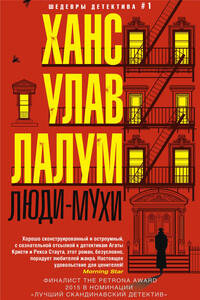
Убит бывший лидер норвежского Сопротивления и бывший член кабинета министров Харальд Олесен. Его тело обнаружено в запертой квартире, следов взлома нет, орудие убийства отсутствует. На звук выстрела к двери Олесена сбежались все соседи, но никого не увидели. Инспектор уголовного розыска Колбьёрн Кристиансен считает, что убийство, скорее всего, совершил кто-то из них. Более того, он полагает, что их показания лживы.
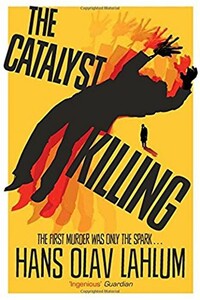
The third mystery in the hugely compelling, bestselling international crime series from Norway's answer to Agatha Christie, Hans Olav Lahlum, The Catalyst Killing will have you guessing to the final clue. The first murder was only the spark… 1970: Inspector Kolbjorn Kristiansen, known as K2, witnesses a young woman desperately trying to board a train only to have the doors close before her face. The next time he sees her, she is dead… As K2 investigates, with the help of his precocious young assistant Patricia, he discovers that the story behind Marie Morgenstierne's murder really began two years ago, when a group of politically active young people set out on a walking tour in the mountains.
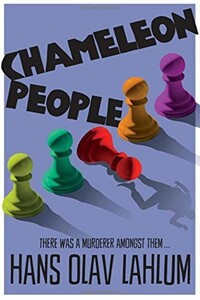
From the international bestselling author, Hans Olav Lahlum, comes Chameleon People, the fourth murder mystery in the K2 and Patricia series.1972. On a cold March morning the weekend peace is broken when a frantic young cyclist rings on Inspector Kolbjorn 'K2' Kristiansen's doorbell, desperate to speak to the detective.Compelled to help, K2 lets the boy inside, only to discover that he is being pursued by K2's colleagues in the Oslo police. A bloody knife is quickly found in the young man's pocket: a knife that matches the stab wounds of a politician murdered just a few streets away.The evidence seems clear-cut, and the arrest couldn't be easier.
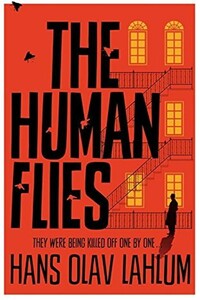
Oslo, 1968: ambitious young detective Inspector Kolbjorn Kristiansen is called to an apartment block, where a man has been found murdered. The victim, Harald Olesen, was a legendary hero of the Resistance during the Nazi occupation, and at first it is difficult to imagine who could have wanted him dead. But as Detective Inspector Kolbjorn Kristiansen (known as K2) begins to investigate, it seems clear that the murderer could only be one of Olesen's fellow tenants in the building. Soon, with the help of Patricia – a brilliant young woman confined to a wheelchair following a terrible accident – K2 will begin to untangle the web of lies surrounding Olesen's neighbors; each of whom, it seems, had their own reasons for wanting Olesen dead.
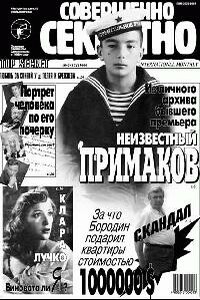
В книге рассказывается история главного героя, который сталкивается с различными проблемами и препятствиями на протяжении всего своего путешествия. По пути он встречает множество второстепенных персонажей, которые играют важные роли в истории. Благодаря опыту главного героя книга исследует такие темы, как любовь, потеря, надежда и стойкость. По мере того, как главный герой преодолевает свои трудности, он усваивает ценные уроки жизни и растет как личность.

В книге рассказывается история главного героя, который сталкивается с различными проблемами и препятствиями на протяжении всего своего путешествия. По пути он встречает множество второстепенных персонажей, которые играют важные роли в истории. Благодаря опыту главного героя книга исследует такие темы, как любовь, потеря, надежда и стойкость. По мере того, как главный герой преодолевает свои трудности, он усваивает ценные уроки жизни и растет как личность.
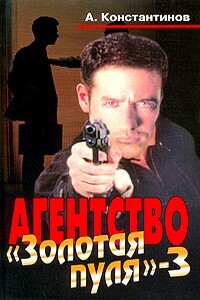
«Золотая пуля». Так называют в городе агентство, в котором работают журналисты-инвестигейторы (или, в переводе на русский — «расследователи»). Возглавляет это вымышленное агентство Андрей Обнорский — герой романов Андрея Константинова и снятого по этим романам телесериала «Бандитский Петербург». В «Золотой пуле»-3 вы встретитесь не только с Обнорским, но и с его соратниками-журналистами: Николаем Повзло, Зурабом Гвичия, Светланой Завгородней, Нонной Железняк, Георгием Зудинцевым и другими. Все они попадают порой в опасные, а порой и комичные ситуации.
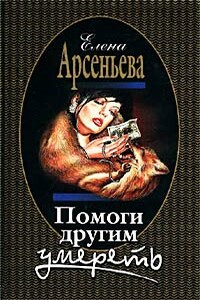
Евгения Кручинина, сотрудница частного детективного агентства, оказалась свидетельницей убийства одного из своих клиентов, а спустя некоторое время случайно спасла другого. Как выяснилось, эти двое много лет назад играли в одном любительском спектакле. Самое странное, что почти все участники этого спектакля погибли... Что это? Цепь совпадений? А может быть, некий беспощадный убийца воспользовался случаем свести счеты со всеми своими врагами? Ранее роман издавался под названием "Смерть тебе не изменит".
В книге рассказывается история главного героя, который сталкивается с различными проблемами и препятствиями на протяжении всего своего путешествия. По пути он встречает множество второстепенных персонажей, которые играют важные роли в истории. Благодаря опыту главного героя книга исследует такие темы, как любовь, потеря, надежда и стойкость. По мере того, как главный герой преодолевает свои трудности, он усваивает ценные уроки жизни и растет как личность.
В книге рассказывается история главного героя, который сталкивается с различными проблемами и препятствиями на протяжении всего своего путешествия. По пути он встречает множество второстепенных персонажей, которые играют важные роли в истории. Благодаря опыту главного героя книга исследует такие темы, как любовь, потеря, надежда и стойкость. По мере того, как главный герой преодолевает свои трудности, он усваивает ценные уроки жизни и растет как личность.