Satellite People - [18]
I tried to ease the atmosphere a bit by asking what they could remember of Magdalon Schelderup’s dead brother from the 1930s and 1940s. They both started. Mr Wendelboe replied that they certainly could remember him, but it did not give them much pleasure. The first time they had met Magdalon Schelderup, he had confided in them how ashamed he was to have a brother who traded with the Germans and earned money from it. Thanks to Magdalon Schelderup’s record in the Resistance movement, nothing more was ever really made of this. He had, however, on several occasions expressed sorrow over his brother’s failings, and had, when he inherited his brother’s wealth, given a sum of several hundred thousand kroner to a charity for those bereaved by the war.
The rumours rumbled on for several years, and when Magdalon Schelderup started his political career in the Conservative Party there were some who opposed it and had tried to use this against him. They had, however, not succeeded. He had been elected to the Storting in 1949 as he had hoped and had pulled out again four years later, even though he could have been re-elected.
‘But something unexpected happened on Liberation Day itself, in which Magdalon Schelderup was involved,’ I probed. The Wendelboes exchanged fleeting glances before they nodded. But Petter Johannes Wendelboe’s voice was still calm when he continued.
‘It promises well for the investigation that you have already managed to unearth the story, though it can hardly have any connection to the murder today. It was a strange and tragic incident, but did not seem to cause Magdalon much concern afterwards. His explanation was reasonable enough and the guilty party was a mentally disturbed man, who gave an insane statement. So there was little doubt as to the outcome. But things like that are often a burden. And though I never heard Magdalon mention it later, I do think that it plagued him.’
I gave him a quizzical look, but he said nothing until I asked for further details.
‘Our group in the Resistance was small, but still had a dramatic and important history. We never had any more than six or seven members, and now that Magdalon is gone, my wife and I and Herlofsen are the only ones left alive. The group was established as early as winter 1940-41 and managed to carry on operating without being caught until Norway was liberated. Magdalon joined in summer 1941. He contacted me himself. It was a very difficult year. We lost a member in the spring and another in early autumn. Both were found shot dead in their own homes. The murderer was never found, either during or after the war. We have to this day simply called him the Dark Prince. He was given the name because he only fired in the dark of night, and no one ever saw him in daylight.’
I was fascinated, in part by the story and in part by the expressionless face and controlled voice with which Wendelboe told it.
‘For the remainder of the war, Magdalon and I and the other members of the group slept in rooms without windows, with the door locked. As I understood it, he continued to do this for many years, even though he was not a man who was easily scared. The Dark Prince never made another appearance after 1941 and we never found out whether he was a German or a Norwegian defector. During the war we believed and hoped that he was a German who had either been killed or left Norway, but afterwards we thought it was perhaps more likely that he had been a Norwegian. The modus operandi was not German. They generally came in uniform with dogs in the early morning. We hoped that maybe the Dark Prince was one of the Nasjonal Samling members we liquidated later. We suspected one of them. But we still do not even know if it was a man. I would dearly like to know for certain before I die who the Dark Prince was.’
I was writing all this down as fast as I could. Fortunately, Wendelboe spoke relatively slowly. It had become a two-way communication with short questions from me and long answers from him. I vaguely registered his wife, who was sitting on the sidelines on the sofa, nodding from time to time.
‘So this Resistance group also carried out liquidations?’
Wendelboe nodded in confirmation and looked even more serious when he continued.
‘Our country was at war, young man, and no one could predict the outcome. We did what we had to whenever we could. Even when it cost the enemy their lives and us our peace of mind and a good night’s sleep for many years to come. But we are talking about a total of five men over the course of four years, and in all cases there was no doubt about the guilt and evil of those men. I will carry those five names with me to the grave. And I will also take with me the knowledge that they all had the lives of good Norwegians on their conscience, whether directly or indirectly, and would have deserved to be shot by the Norwegian state if we had not killed them during the war.’
Petter Johannes Wendelboe had leaned forwards in his chair so that his face was now alarmingly close to mine. It was not hard to see why his presence resulted in a subdued atmosphere at dinner parties in the house, or to understand that he was a man Magdalon Schelderup had respected. I had no desire to ask Wendelboe whether the five would truly have been executed after the war. I had a feeling that he was not entirely satisfied with the treason trials.
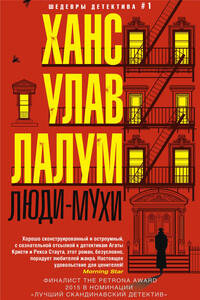
Убит бывший лидер норвежского Сопротивления и бывший член кабинета министров Харальд Олесен. Его тело обнаружено в запертой квартире, следов взлома нет, орудие убийства отсутствует. На звук выстрела к двери Олесена сбежались все соседи, но никого не увидели. Инспектор уголовного розыска Колбьёрн Кристиансен считает, что убийство, скорее всего, совершил кто-то из них. Более того, он полагает, что их показания лживы.
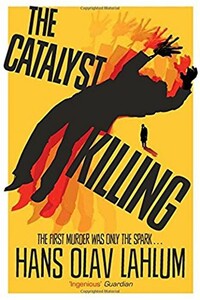
The third mystery in the hugely compelling, bestselling international crime series from Norway's answer to Agatha Christie, Hans Olav Lahlum, The Catalyst Killing will have you guessing to the final clue. The first murder was only the spark… 1970: Inspector Kolbjorn Kristiansen, known as K2, witnesses a young woman desperately trying to board a train only to have the doors close before her face. The next time he sees her, she is dead… As K2 investigates, with the help of his precocious young assistant Patricia, he discovers that the story behind Marie Morgenstierne's murder really began two years ago, when a group of politically active young people set out on a walking tour in the mountains.
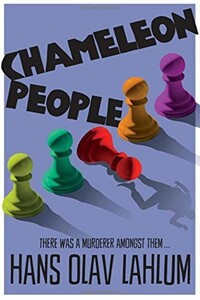
From the international bestselling author, Hans Olav Lahlum, comes Chameleon People, the fourth murder mystery in the K2 and Patricia series.1972. On a cold March morning the weekend peace is broken when a frantic young cyclist rings on Inspector Kolbjorn 'K2' Kristiansen's doorbell, desperate to speak to the detective.Compelled to help, K2 lets the boy inside, only to discover that he is being pursued by K2's colleagues in the Oslo police. A bloody knife is quickly found in the young man's pocket: a knife that matches the stab wounds of a politician murdered just a few streets away.The evidence seems clear-cut, and the arrest couldn't be easier.
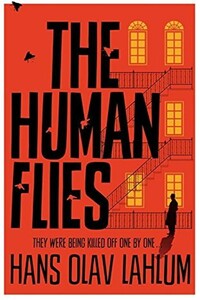
Oslo, 1968: ambitious young detective Inspector Kolbjorn Kristiansen is called to an apartment block, where a man has been found murdered. The victim, Harald Olesen, was a legendary hero of the Resistance during the Nazi occupation, and at first it is difficult to imagine who could have wanted him dead. But as Detective Inspector Kolbjorn Kristiansen (known as K2) begins to investigate, it seems clear that the murderer could only be one of Olesen's fellow tenants in the building. Soon, with the help of Patricia – a brilliant young woman confined to a wheelchair following a terrible accident – K2 will begin to untangle the web of lies surrounding Olesen's neighbors; each of whom, it seems, had their own reasons for wanting Olesen dead.
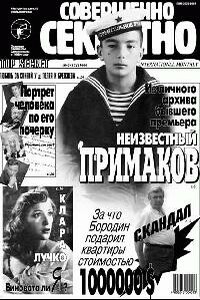
В книге рассказывается история главного героя, который сталкивается с различными проблемами и препятствиями на протяжении всего своего путешествия. По пути он встречает множество второстепенных персонажей, которые играют важные роли в истории. Благодаря опыту главного героя книга исследует такие темы, как любовь, потеря, надежда и стойкость. По мере того, как главный герой преодолевает свои трудности, он усваивает ценные уроки жизни и растет как личность.

В книге рассказывается история главного героя, который сталкивается с различными проблемами и препятствиями на протяжении всего своего путешествия. По пути он встречает множество второстепенных персонажей, которые играют важные роли в истории. Благодаря опыту главного героя книга исследует такие темы, как любовь, потеря, надежда и стойкость. По мере того, как главный герой преодолевает свои трудности, он усваивает ценные уроки жизни и растет как личность.
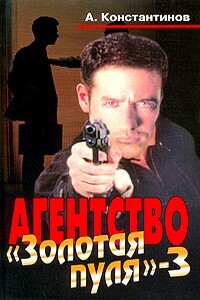
«Золотая пуля». Так называют в городе агентство, в котором работают журналисты-инвестигейторы (или, в переводе на русский — «расследователи»). Возглавляет это вымышленное агентство Андрей Обнорский — герой романов Андрея Константинова и снятого по этим романам телесериала «Бандитский Петербург». В «Золотой пуле»-3 вы встретитесь не только с Обнорским, но и с его соратниками-журналистами: Николаем Повзло, Зурабом Гвичия, Светланой Завгородней, Нонной Железняк, Георгием Зудинцевым и другими. Все они попадают порой в опасные, а порой и комичные ситуации.
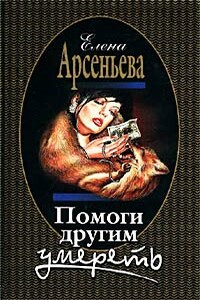
Евгения Кручинина, сотрудница частного детективного агентства, оказалась свидетельницей убийства одного из своих клиентов, а спустя некоторое время случайно спасла другого. Как выяснилось, эти двое много лет назад играли в одном любительском спектакле. Самое странное, что почти все участники этого спектакля погибли... Что это? Цепь совпадений? А может быть, некий беспощадный убийца воспользовался случаем свести счеты со всеми своими врагами? Ранее роман издавался под названием "Смерть тебе не изменит".
В книге рассказывается история главного героя, который сталкивается с различными проблемами и препятствиями на протяжении всего своего путешествия. По пути он встречает множество второстепенных персонажей, которые играют важные роли в истории. Благодаря опыту главного героя книга исследует такие темы, как любовь, потеря, надежда и стойкость. По мере того, как главный герой преодолевает свои трудности, он усваивает ценные уроки жизни и растет как личность.
В книге рассказывается история главного героя, который сталкивается с различными проблемами и препятствиями на протяжении всего своего путешествия. По пути он встречает множество второстепенных персонажей, которые играют важные роли в истории. Благодаря опыту главного героя книга исследует такие темы, как любовь, потеря, надежда и стойкость. По мере того, как главный герой преодолевает свои трудности, он усваивает ценные уроки жизни и растет как личность.