Satellite People - [15]
For one reason or another, I stood by the window and watched Synnøve Jensen until she was safely outside the gate. It did not take long. She left the house swiftly and walked away fast, with her head down. It struck me that she was the only one of those questioned so far who would actually miss Magdalon Schelderup.
X
The manager, Hans Herlofsen, was a slightly overweight man of fifty-five, with greying hair, dressed in a simple grey suit. I could imagine him being a jovial and kind uncle at any other time. But now he was visibly affected by the day’s events and seemed to be somewhat tense at the start of our conversation.
He calmed down when my first questions were about Magdalon Schelderup’s company. Herlofsen quickly proved to have an exceptional head for figures. He could reel off turnover and market shares from the 1940s, the 1950s and the 1960s without any pause for thought. His conclusion was that the Schelderup business empire was going from strength to strength. According to Herlofsen’s calculations, the recent estimate of Schelderup’s worth at 100 million was in fact too low rather than too high. He himself reckoned it to be somewhere between 125 and 130 million, taking into account various estimated fees and charges and the possibility that the value of the company might fall if the company and property portfolio were to be divided up.
With regard to himself, Hans Herlofsen told me in a succinct and practised manner that he was a widower and lived on his own on the first floor of his childhood home in Lysaker. His only son was now a grown man, who lived with his wife and two children on the ground floor. Hans Herlofsen had always devoted himself to his work, and other than his son and his family the greater part of his social life was linked to work. Magdalon Schelderup had been a friend of his father’s, so they had known each other since Herlofsen was a youth. Herlofsen had been employed by the company since the autumn of 1944 and been the manager since 1946.
When asked who he thought might have killed Magdalon Schelderup, Hans Herlofsen replied that the only thing he could say with 100 per cent certainty was that it was not he who had done it. As for the others, he would rather not hazard a guess. With a slightly self-deprecating smile, he added that with eleven others round the table, minus himself and the deceased, there was only an 11.1 per cent chance of getting it right.
I saw no reason, for the moment, to add to his burden by saying that I personally was operating on the assumption of a 10 per cent chance. I had not got any further and did not dare strike Hans Herlofsen from the list of suspects until I knew what was in the will.
As Hans Herlofsen stood up to leave, I realized that I should ask whether he had worked together with Magdalon Schelderup when they were in the Resistance. His answer was another surprise.
‘Yes, of course. But I was more of an assistant to the senior members of the Resistance and was not there when it happened. If you think it might have anything to do with that strange episode from 8 May 1945, you will have to ask the Wendelboes or even Magdalena Schelderup.’
I nodded to show that I understood. Then made a note that I had to ask the Wendelboes about the strange episode that took place on Liberation Day in 1945.
XI
My conversation with the deceased’s ex-wife was brief and without any great surprises. She had a slim body and her neck was almost perilously thin. Her hair, on the other hand, was raven black and her voice was spirited. She seemed far younger in body and mind than her actual sixty years of age.
Ingrid Schelderup was also visibly shaken by the death of her former husband, but her predominant focus was the situation of her son Leonard. She assured me repeatedly that she could guarantee he had nothing to do with his father’s death, and expressed her concern that he would take this very badly, given his sense of duty and responsibility. His relationship with his father was not the best, but it was far better than it had been. And Leonard was the world’s sweetest boy, who would never wish to hurt anyone. It was completely incomprehensible that his father had asked him, of all people, to try his food and then later pointed at him. The only explanation she could think of was that Magdalon Schelderup was no longer the man he had once been, even though that might seem strange to all who knew him.
The conversation dwelled on this theme for a few minutes without going anywhere. She then sat up abruptly in her chair and raised her voice: ‘You must forgive me if I am repeating myself and talking too much about my son. It is all too easy when you are a divorced woman who has only one child. And even though it is now many years since our divorce, Magdalon’s death today was a great shock.’
I immediately felt that she was opening up and assured her that I had the utmost sympathy for her situation. Then I expressed my surprise at the fact that she still regularly visited her ex-husband’s home, so many years after the divorce. She gave a sad shrug.
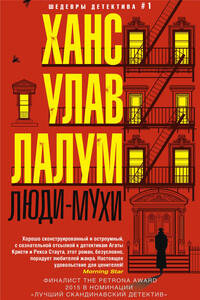
Убит бывший лидер норвежского Сопротивления и бывший член кабинета министров Харальд Олесен. Его тело обнаружено в запертой квартире, следов взлома нет, орудие убийства отсутствует. На звук выстрела к двери Олесена сбежались все соседи, но никого не увидели. Инспектор уголовного розыска Колбьёрн Кристиансен считает, что убийство, скорее всего, совершил кто-то из них. Более того, он полагает, что их показания лживы.
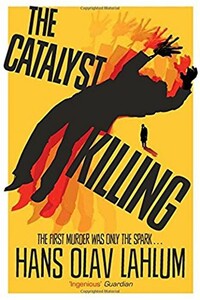
The third mystery in the hugely compelling, bestselling international crime series from Norway's answer to Agatha Christie, Hans Olav Lahlum, The Catalyst Killing will have you guessing to the final clue. The first murder was only the spark… 1970: Inspector Kolbjorn Kristiansen, known as K2, witnesses a young woman desperately trying to board a train only to have the doors close before her face. The next time he sees her, she is dead… As K2 investigates, with the help of his precocious young assistant Patricia, he discovers that the story behind Marie Morgenstierne's murder really began two years ago, when a group of politically active young people set out on a walking tour in the mountains.

From the international bestselling author, Hans Olav Lahlum, comes Chameleon People, the fourth murder mystery in the K2 and Patricia series.1972. On a cold March morning the weekend peace is broken when a frantic young cyclist rings on Inspector Kolbjorn 'K2' Kristiansen's doorbell, desperate to speak to the detective.Compelled to help, K2 lets the boy inside, only to discover that he is being pursued by K2's colleagues in the Oslo police. A bloody knife is quickly found in the young man's pocket: a knife that matches the stab wounds of a politician murdered just a few streets away.The evidence seems clear-cut, and the arrest couldn't be easier.
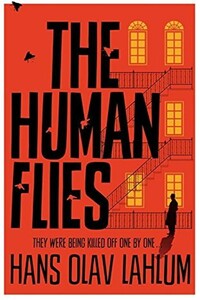
Oslo, 1968: ambitious young detective Inspector Kolbjorn Kristiansen is called to an apartment block, where a man has been found murdered. The victim, Harald Olesen, was a legendary hero of the Resistance during the Nazi occupation, and at first it is difficult to imagine who could have wanted him dead. But as Detective Inspector Kolbjorn Kristiansen (known as K2) begins to investigate, it seems clear that the murderer could only be one of Olesen's fellow tenants in the building. Soon, with the help of Patricia – a brilliant young woman confined to a wheelchair following a terrible accident – K2 will begin to untangle the web of lies surrounding Olesen's neighbors; each of whom, it seems, had their own reasons for wanting Olesen dead.

В книге рассказывается история главного героя, который сталкивается с различными проблемами и препятствиями на протяжении всего своего путешествия. По пути он встречает множество второстепенных персонажей, которые играют важные роли в истории. Благодаря опыту главного героя книга исследует такие темы, как любовь, потеря, надежда и стойкость. По мере того, как главный герой преодолевает свои трудности, он усваивает ценные уроки жизни и растет как личность.
В книге рассказывается история главного героя, который сталкивается с различными проблемами и препятствиями на протяжении всего своего путешествия. По пути он встречает множество второстепенных персонажей, которые играют важные роли в истории. Благодаря опыту главного героя книга исследует такие темы, как любовь, потеря, надежда и стойкость. По мере того, как главный герой преодолевает свои трудности, он усваивает ценные уроки жизни и растет как личность.
В книге рассказывается история главного героя, который сталкивается с различными проблемами и препятствиями на протяжении всего своего путешествия. По пути он встречает множество второстепенных персонажей, которые играют важные роли в истории. Благодаря опыту главного героя книга исследует такие темы, как любовь, потеря, надежда и стойкость. По мере того, как главный герой преодолевает свои трудности, он усваивает ценные уроки жизни и растет как личность.
В книге рассказывается история главного героя, который сталкивается с различными проблемами и препятствиями на протяжении всего своего путешествия. По пути он встречает множество второстепенных персонажей, которые играют важные роли в истории. Благодаря опыту главного героя книга исследует такие темы, как любовь, потеря, надежда и стойкость. По мере того, как главный герой преодолевает свои трудности, он усваивает ценные уроки жизни и растет как личность.
В книге рассказывается история главного героя, который сталкивается с различными проблемами и препятствиями на протяжении всего своего путешествия. По пути он встречает множество второстепенных персонажей, которые играют важные роли в истории. Благодаря опыту главного героя книга исследует такие темы, как любовь, потеря, надежда и стойкость. По мере того, как главный герой преодолевает свои трудности, он усваивает ценные уроки жизни и растет как личность.
В книге рассказывается история главного героя, который сталкивается с различными проблемами и препятствиями на протяжении всего своего путешествия. По пути он встречает множество второстепенных персонажей, которые играют важные роли в истории. Благодаря опыту главного героя книга исследует такие темы, как любовь, потеря, надежда и стойкость. По мере того, как главный герой преодолевает свои трудности, он усваивает ценные уроки жизни и растет как личность.