Русский Феникс. Между советским прошлым и евразийским будущим - [81]
When I immersed into the Eurasian topic of the his-toriosophical heritage of the early Eurasians[422] within the post-Bolshevik emigration, I found an explanation for the archetype of ‘Russian national identity’, namely, ‘phoenix-nation’, i.e. the Russian national education process will always be open, unfinished, integrating through the Russian culture, being European, and preserving the ethnic sovereignty of each people within Russia. It is a ‘phoenix’ because it is capable of recovering after historical cataclysms (1812, 1917, 1941–1945, 1991…) without elapsing into the track of European nationalism. Similarly to the Soviet-time Russian rail tracks that are broader than the European ones (a matter of national security), the ethno-nation-al (completed) type of identity within Russian territory is incompatible with the Russian areas. It is possible to develop only within limited territories and leads to disintegration.
It is not a mere chance that Zbigniew Brzezinski maintains the theory of opposing the ‘imperial’ to the ‘national’ in Russian context in relation to post-Soviet Russia as a former empire, which should become a national state. Brzezinski goes as far as defining the Russian aristocracy of the imperial period as Baltic, German, Polish and Georgian elite (‘That was elite!’), which ‘had never became authentically Russian regardless of the Russian piety [he refers to the Eastern Orthodox religion] and self-identification’. In his opinion, the absence of a Russian elite persists within USSR. Under the Bolsheviks, it were ‘foreigners that were in power’ although there were few Russians among them and Lenin was succeeded by a Georgian[423].
If Stalin was only Georgian, former Georgian President Mikheil Saakashvili would not demolish his monument in the centre of Gori after the Colour Revolution of Roses. It is namely Stalin’s policy that was anti-Lenin and pro-Russian (in national rather than in ethnic terms) for revival of the Russian idea from the second half of the 1930s to the end of the war[424]. Brzezinski provides an interpretation in the spirit of ethnocentric nationalism, which could speculatively be applied to a high number of countries with marginal nationalities, including USA (it is as if someone would challenge the American-Polish dualism of Brzezinski himself). The curious thing in this case is the tendency that is imposed and not its academic precision.
Post-Soviet Russia is indeed faced with the task of solving the crisis of the national identity and emerging from the debate of‘saving the empire or construction of a national state’[425] as of the beginning of the 1990s.
This was prompted by the disappearance of the ‘Soviet’ one in 1991. Actually, I am not sure of the ‘disappearance’ of the Soviet identity — not from the point of view of the live psychology of the so-called ‘sovki’ but because of the most important characteristic feature of the Soviet nation as a winner-nation after 9 May 1945. Until then, there were only Soviet citizens but not a national community.
The navel string between new Russia and USSR is not the geopolitical space including over 20 million Russians but the Victory Day, which so far has been the only holiday uniting all layers of the Russian society regardless of their political or other differences. It is namely for this reason that Russia’s geopolitical opponents propose a ‘mild’ version of depreciation of 9 May with the theory about identity between Nazism and Stalinism being imposed on a large scale (the ones that are still confined to the thinking of the Cold War period would also add Putinism).
The idea about the European Parliament decision as of 23 September 2008 to proclaim 23 August an European Day of Remembrance for Victims of Stalinism and Nazism came from the Baltic countries and Poland (the latter quite forgetting the fact that after the 1938 Munich Conference, with the approval of the European Great Powers, Hungary, along with Germany invaded Czechoslovakia. Likewise, Russia ‘does not remember’ 17 September 1939, as well as the fact that the war became Great Patriotic for USSR only after 22 June 1941). ‘The fight for people’s hearts’ and, sometimes, their minds is an invariable part of human history.
The effect of such comparisons is at first glance like the wrapping of public buildings by artist Christo: the thin cloth covers the stone building and, although it does not destroy it, it makes it invisible. You should remember it so as to wish to remove the curtain, whether word, pictorial or digital.
The author’s periodization, offered in this book, is from 8 December 1991 to 16 March 2014. The starting point of post-Soviet Russia, which I have accepted is eloquent — the Belovezha Accords, whereby Russia, Ukraine and Belarus denounced the agreement on the establishment of USSR (it is quite another issue whether the three republics had a legitimate power to determine the fate of the federation but the fact is irreversible).
Эта книга о людях, которые изменили мир и оставили свой след навеки!Мужчины, которые вершили историю! Умные, великие, мудрые, сильные и гениальные! Мужчины, сделавшие невероятные научные открытия, благодаря которым мы знаем, как устроен мир!Как часто вы слышите, что женщины по сравнению с мужчинами ничто? Что женщин нет в науке, войне и медицине? Как часто вы встречаетесь с изречениями, что женщинам нет места в политике? Частенько? Но не забывайте: за каждым великим мужчиной стоит великая женщина!Это потрясающая книга, которая окунет вас в мир прекрасного, изысканного и невероятно мудрого!
«Женщины, покорившие мир» — прекрасное издание о великих женщинах. Благодаря этой книге вы познакомитесь с самыми знаменитыми женщинами разных веков, проникнитесь их трагичными историями и смелыми решениями. Узнаете о великих женщинах политиках, воительницах, императрицах и ученых, философов и писательниц, о женщинах которые пленяли своей красотой и делали этот мир прекрасней.
Историю творят великие личности, и эта книга о них. Благодаря могущественным, сильным, гениальным мужчинам и женщинам менялся мир, совершались открытия, разрабатывались новые технологии. Биографии этих людей всегда вызывали интерес, восхищение, удивление и желание понять, в чем же их секрет?Перед вами истории жизни людей, которые изменили наш мир. Петр Великий, Томас Эдисон, Наполеон, Цезарь, Жанна д’Арк, Екатерина Великая, Маргарет Тэтчер, Коко Шанель – это люди-легенды. Их жизнь вроде бы на виду у всех, но у каждого – свой секрет, своя тайна, своя неповторимая судьба.
Опубликовано в журнале «Левая политика», № 10–11 .Предисловие к английскому изданию опубликовано в журнале «The Future Present» (L.), 2011. Vol. 1, N 1.
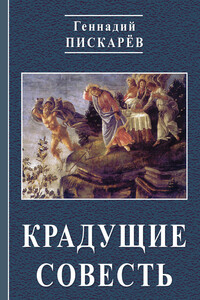
«Спасись сам и вокруг тебя спасутся тысячи», – эта библейская мысль, перерожденная в сознании российского человека в не менее пронзительное утверждение, что на праведнике земля держится, является основным стержнем в материалах предлагаемой книги. Автор, казалось бы, в незамысловатых, в основном житейских историях, говорит о загадочном тайнике человеческой души – совести. Совести – божьем даре и Боге внутри самого человека, что так не просто и так необходимо сохранить, когда правит бал Сатана.
В книге рассказывается история главного героя, который сталкивается с различными проблемами и препятствиями на протяжении всего своего путешествия. По пути он встречает множество второстепенных персонажей, которые играют важные роли в истории. Благодаря опыту главного героя книга исследует такие темы, как любовь, потеря, надежда и стойкость. По мере того, как главный герой преодолевает свои трудности, он усваивает ценные уроки жизни и растет как личность.
В книге рассказывается история главного героя, который сталкивается с различными проблемами и препятствиями на протяжении всего своего путешествия. По пути он встречает множество второстепенных персонажей, которые играют важные роли в истории. Благодаря опыту главного героя книга исследует такие темы, как любовь, потеря, надежда и стойкость. По мере того, как главный герой преодолевает свои трудности, он усваивает ценные уроки жизни и растет как личность.

«Правда не нуждается в союзниках» – это своего рода учебное пособие, подробный путеводитель по фотожурналистике, руководство к действию для тех, кто хочет попасть в этот мир, но не знает дороги.Говард Чапник работал в одном из крупнейших и важнейших американских фотоагентств, «Black Star», 50 лет (25 из которых – возглавлял его). Он своими глазами видел рождение, расцвет и угасание эпохи фотожурналов. Это бесценный опыт, которым он делится в своей книге. Несмотря на то, как сильно изменился мир с тех пор, как книга была написана, она не только не потеряла актуальности, а стала еще важнее и интереснее для современных фотографов.
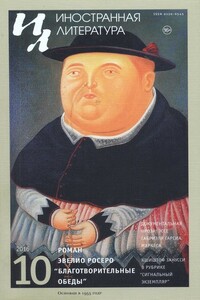
В рубрике «Документальная проза» — газетные заметки (1961–1984) колумбийца и Нобелевского лауреата (1982) Габриэля Гарсиа Маркеса (1927–2014) в переводе с испанского Александра Богдановского. Тема этих заметок по большей части — литература: трудности писательского житья, непостижимая кухня Нобелевской премии, коварство интервьюеров…