Прощай, нищета! Краткая экономическая история мира - [137]
— 2002b. «The Agricultural Revolution? England, 1500–1912». Working Paper, University of California, Davis.
— 2003. «Agricultural Wages». In The Oxford Encylopedia of Economic History, Vol. 1, ed. Joel Mokyr. Oxford: Oxford University Press, pp. 59–65.
— 2005. «The Condition of the Working-Class in England, 1209–2004». Journal of Political Economy 113 (6): 1307–1340.
— 2007а. «Farm Wages, Population and Economic Growth, England, 1209–1869». Economic History Review 60 (1): 97-135.
— 2007b. «The Economic Aggregates for England, 1209–1869». Working Paper, University of California, Davis.
Clark, Gregory, and Gillian Hamilton. 2006. «Survival of the Richest: The Malthusian Method in England, 1585–1638». Journal of Economic History 66 (3): 707–736.
Clark, Gregory, and David Jacks. 2007. «Coal and the Industrial Revolution». European Review of Economic History 11 (1).
Clark, Gregory, and Patricia Levin. 2001. «How Different Was the Industrial Revolution? The Revolution in Printing, 1350–1869». Working Paper, University of California, Davis.
Clark, Gregory, and Alan McGinley. 1989. «Selective Pressure and Economic History: Economics in the Very Long Run». Paper presented to the Berkeley-Stanford Economic History Seminar, May 25.
Clark, Gregory, and Ysbrand van der Werf. 1998. «Work in Progress? The Industrious Revoiution». Journal of Economic History 58 (3): 830–843.
Clark, Gregory, Michael Huberman, and Peter Lindert. 1995. «A British Food Puzzle, 1770–1850». Economic History Review 48 (2): 215–237.
Clark, W. A. Graham. 1907. The Cotton Industry of British India and the Philippines. Washington, D.C.: U.S. Government Printing Office.
Cockburn, J.S. 1977. «The Nature and Incidence of Crime in England, 1559–1625: A Preliminary Survey». In Crime in England, 1550–1800, ed. J.S. Cockburn. Princeton, N.J.: Princeton University Press, pp. 49–71.
— 1991. «Patterns of Violence in English Society: Homicide in Kent 1560–1985». Past and Present 130: 70-106.
Cohen, Mark Nathan. 1977. The Food Crisis in Pre-History. New Haven, Conn.: Yale University Press.
Condorcet, Jean-Antoine-Nicolas, Marquis de. 1795. Esquisse dun tableau historique des progres de I'esprit humain (Sketch for a Historical Picture of the Progress of the Human Mind). Paris: Agasse.
Cotton Spinning Productivity Team. 1951. Cotton Spinning. London: Anglo-American Council on Productivity.
Cotton Yarn Association. 1929. «Statistics Concerning Cotton Spinning in India». Journal of the Textile Institute. Transactions 20: T10 — T20.
Cousin, Victor. 1854. Lectures on the True, the Beautiful, and the Good. New York: D.Appleton.
Crawcour, Sidney. 1961. «The Development of a Credit System in Seventeenth-Century Jарап». Journal of Economic History 21: 342–360.
Cressy, David. 1980. Literacy and the Social Order: Reading and Writing in Tudor and Stuart England. Cambridge, U.K.: Cambridge University Press.
Cronk, Lee. 1991. «Wealth, Status, and Reproductive Success among the Mukogodo of Кепуа». American Anthropologist 93: 345–360.
Curtin, Philip D. 1989. Death by Migration: Europe's Encounter with the Tropical World in the Nineteenth Century. Cambridge, U.K.: Cambridge University Press.
Darwin, Charles. 1859. On the Origin of Species. London: John Murray.
— 1965. The Voyage of the Beagle. London: J. M. Dent and Sons.
— 1969. Autobiography. In The Autobiography of Charles Darwin, 1809–1882: With Original Omissions Restored, ed. Nora Barlow. New York: W.W. Norton, pp. 17-146.
— 1998. The Descent of Man. Amherst, N.Y.: Prometheus.
Davis, Lance E., and Robert A. Huttenback. 1986. Mammon and the Pursuit of Empire: the Economics of British Imperialism. Cambridge, U.K.: Cambridge University Press.
Deane, Phyllis, and W.A. Cole. 1967. British Economic Growth, 1688–1959, 2nd ed. Cambridge, U.K.: Cambridge University Press.
Deaux, George. 1969. The Black Death. London: Hamilton.
Deshpande, S. R. 1946. Report on an Enquiry into Conditions of Labour in the Cotton Mill Industry in India. Simla: Government of India Press.
De Vries, Jan. 1984. European Urbanization, 1500–1800. London: Methuen.
— 1985. «The Population and Economy of the Pre-Industrial Netherlands». Journal of Interdisciplinary History 15 (4): 661–682.
— 1994. «The Industrial Revolution and the Industrious Revolution». Journal of Economic History 54: 249–270.
De Vries, Jan, and Ad van der Woude. 1997. The First Modern Economy: Success, Failure, and Perseverance of the Dutch Economy, 1500–1815. Cambridge, U.K.: Cambridge University Press.
De Wever, F. 1978. «Rents and Selling Prices of Land at Zele, Sixteenth to Eighteenth Century». In The Agricultural Development of the Low Countries as Revealed by the Tithe and Rent Statistics, 1250–1800, eds. Herman van der Wee and E. van Cauwenbere. Leuven: Leuven University Press, pp. 1-23.
Diamond, Jared M. 1987. «The Worst Mistake in the History of the Human Race». Discover, May, pp. 64–66.
— 1997. Chins, Germs, and Steel: The Fates of Human Societies. New York: W.W. Norton.
Dickmann, Nicola. 2003. «Fertility and Family Income on the Move: An International Comparison over 20 Years». Working Paper 360, Maxwell School of Citizenship and Public Affairs, Syracuse University.
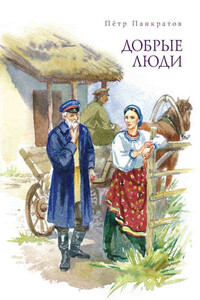
В книге П. Панкратова «Добрые люди» правдиво описана жизнь донского казачества во время гражданской войны, расказачивания и коллективизации.
В книге сотрудника Нижегородской архивной службы Б.М. Пудалова, кандидата филологических наук и специалиста по древнерусским рукописям, рассматриваются различные аспекты истории русских земель Среднего Поволжья во второй трети XIII — первой трети XIV в. Автор на основе сравнительно-текстологического анализа сообщений древнерусских летописей и с учетом результатов археологических исследований реконструирует события политической истории Городецко-Нижегородского края, делает выводы об административном статусе и системе управления регионом, а также рассматривает спорные проблемы генеалогии Суздальского княжеского дома, владевшего Нижегородским княжеством в XIV в. Книга адресована научным работникам, преподавателям, архивистам, студентам-историкам и филологам, а также всем интересующимся средневековой историей России и Нижегородского края.
В настоящей книге дается материал об отношениях между папством и Русью на протяжении пяти столетий — с начала распространения христианства на Руси до второй половины XV века.
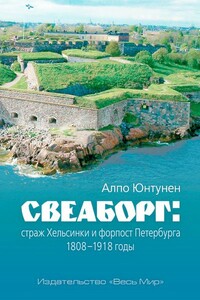
В книге финского историка А. Юнтунена в деталях представлена история одной из самых мощных морских крепостей Европы. Построенная в середине XVIII в. шведами как «Шведская крепость» (Свеаборг) на островах Финского залива, крепость изначально являлась и фортификационным сооружением, и базой шведского флота. В результате Русско-шведской войны 1808–1809 гг. Свеаборг перешел к Российской империи. С тех пор и до начала 1918 г. забота о развитии крепости, ее боеспособности и стратегическом предназначении была одной из важнейших задач России.
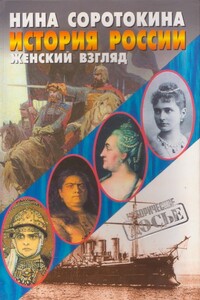
Обзор русской истории написан не профессиональным историком, а писательницей Ниной Матвеевной Соротокиной (автором известной серии приключенческих исторических романов «Гардемарины»). Обзор русской истории охватывает период с VI века по 1918 год и написан в увлекательной манере. Авторский взгляд на ключевые моменты русской истории не всегда согласуется с концепцией других историков. Книга предназначена для широкого круга читателей.
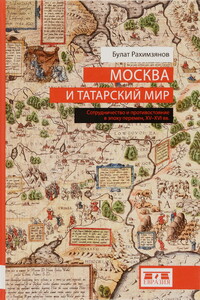
В числе государств, входивших в состав Золотой Орды был «Русский улус» — совокупность княжеств Северо-Восточной Руси, покоренных в 1237–1241 гг. войсками правителя Бату. Из числа этих русских княжеств постепенно выделяется Московское великое княжество. Оно выходит на ведущие позиции в контактах с «татарами». Работа рассматривает связи между Москвой и татарскими государствами, образовавшимися после распада Золотой Орды (Большой Ордой и ее преемником Астраханским ханством, Крымским, Казанским, Сибирским, Касимовским ханствами, Ногайской Ордой), в ХѴ-ХѴІ вв.