Half the World Away - [8]
‘They’ll keep some people on,’ I say, ‘surely, even if the merger goes ahead. The project will still need finishing.’
‘I don’t know. Andy’s not giving anyone straight answers.’ Andy is his boss, the project manager. ‘He probably doesn’t know himself,’ he adds, still anxious to be fair, even though he might be getting shafted. ‘It’s an awful time to be looking for jobs.’
‘It might not come to that. We’ll manage,’ I say.
‘How? On what you earn? On bloody benefits?’
‘We’ll have to,’ I say. ‘People do.’ I’m being optimistic. I’ve seen families at school go through the mill, plunged into free school dinners, shocked at the reality of life on the welfare system. And others who, despite all their efforts, have never been able to escape from it, now shamed and hounded by the rhetoric of blaming the poor for poverty. But I’m determined to remain positive, ignore the way my stomach dropped when he announced the risk of redundancy.
‘Besides,’ I say, ‘you’ll get some money.’
‘Yes,’ Nick says, ‘twenty grand.’
‘Breathing space. Then you could look for-’
He holds up his hands, he doesn’t need any more blithe reassurances.
A week later I get a call from Sunita, Isaac’s teacher. Can I come to the classroom?
She sounds strained, or am I imagining it?
The rest of the class are playing out. Isaac is there and his best friend Sebastian. Sebastian is in tears.
‘What’s the matter?’ I say.
‘I’m afraid Isaac bit Sebastian,’ Sunita says.
‘I didn’t,’ Isaac says.
Crouching down so I’m level with the two boys, I say to Isaac, ‘What happened?’
His face is tight, a scowl scored deep on his brow. ‘He’s stupid,’ Isaac says.
‘Calling people names is naughty. What happened, Sebastian?’ I say.
Sebastian’s lower lip is quivering and his eyes well up again. He talks in hiccups. ‘He bit me.’ He shows me the evidence, tooth-marks on his forearm.
‘You need to say sorry,’ I tell Isaac, ‘and you’ll have to go to time-out.’
Isaac looks murderous. If he could bite me too, he would.
‘He said Benji was a pig,’ Isaac says.
‘I did not,’ Sebastian retorts. ‘I said he was big. You didn’t listen.’
‘It doesn’t matter what he said,’ Sunita tells Isaac. ‘You do not hurt other people. If someone is mean to you, you tell a teacher.’
Thank God it was Sebastian, I think. His mum, Freya, won’t make a big deal of it. I hope the boys’ friendship will last. Isaac needs all the friends he can get.
‘Say sorry,’ I say.
Isaacs spits out a ‘sorry’.
‘Isaac,’ Sunita says, ‘that doesn’t sound like you mean it.’
It takes two more attempts but we get a halfway decent apology and Isaac spends the rest of the morning in time-out.
There’s a darkness in Isaac I don’t understand. It’s not just the biting – that’s one of the ways he expresses it. While the world is Lori’s oyster and Finn’s happy home, for Isaac it often seems to be a place of treachery and shadows. Glass half empty and witches under the bed. Where does it come from?
Lori in the Ori-ent
Food: the good, the bad and the… What is that?
Posted on 12 February 2014 by Lori
Sichuan province, and Chengdu in particular, is known for its spicy food. If you are lucky enough to stumble upon a waiter who has any English you might be able to negotiate a mild version of the day’s dish. For mild read fiery.
The cuisine comes in three levels of spiciness. Spiciness is a bit of a euphemism. We’re talking chilli at industrial concentrations. But also Sichuan peppers – little round peppercorns that are like culinary grenades, zapping the nerve endings and destroying all sensation in the mouth. Raised in Manchester, I am quite familiar with the delights of the curry house, and can scarf down a vindaloo with the best of them. I had no idea.
Here the meals are
1) hot
2) blazing hot
3) scorching.
It would be handy to have some sort of rating system on the menus, sticks of dynamite, maybe, or little bonfires. Until that is introduced (don’t hold your breath) the dining-out experience can best be described as a minefield. One advantage of this custom of drenching everything in fiery, sweat-inducing chilli sauce is that while I am trying to tell if my tongue has melted or there’s any enamel left on my teeth I am less anxious about what lurks within the sauce. Whether it is lamb or pork or chicken or, to be more precise, a bit of the animal I have ever allowed past my lips before. Armpits, eyeballs, testicles, toes? Or any of those inside bits I prefer not to think about? Nothing is wasted.
There is no bread. There are no chips, no mash or jacket potatoes. There is always rice or noodles – as long as you ask for it. I have never been so hungry in my life. You’d think three honey buns would fill up a girl with an appetite but the effect lasts for about ten minutes.
On Saturday I was out with friends (you can see us in the last picture). Bradley, Dawn and Shona. Bradley has better Mandarin than me (hah! everyone has better Mandarin than me), and by the end of our meal, with a little help from an app on his phone, he’d worked out that among our dishes of baby lamb and big pig we had also enjoyed sea slug.
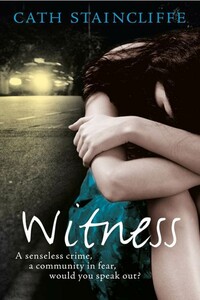
"A painfully honest exploration of an ordinary family under stress… A stunning piece of work." – Ann CleevesFour bystanders in the wrong place at the wrong time. Witnesses to the shocking shooting of a teenage boy. A moment that changes their lives forever. Fiona, a midwife, is plagued by panic attacks and unable to work. Has she the strength to testify? Mike, a delivery driver and family man, faces an impossible decision when his frightened wife forces him to choose – us or the court case. Cheryl, a single-mother, doesn't want her child to grow up in the same climate of fear.

1960, Manchester. Three young Catholic women find themselves pregnant and unmarried. In these pre-Pill days, there is only one acceptable course of action: adoption. So Megan, Caroline and Joan meet up in St Ann's Home for Unmarried Mothers to await the births of their babies. Three little girls are born, and placed with their adoptive families. Trio follows the lives of these mothers and daughters over the ensuing years.
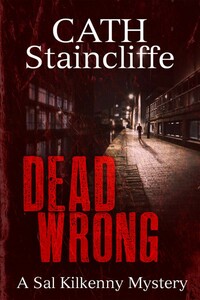
Single mother and private eye, Sal Kilkenny, has two very frightened clients on her hands. One, young mother Debbie Gosforth, is a victim; the other, Luke Wallace, is afraid he is a murderer. While Sal tries to protect Debbie from a stalker, she has to investigate the murder of Luke's best friend.

Your husband, your family, your freedom. What would you sacrifice for love? A love story, a modern nightmare and an honest and incisive portrayal of a woman who honours her husband's wish to die and finds herself in the dock for murder.When Deborah reluctantly helps her beloved husband Neil end his life and conceals the truth, she is charged with murder. As the trial unfolds and her daughter Sophie testifies against her, Deborah, still reeling with grief, fights to defend her actions. Twelve jurors hold her fate in their hands, if found guilty she will serve a life sentence.

From the author of LOOKING FOR TROUBLE, a further crime novel featuring private investigator Sal Kilkenny. When a man is distraught at his wife's apparent infidelity, he enlists the help of Sal to confirm his suspicions, only to find himself a widower soon afterwards. From there Sal's other case also begins to take a disturbing and violent turn.

The fourth Blue Murder novel written by the creator of the hit ITV police drama starring Caroline Quentin as DCI Janine Lewis.A well-respected family GP is found shot dead outside his surgery; who could possibly want to kill him? As DCI Janine Lewis and her team investigate they uncover stories of loyalty, love, deception, betrayal and revenge.Praise for the Blue Murder books'Complex and satisfying in its handling of Lewis's agonised attempts to be both a good cop and a good mother.' The Sunday Times'Uncluttered and finely detailed prose.' Birmingham Post'Beautifully realised little snapshots of the different characters' lives… Compelling stuff.' Sherlock Magazine'A swift, satisfying read.' City Life'Precise and detailed delineation of contemporary family relationships.' Tangled Web'Lewis seems set to become another very popular string to Staincliffe's bow as one of the leading English murder writers.' Manchester Metro'Pace and plenty of human interest.' Publishing News'Blending the warmth of family life with the demands of a police investigation.'Manchester Evening News'Juggling work and family is a challenge of modern life and encountering realistically portrayed women with family responsibilities is a pleasure.

Кен Фоллетт — один из самых знаменитых писателей Великобритании, мастер детективного, остросюжетного и исторического романа. Лауреат премии Эдгара По. Его романы переведены на все ведущие языки мира и изданы в 27 странах. Содержание: Скандал с Модильяни Бумажные деньги Трое Ключ к Ребекке Человек из Санкт-Петербурга На крыльях орла В логове львов Ночь над водой.

В самой середине 90-тых годов прошлого века жизнь приобрела странные очертания, произошел транзит эпох, а обитатели осваивали изменения с разной степенью успешности. Катя Малышева устраивалась в транзитной стадии тремя разными способами. Во-первых, продолжала служить в издательстве «Факел», хотя ни работы, ни денег там почти не наблюдалось. Во-вторых редактировала не совсем художественную беллетристику в частных конторах, там и то и другое бытовало необходимом для жизни количестве. А в третьих, Катя стала компаньоном старому другу Валентину в агентстве «Аргус».

В самом начале нового века, а может быть и в конце старого (на самом деле все подряд путались в сроках наступления миллениума), Катя Малышева получила от бывшего компаньона Валентина поручение, точнее он попросил оказать ему платную любезность, а именно познакомиться с заслуженной старой дамой, на которую никто в агентстве «Аргус» не мог угодить. Катя без особой охоты взялась за дело, однако очень скоро оно стало усложняться. Водоворот событий увлек Катю за собой, а Валентину пришлось её искать в печальных сомнениях жива она или уже нет…

Наталия Новохатская Предлагает серию развернутых описаний, сначала советской (немного), затем дальнейшей российской жизни за последние 20 с лишком лет, с заметным уклоном в криминально-приключенческую сторону. Главная героиня, она же основной рассказчик — детектив-самоучка, некая Катя Малышева. Серия предназначена для более или менее просвещенной аудитории со здоровой психикой и почти не содержит описаний кровавых убийств или прочих резких отклонений от здорового образа жизни. В читателе предполагается чувство юмора, хотя бы в малой степени, допускающей, что можно смеяться над собой.

Эта история начинается с ограбления с трагическим финалом: немолодой хозяин загородного дома погибает от рук неизвестных преступников. Однако в этой истории оказывается не так все просто, и сам погибший несет ответственность за то, что с ним произошло. Рассказ «Вода из колодца» седьмой в ряду цикла «Дыхание мегаполиса». Главным героем этого цикла является следователь Дмитрий Владимиров, который на этот раз должен разобраться в хитросплетениях одной запутанной семейной драмы.